Rehabilitation System Design

Introdução
Global trends in health and ageing signal the need for a major scaling up of rehabilitation services in countries around the world and in low- and middle-income countries in particular. Investment in rehabilitation allows people with a health condition to achieve and maintain optimal functioning, by improving their health and by increasing their participation in life. Strengthening rehabilitation in health systems is fundamental to responding to the increasing demand and ensuring that rehabilitation is available and affordable for those who require it. As recommended by the WHO Rehabilitation 2030 initiative, A Call for Action, a key action to strengthen rehabilitation is to collect data relevant to rehabilitation to enhance health information systems (HIS).
The data that are collected through routine rehabilitation health facility reporting, both from individual records and service records, are used to gather information for defining rehabilitation targets and outcomes, clinical decision-making, estimates of service utilization, and quality management. Regular monitoring of rehabilitation services at national and subnational level provides information about their availability and distribution which may inform measures that are taken to achieve Universal Health Coverage (UHC). System level rehabilitation data and information on functioning underpin rehabilitation decision-making in health policy, management and clinical care. Information on functioning is essential to decision-making in rehabilitation at all levels of the health system since the goal of rehabilitation is to optimize functioning in light of impairments, injuries, and acute or chronic diseases.
Objectivo
The Rehabilitation Aggregate System Design document provides an overview of the design principles and guidance used to develop the digital data package for aggregate Rehabilitation surveillance. This document is intended for use by DHIS2 implementers at country and regional level to be able to support implementation and localization of the package. The Rehabilitation metadata package can be adapted to local needs and national guidelines. In particular, local work flows and national guidelines should be considered in the localization and adoption of the package.
Fundo
Rehabilitation service delivery covers a wide range of activities for various health conditions, and it is provided by a multidisciplinary workforce at all administrative levels of healthcare. Rehabilitation indicators for routine health facility reporting cover the common types of rehabilitation that are delivered and their relevant features for decision-making both at a system and health facility level. Fully aware of the potential burden of data collection in health facilities, this module uses a general approach in terms of service delivery and does not cover monitoring for specific rehabilitation interventions nor features related to specific intervention types.
What are the expected outcomes?
-
The indicators guide the data collected and support the integration of rehabilitation into facility level reporting.
-
A estrutura de análise apoia a tomada de decisões do sector de saúde para reabilitação. Ele informa as equipes de análise, monitoramento e avaliação e permite que os gestores observem o desempenho do sector de reabilitação, incluindo sua integração ao sistema de saúde, tendências das condições de saúde e utilização de serviços de reabilitação, padrões de características de qualidade e diferenças geográficas para cobertura de serviço entrega ao longo do tempo. A estrutura de análise deve ajudar os gerentes de programas e planejadores de saúde a responder perguntas de M&E de reabilitação, tais como: Os serviços de reabilitação estão equipados com recursos adequados e onde estão as lacunas? Em que medida os serviços de reabilitação são utilizados e quais são as características de utilização em relação à capacidade de atendimento, perfil do usuário e plataforma de prestação de serviços? Como a reabilitação está contribuindo para a UHC? Como a eficácia da reabilitação evolui com o tempo? Quão bem a reabilitação está integrada no sistema de saúde e ao longo da continuidade dos cuidados? Até que ponto as pessoas que precisam de uma estadia mais longa, reabilitação multidisciplinar de alta intensidade têm acesso a cuidados de qualidade?
-
Program managers and planners could use the data for the establishment and follow up of real-time measures regarding accessibility, availability, human resources, quality, and service outcome.
-
Os indicadores padrão propostos podem ser usados para fins de monitoramento do planejamento operacional e estratégico para reabilitação. Os dados são então coletados para acompanhar o progresso em direção aos objetivos de um plano estratégico (nacional). Embora o documento ‘Reabilitação no Sistema de Saúde da WHO – Guia de Acção’ forneça orientações para o fortalecimento do sistema de saúde, ele contém uma secção sobre o monitoramento de um plano estratégico de reabilitação, chamado FRAME2. Um Menu de Indicadores de Reabilitação (RIM) com 40 indicadores está incluído para esta finalidade. Dos 40 indicadores RIM, 11 indicadores são coletados usando dados fornecidos principalmente pelas unidades de saúde. Como tal, estes 11 indicadores formam a base da lista de indicadores da unidade sanitária para reabilitação que são recomendados para recolha de rotina pelas unidades sanitárias e recolhidos através dos sistemas distritais de informação de gestão sanitária (DHMIS).
Usuários pretendidos
The information provided through routine data collection and reporting from rehabilitation health facilities needs to be analyzed and used. This is typically done by the following target audience:
- Ministry of health decision makers such as rehabilitation program managers, data managers and health information system managers;
- Rehabilitation program partners and program planners;
- Health facility managers for rehabilitation;
- Research institutes involved with the assessment and improvement of rehabilitation data and information systems.
Module overview
The Rehabilitation aggregate package includes 6 proposed data sets for data collection and 7 dashboards.
Data sets
The data entry forms are logically divided by data collection periods and health care facility types.
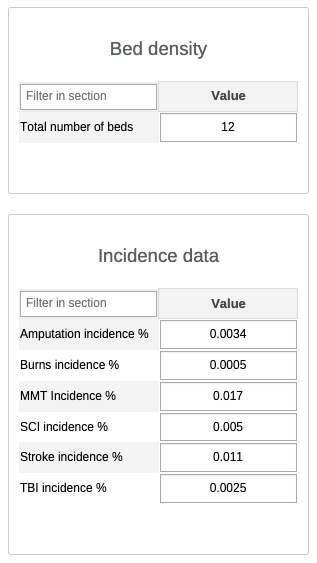
Bed Density and Incidence Data
| Bed Density | giKizLegiUW |
|---|---|
| Data set form type | default |
| Data collection period | yearly |
| Facility types | Rehabilitation facilities with a dedicated rehabilitation inpatient ward |
O conjunto de dados de densidade do leito é um conjunto de dados autônomo que inclui 2 secções:
- Bed density
- Available rehabilitation beds (total)
- Incidence data
- Amputation
- Burns
- MMT
- SCI
- Stroke
- TBI
Note
- If the Rehabilitation bed density data is already collected in the existing DHIS2 HMIS system, it is possible to replace the proposed data element and its references with the existing element in the system. Please refer to the Rehabilitation package installation guide for information on additional configuration of bed density indicators.
- The list of health conditions can be adjusted according to national guidance.
Essential Package Availability at PHC
| Essential Package Availability | MGzqZDWvPhL |
|---|---|
| Data set form type | secção |
| Data collection period | yearly |
| Facility types | Primary Healthcare Facilities reporting on Rehabilitation (Rehab PHC) |
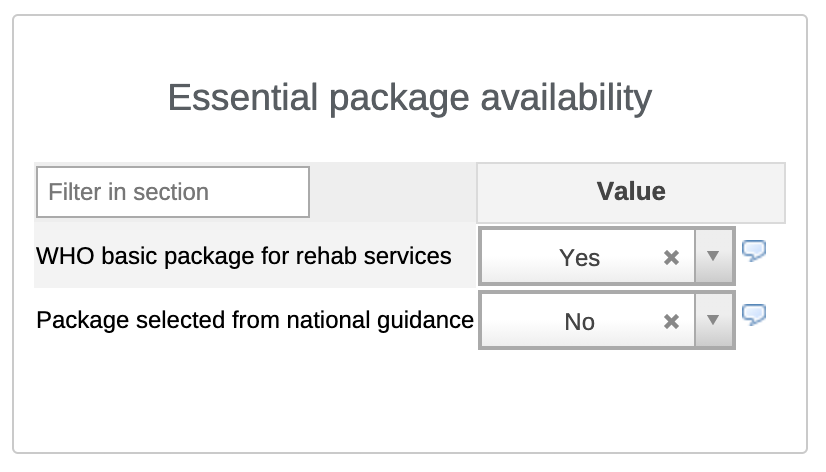
Essential package availability dataset collects data on the availability of essential rehabilitation packages in primary healthcare facilities:
- Pacote básico da WHO
- Package selected from national guidance
Personnel Density

| Personnel Density | Sm2fALTZROS |
|---|---|
| Data set form type | secção |
| Data collection period | yearly |
| Facility types | All facilities reporting on Rehab (Master Facility List) |
Rehabilitation occupational groups usually include rehabilitation doctors, rehabilitation nurses, physiotherapists, occupational therapists, speech language therapists, prosthetists and orthotists, and psychologists. Other rehabilitation occupational groups relevant to the country may also be included, for example audiologists, social workers and mid-level rehabilitation occupational groups. It is also possible to include hospital rehabilitation personnel that are not working for the rehabilitation department. A national health workforce plan typically includes a list of occupational groups for the country and it is recommended to consult this list when establishing the reporting system in the country.
This dataset collects numbers of the following rehabilitation groups at facilities:
- Rehabilitation doctors
- Physiotherapists
- Occupational therapists
- Speech language therapists
- Prosthetists/orthotists
- Psychologists
- Other personnel
If these figures are already collected in the existing DHIS2 HMIS system, it is possible to replace the proposed data element and all its occurences with the existing element in the system. Please refer to the installation guide for information on additional configuration of rehabilitation occupational groups data elements and indicators.
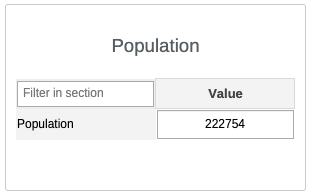
The organisation unit level for collection of population data may vary from use case to use case. Find more information on the configuration of population and personnel data collection in the installation guide.
Inpatient Report
| Inpatient Report | WjN1YoDtlOd |
|---|---|
| Data set form type | custom |
| Data collection period | monthly |
| Facility types | All facilities with an inpatient ward (not dedicated Rehab ward) reporting on Rehab (Master Facility List) |
This data set uses a custom html data entry form that contains four tables:
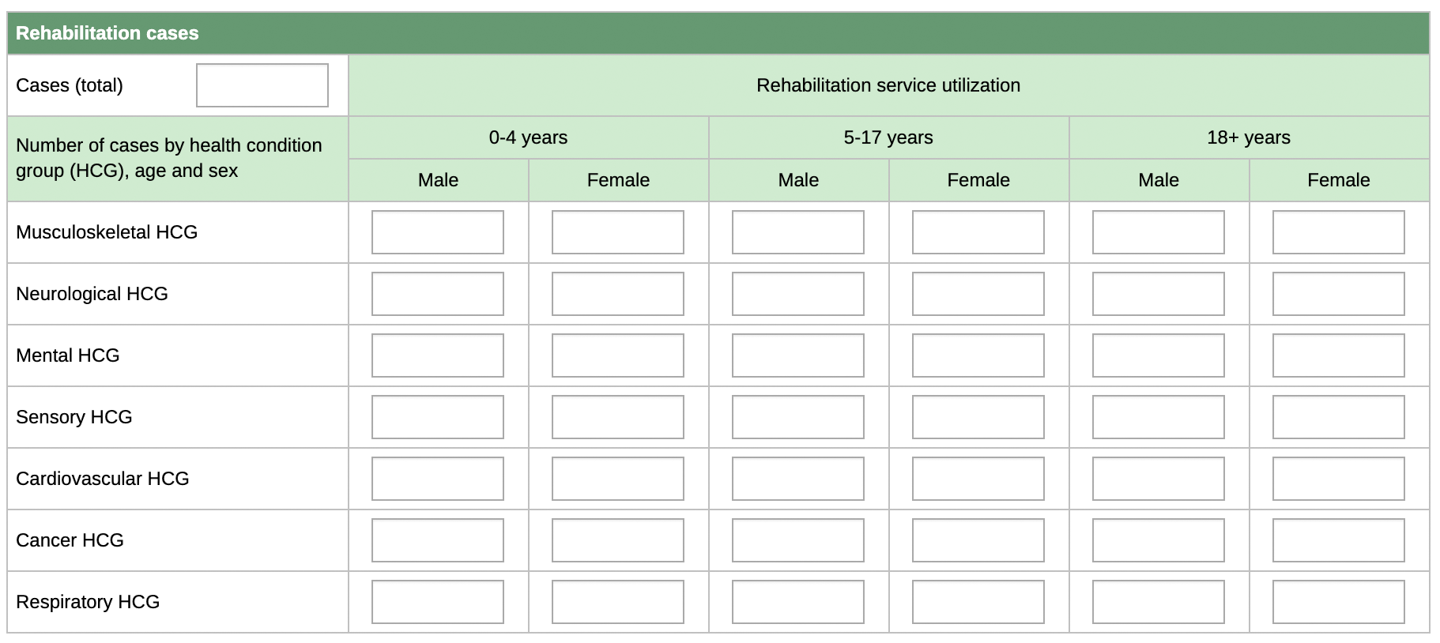
Rehabilitation cases - Total number of inpatients receiving rehabilitation services at inpatient wards that are not dedicated rehabilitation wards and the disaggregation of these cases by age, sex and health condition groups (HCG) that include musculoskeletal, neurological, mental, sensory, cardiovascular, cancer and respiratory HCGs.
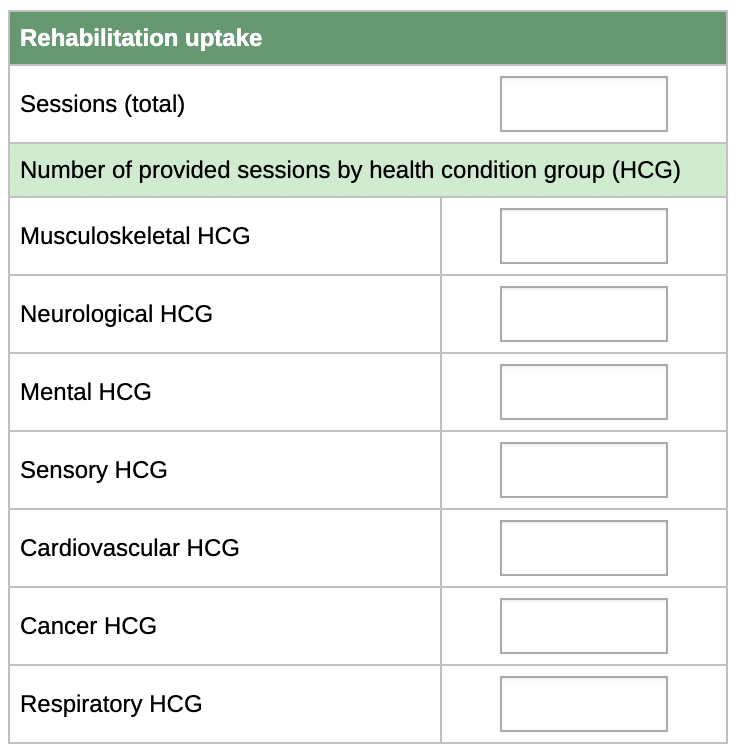
Rehabilitation uptake - Total number of sessions provided to inpatients at non-rehabilitation wards and the disaggregation by HCGs
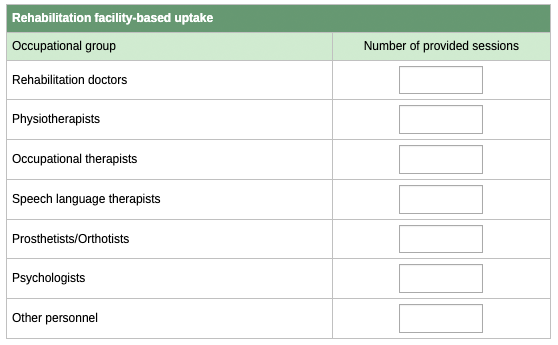
Rehabilitation facility-based uptake - Number of sessions provided by various rehabilitation occupational groups (rehabilitation doctors, physiotherapists, occupational therapists, speech language therapists, prosthetists/orthotists, psychologists, other personnel)
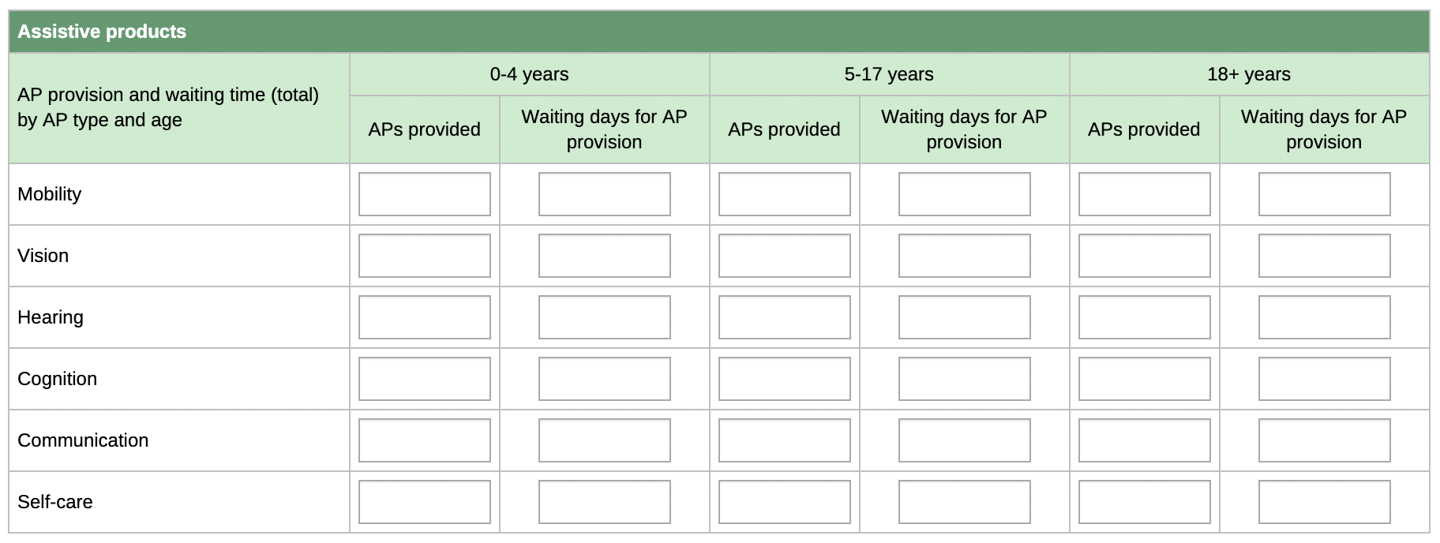
Assistive products (AP) - Number of assistive products provided to patients disaggregated by age (0-4, 5-17, 18+) and AP groups (mobility, vision, hearing, cognition, communication, self-care) and waiting days for assistive product provision
Rehab Ward Report
| Rehab Ward Report | tP8et8TNWgF |
|---|---|
| Data set form type | custom |
| Data collection period | monthly |
| Facility types | All facilities with a dedicated rehabilitation inpatient ward reporting on Rehab (Master Facility List) |
This data set uses a custom html data entry form that contains six tables:
Rehabilitation cases - Total number of inpatients receiving Rehabilitation services at rehab ward and the disaggregation of these cases by age, sex and health condition groups (HCG) that include musculoskeletal, neurological, mental, sensory, cardiovascular, cancer and respiratory HCGs.
Rehabilitation uptake - Total number of sessions provided to inpatients and the disaggregation by HCGs
Rehabilitation facility-based uptake - Number of sessions provided by various rehabilitation occupational groups (rehabilitation doctors, physiotherapists, occupational therapists, speech language therapists, prosthetists/orthotists, psychologists, other personnel)
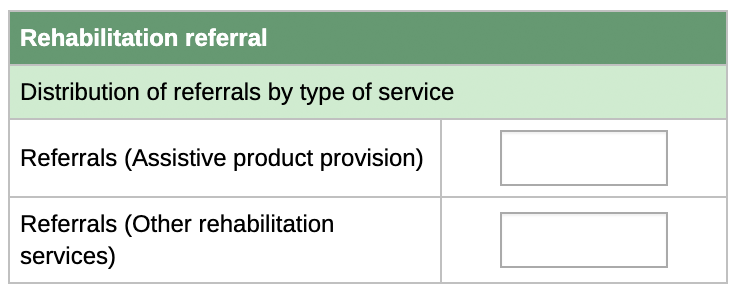
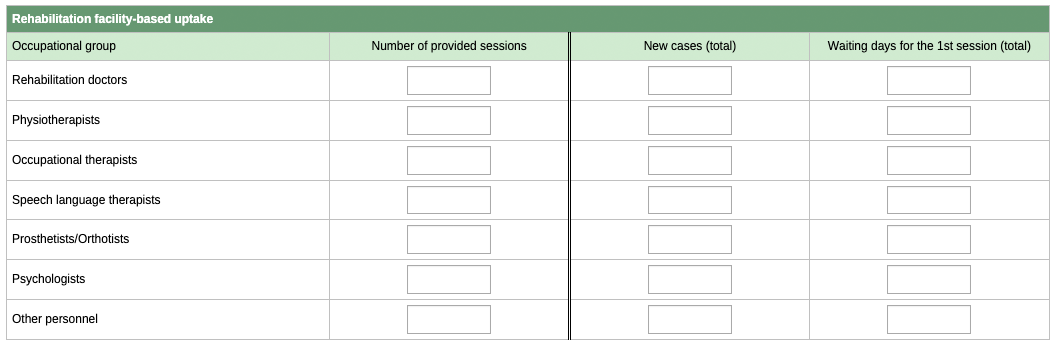
Rehabilitation referral - Total number of new cases accessing the facility during the reporting month and number of referrals disaggregated by assistive product provision and other rehabilitation services.
Assistive products (AP) Number of provided assistive products disaggregated by age (0-4, 5-17, 18+) and AP groups (mobility, vision, hearing, cognition, communication, self-care) and waiting days for assistive product provision
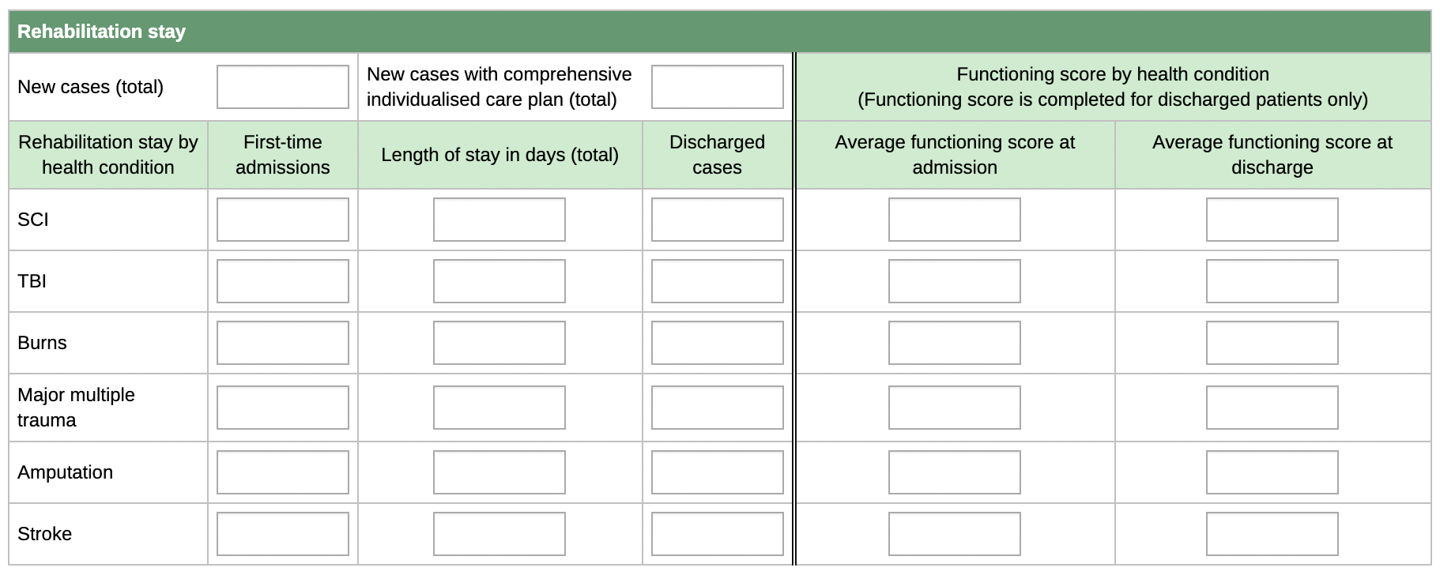
Permanência de reabilitação Número total de novos casos durante o mês de notificação, desagregados por condições de saúde (HC) que incluem SCI, TBI, queimaduras, politraumatismo maior, amputação e acidente vascular cerebral; número de casos novos com plano de atendimento individualizado abrangente; tempo de internação para casos de alta, número de casos de alta, escore médio de funcionamento para casos de alta na admissão e alta desagregados por HCs.
Outpatient Report
| Outpatient Report | zInFVXb98JD |
|---|---|
| Data set form type | custom |
| Data collection period | monthly |
| Facility types | All facilities with an outpatient department reporting on Rehab (Master Facility List) |
This data set uses a custom html data entry form that contains six tables:
Casos de reabilitação - Número total de pacientes ambulatoriais que recebem serviços de reabilitação na unidade e a desagregação desses casos por idade, sexo e grupos de condições de saúde (HCG) que incluem HCGs musculoesqueléticos, neurológicos, mentais, sensoriais, cardiovasculares, câncer e respiratórios .
Rehabilitation uptake - Total number of sessions provided to outpatients and the disaggregation by HCGs
Rehabilitation referral - Total number of new cases accessing the facility during the reporting month and number of referrals disaggregated by assistive product provision and other rehabilitation services.
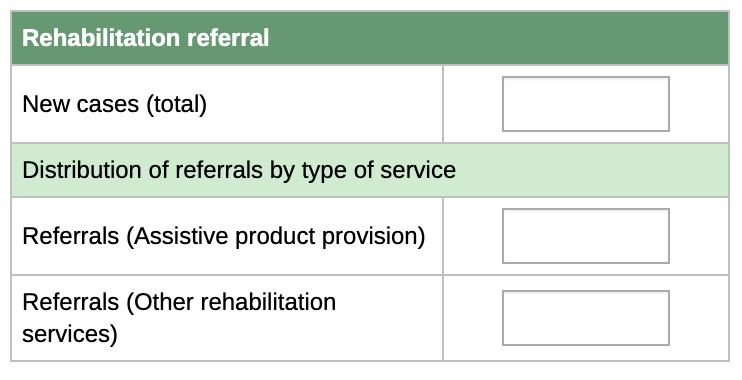
Rehabilitation facility-based uptake - Number of sessions provided by various rehabilitation occupational groups (rehabilitation doctors, physiotherapists, occupational therapists, speech language therapists, prosthetists/orthotists, psychologists, other personnel), number of new cases (first visits) disaggregated by rehabilitation occupational groups and the total number of waiting days for the first session
Assistive products (AP) - Number of assistive products provided to patients disaggregated by age (0-4, 5-17, 18+) and AP groups (mobility, vision, hearing, cognition, communication, self-care) and waiting days for assistive product provision
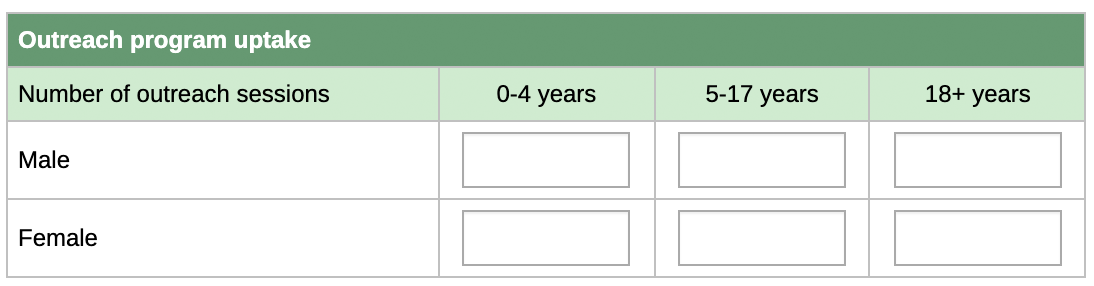
Outreach program uptake - Number of outreach sessions provided for clients disaggregated by age (0-4, 5-17, 18+) and sex
Organisation unit groups
O pacote de Reabilitação opera com um conjunto de grupos de unidades de organização predefinidos. O objectivo desses grupos é:
- help the implementers configure the package after importing it into a new or existing DHIS2 instance
- assign the rehabilitation data sets to the relevant organisation unit groups
- utilize the preconfigured dashboards for analysis purposes.
The predifined organisation unit groups are listed in the table below:
| Nome | UID | Descrição | Objectivo |
|---|---|---|---|
| REHAB - Master Facility List | Uvefj6bDfzo | Includes all facilities reporting on rehabilitation | Data set assignment, analytics |
| PHC | aT5pkgRLbw5 | Includes all primary health care facilities | Análise |
| PHC facilities with a mandate to allocate rehabilitation workers | JCgLXxVGcRS | Includes all primary healthcare facilities with a mandate to allocate rehabilitation workers | Análise |
| REHAB - PHC | bbsxlCu3Vya | Includes all primary health care facilities reporting on rehabilitation | Análise |
| SHC | RbJ4hRSGQaH | Includes all secondary health care Facilities | Análise |
| REHAB - SHC | wZJCB2cj9jg | Includes all secondary health care facilities reporting on rehabilitation | Análise |
| THC | dV8Ec2zJrze | Includes all tertiary Health Care Facilities | Análise |
| REHAB - THC | Re0iJ3vtBzE | Includes all tertiary health care facilities reporting on rehabilitation | Análise |
| Rehab inpatient ward | AGK6oOK4ncb | Includes all facilities with a dedicated rehabilitation ward | Análise |
The Master Facility List for rehabilitation includes those facilities that have a mandate to report on rehabilitation; these commonly include facilities that have rehabilitation workforce, but also facilities that may be providing rehabilitation services/are expected to provide rehabilitation services delivered by non-rehabilitation workforce through task sharing (often primary care facilities).
The Rehab PHC organisation unit group can be further divided into district hospitals and health centres if such disaggregation is relevant for the country.
More information on the configuration of the organisation unit groups, please refer to the Rehabilitation package installation guide
Indicadores
The configuration of indicators included in the Rehabilitation package is described in more detail in the Rehabilitation package installation guide
Regras de validação
To maintain data quality during data collection, the package includes a set of validation rules for the outpatient, inpatient and the Rehab Ward report datasets.
The configuration of these validation rules is described in more detail in the Rehabilitation package installation guide
Predictors
The Rehabilitation package includes a set of predictors that are used to produce data values for rehabilitation occupational groups, rehabilitation master facility list and rehabilitation package availability.
Painéis
The Rehabilitation module includes 7 dashboards described below.
REHAB.01 - Input / Rehabilitation input data
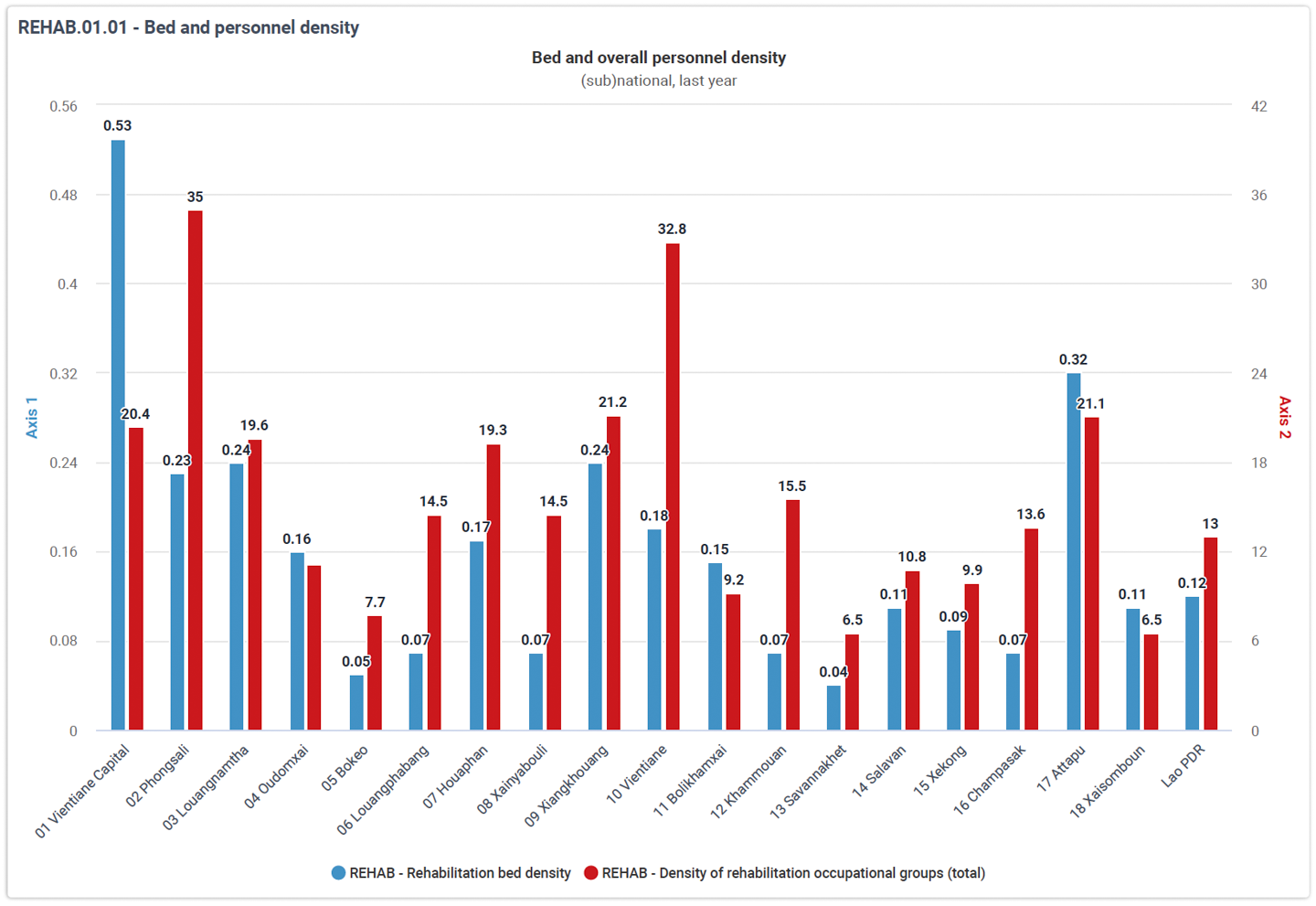
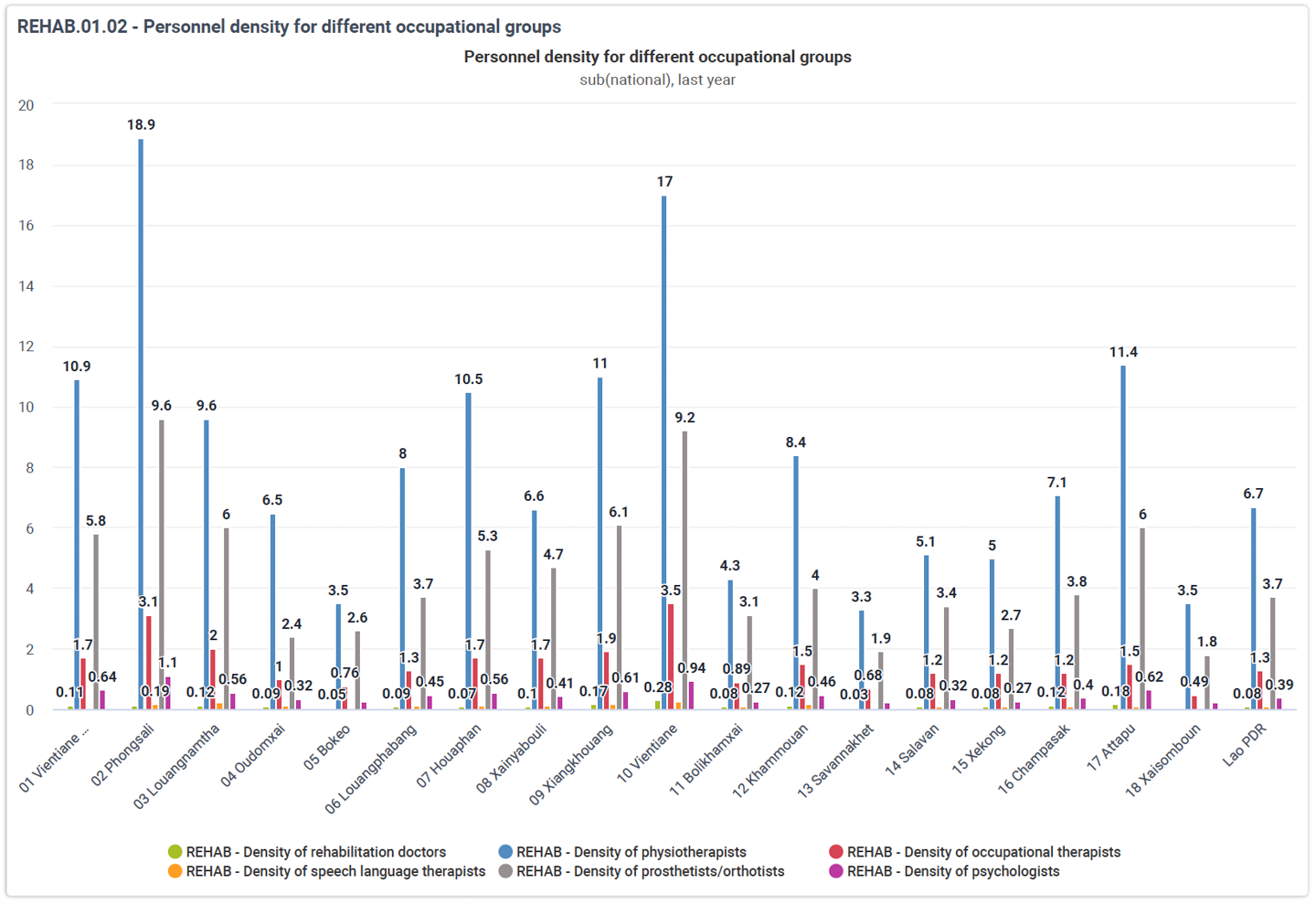
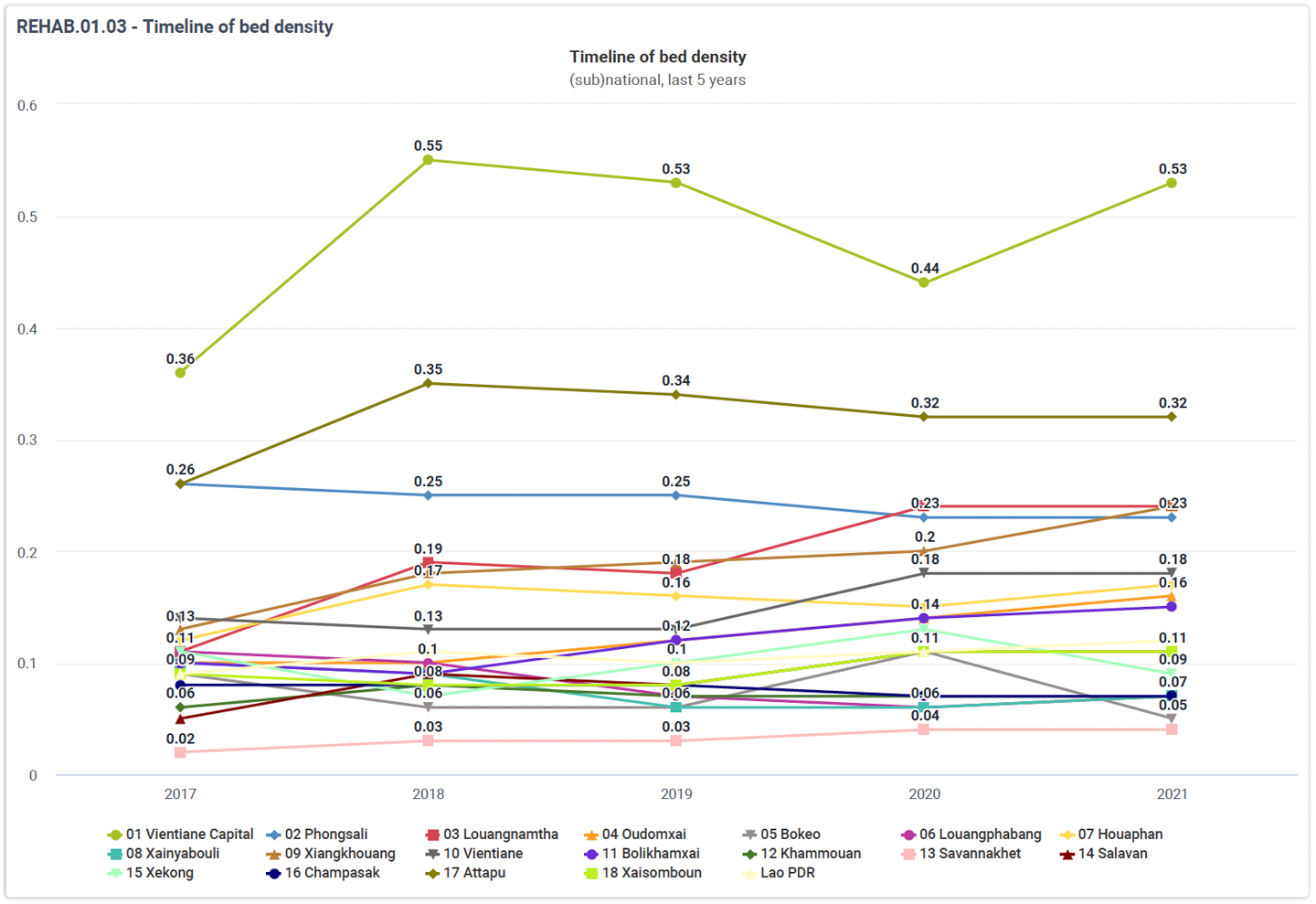
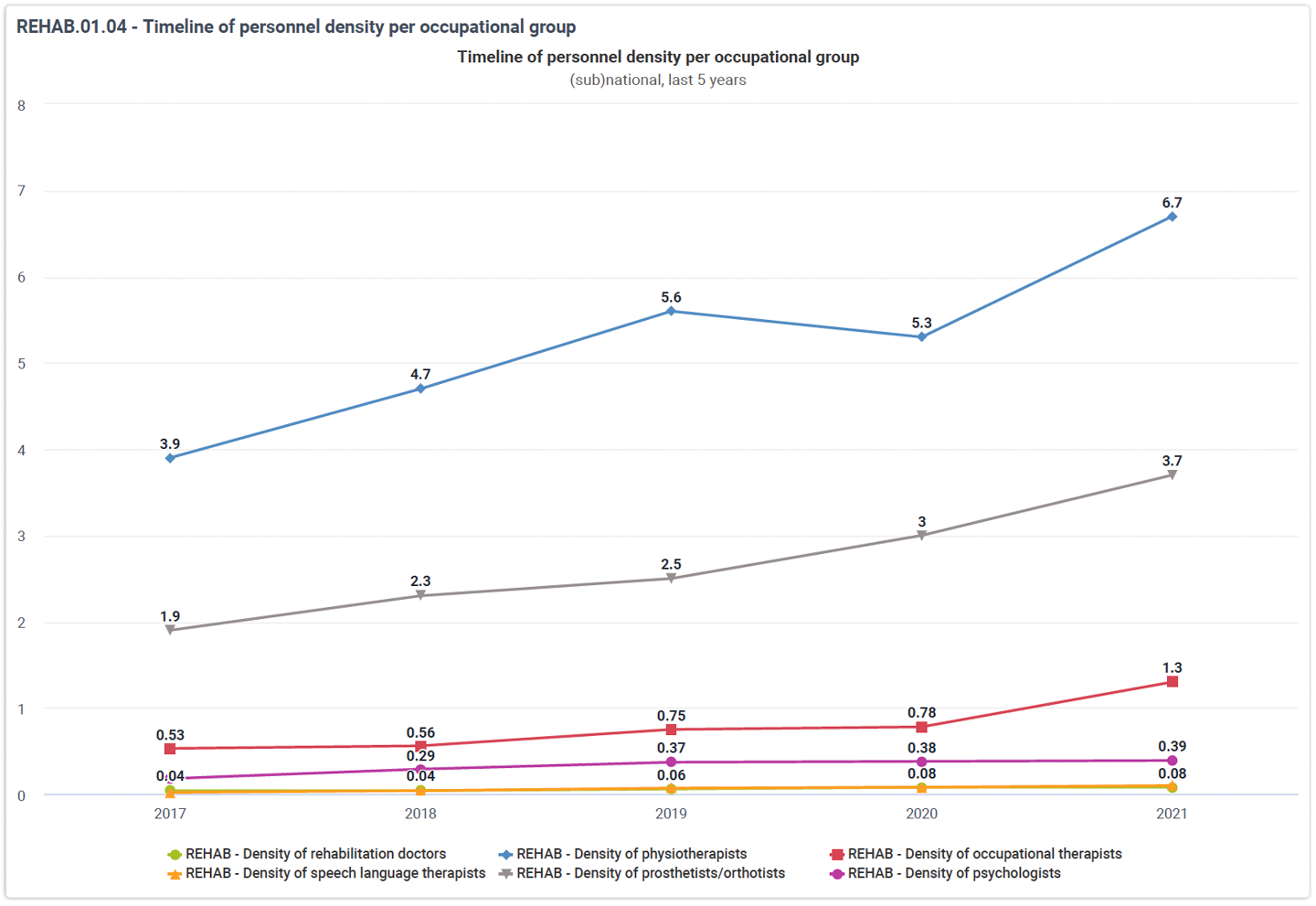
Objectivo: Os dois indicadores densidade de leitos de reabilitação e densidade de pessoal são selecionados para representar esta categoria, pois fornecem informações básicas sobre a disponibilidade de recursos básicos necessários para a prestação de serviços essenciais de reabilitação. Eles avaliam indiretamente a qualidade do sistema de prestação de serviços de reabilitação por meio do conjunto de habilidades dos recursos humanos disponíveis nas instalações. Além dos gerentes de programas de unidades de saúde, essas informações também fazem parte das informações do sistema de saúde que os gerentes de sistemas de saúde precisam para fins de monitoramento, planejamento e coordenação: eles precisam saber se os leitos de reabilitação e os profissionais de saúde estão distribuídos corretamente pelas unidades de saúde e entre os programas, a fim de atender às necessidades das populações-alvo.
01.01 - Bed and overall personnel density, (sub)national, last year
01.02 - Personnel density for different occupational groups (sub)national, last year
01.03 - Time trend of bed density, (sub)national, last 5 years
01.04 - Timeline of personnel density per occupational group, (sub)national, last 5 years
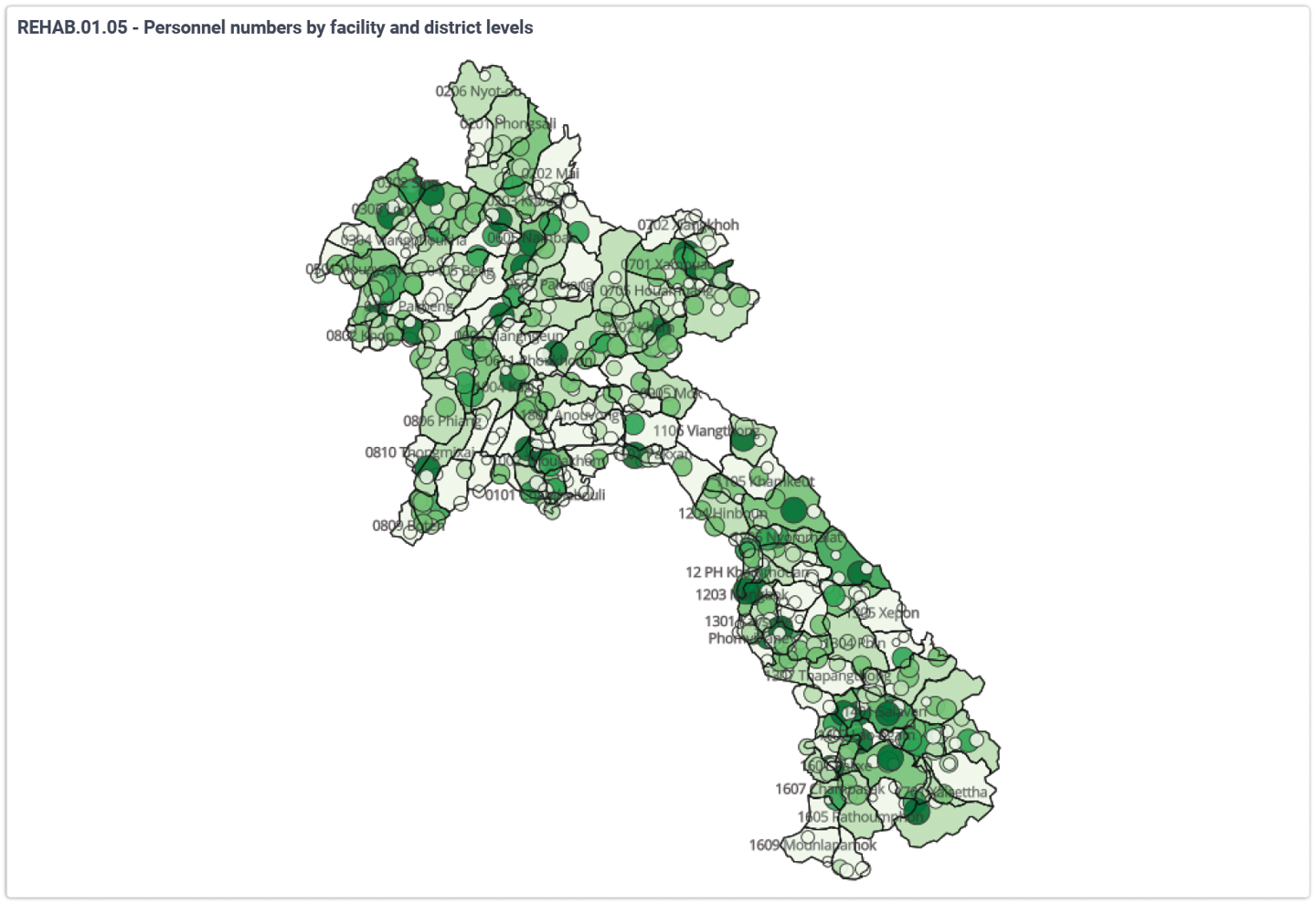
01.05 - Map of facilities and number of rehabilitation personnel, last year
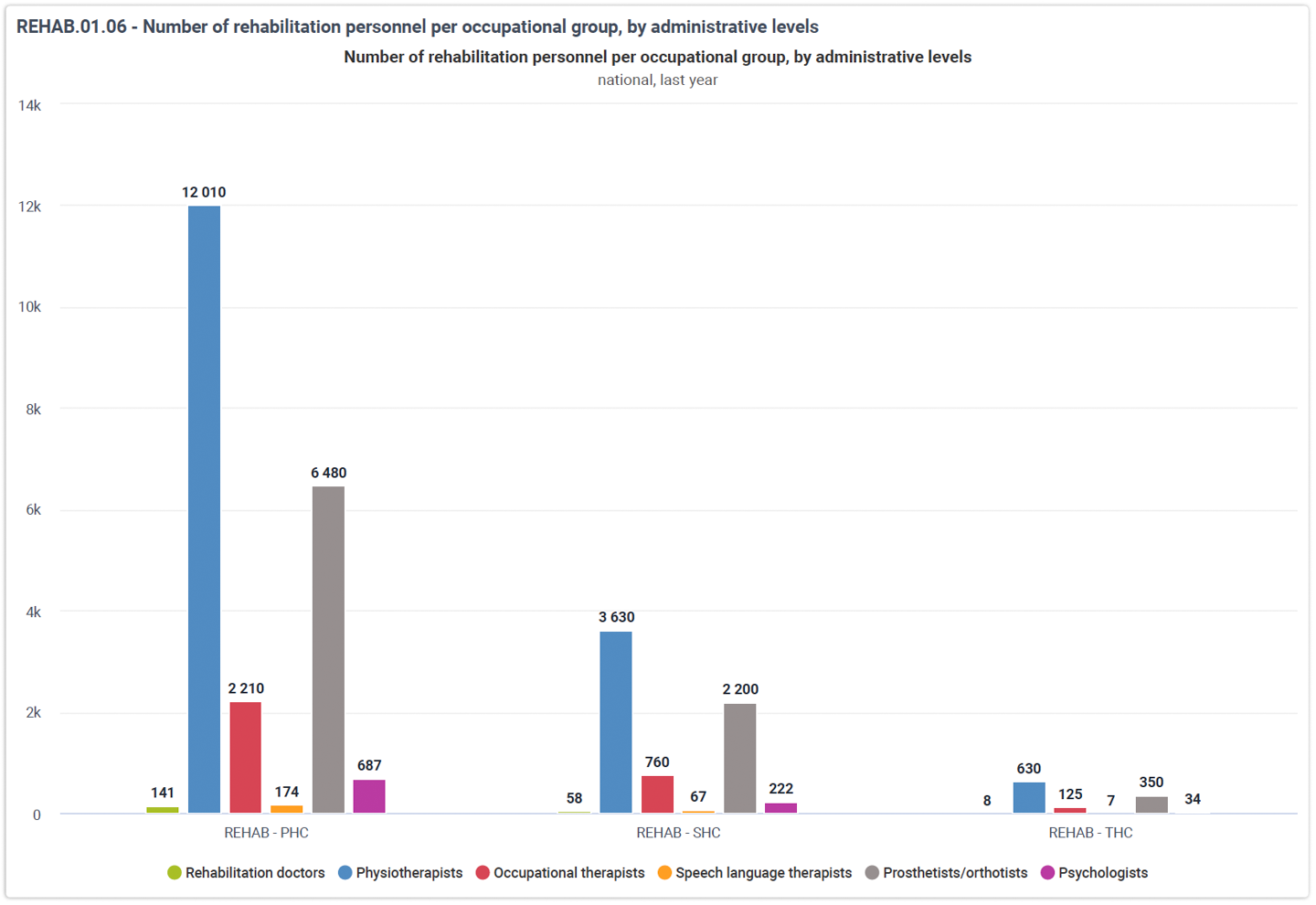
01.06 - Number of rehab personnel per occupational group, by administrative levels, national, last year
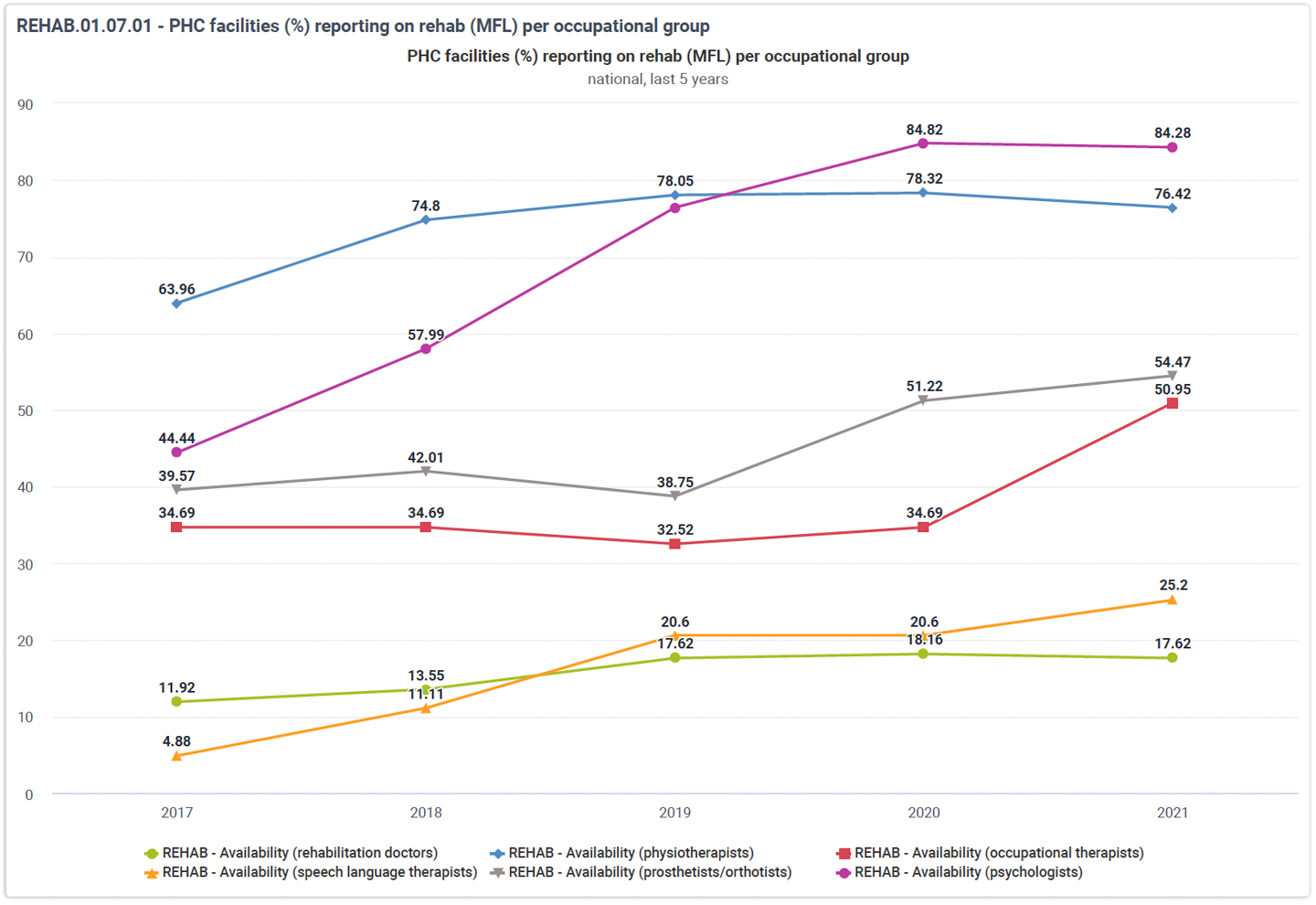
01.07.01 - Facilities (%) reporting on rehab (MFL) per occupational group, PHC level, national, last 5 years
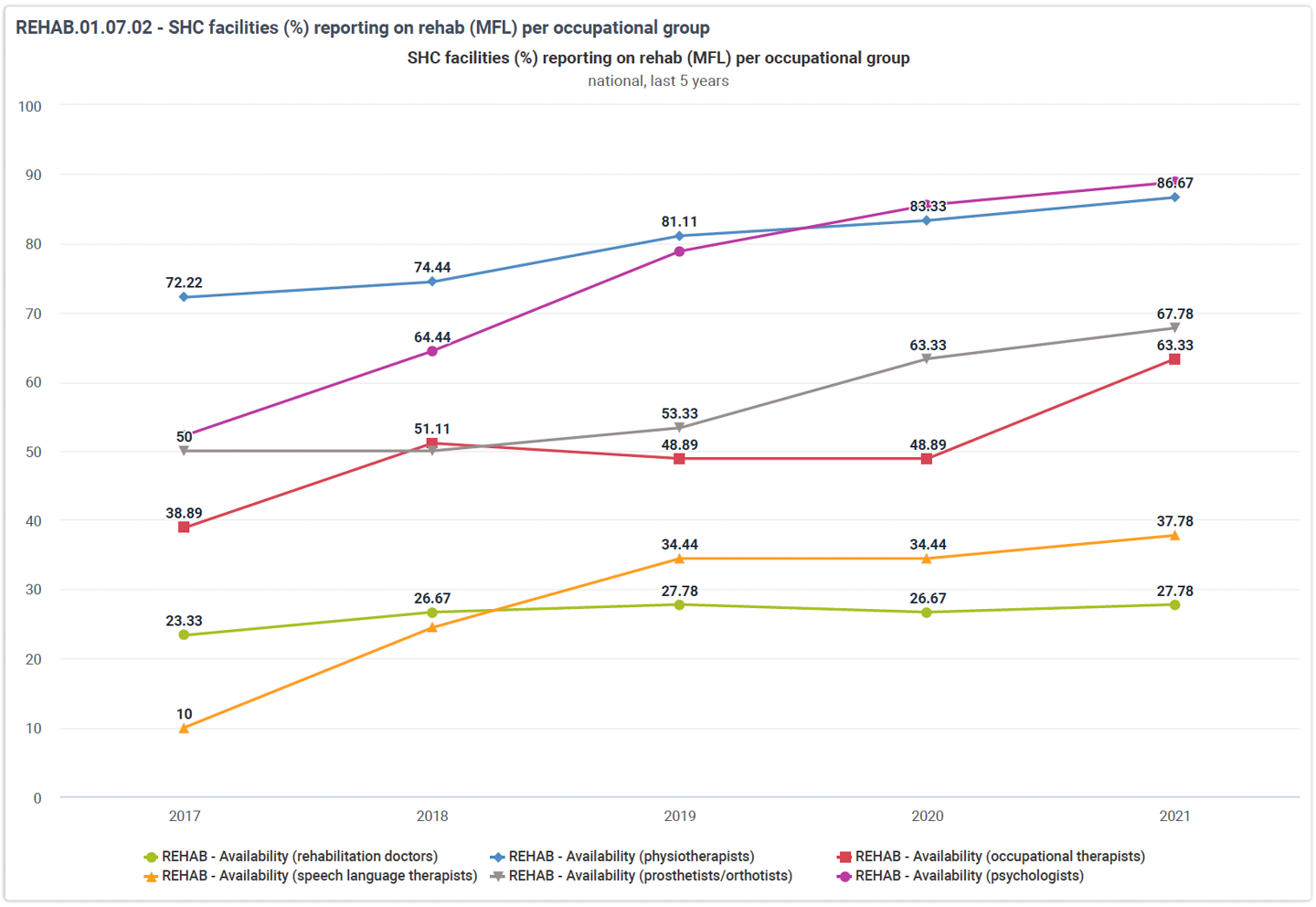
01.07.02 - Facilities (%) reporting on rehab (MFL) per occupational group, SHC level, national, last 5 years
01.07.03 - Facilities (%) reporting on rehab (MFL) per occupational group, THC level, national, last 5 years
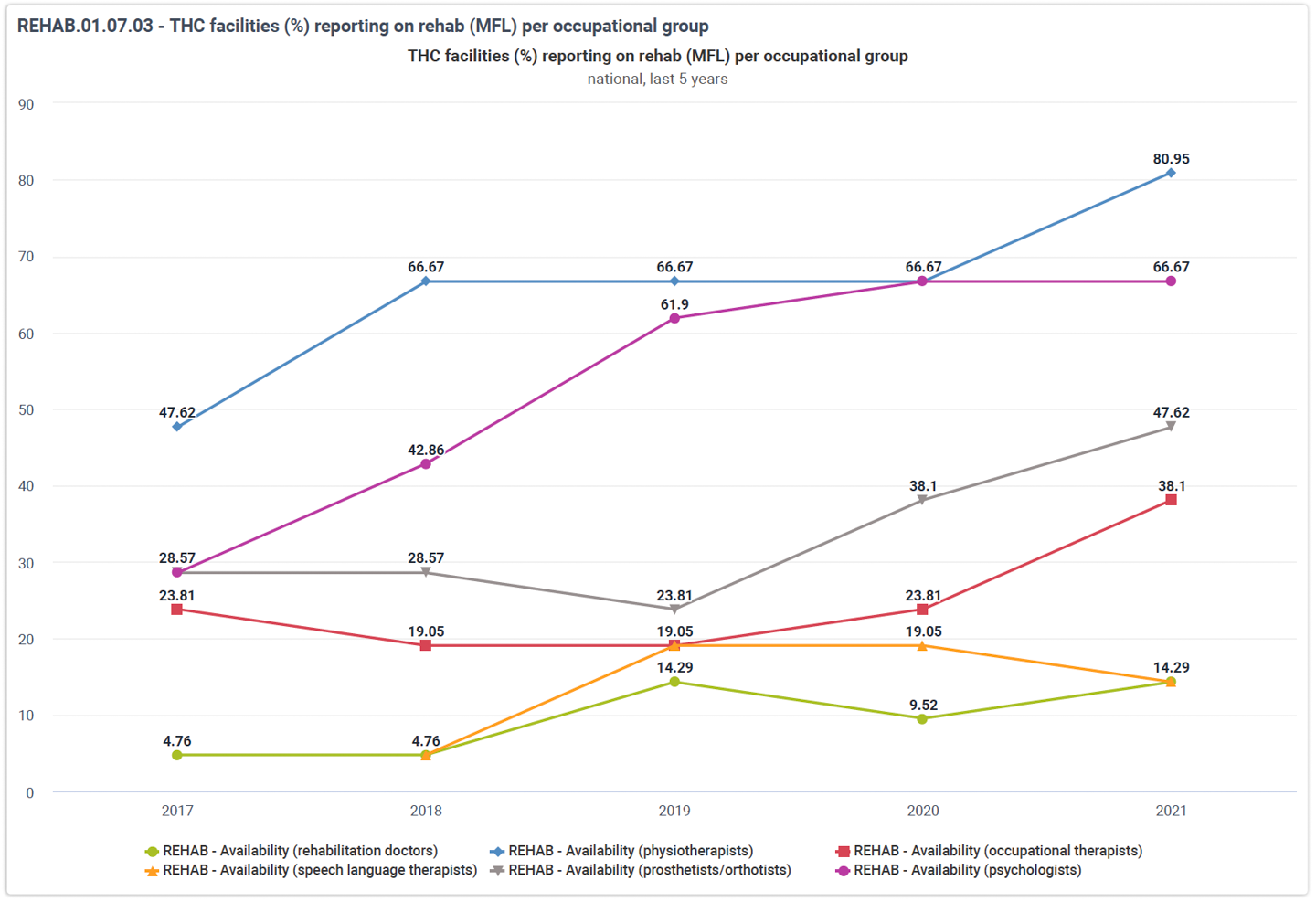
REHAB.02 - Output / Rehabilitation-specific service availability
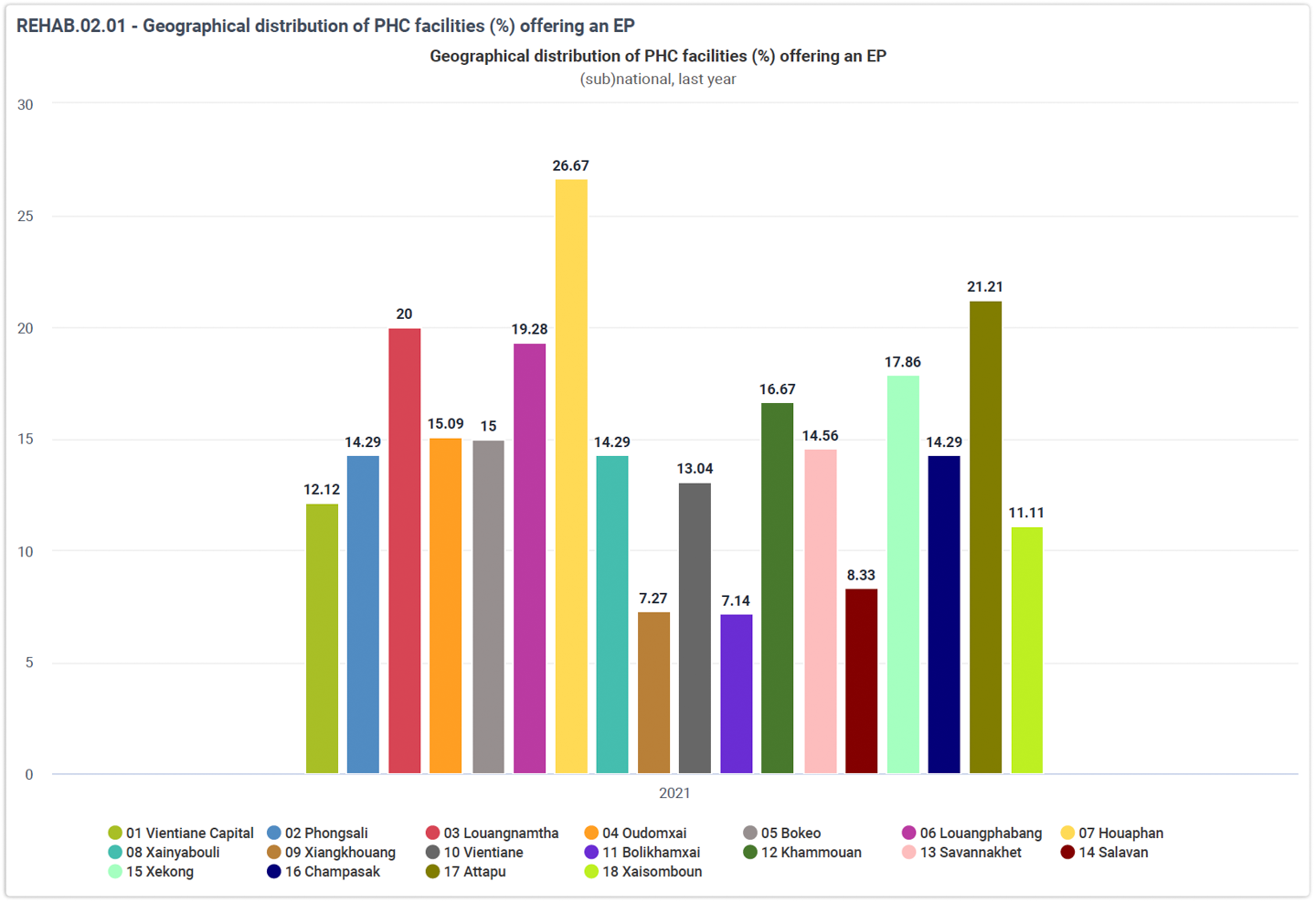
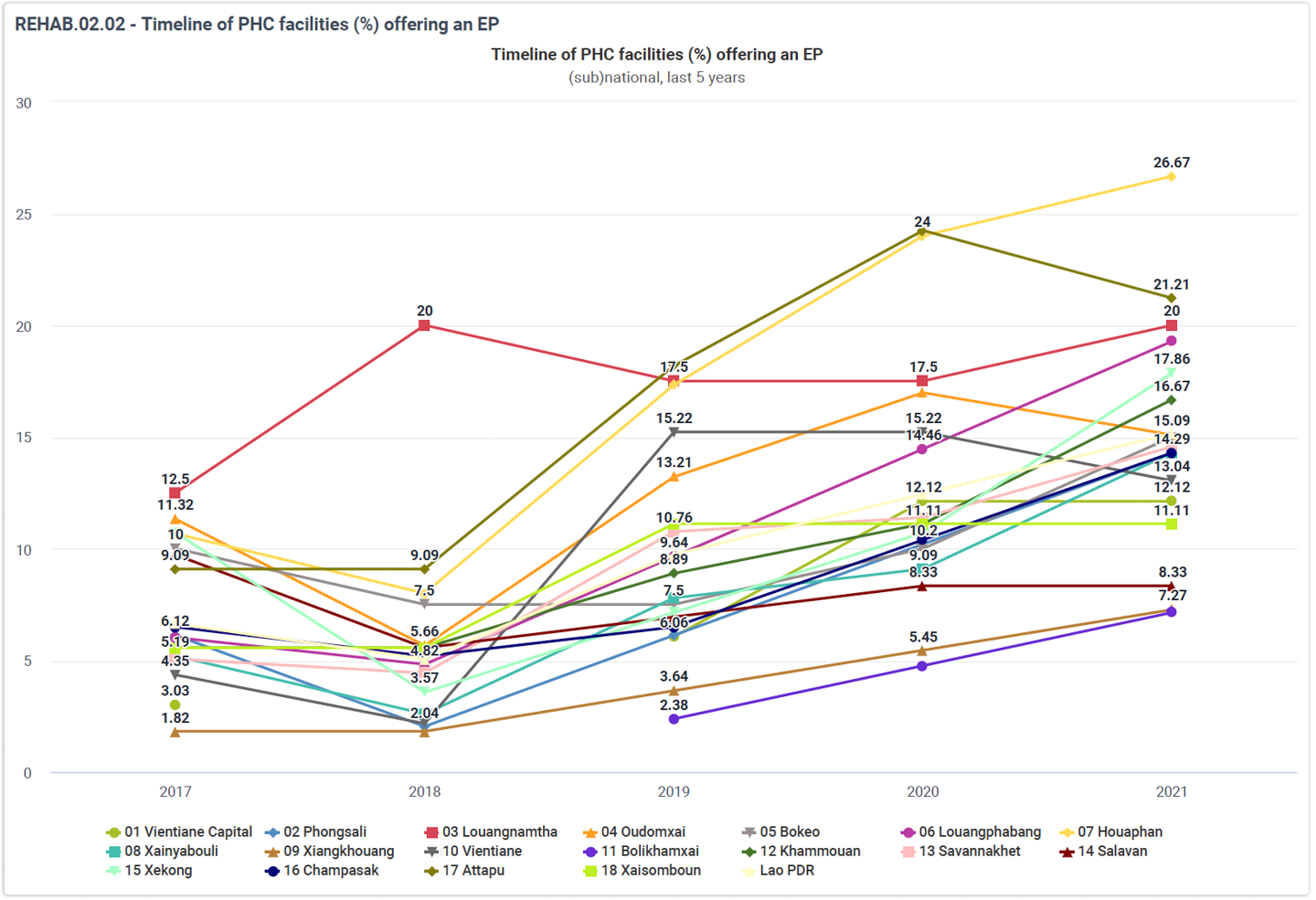
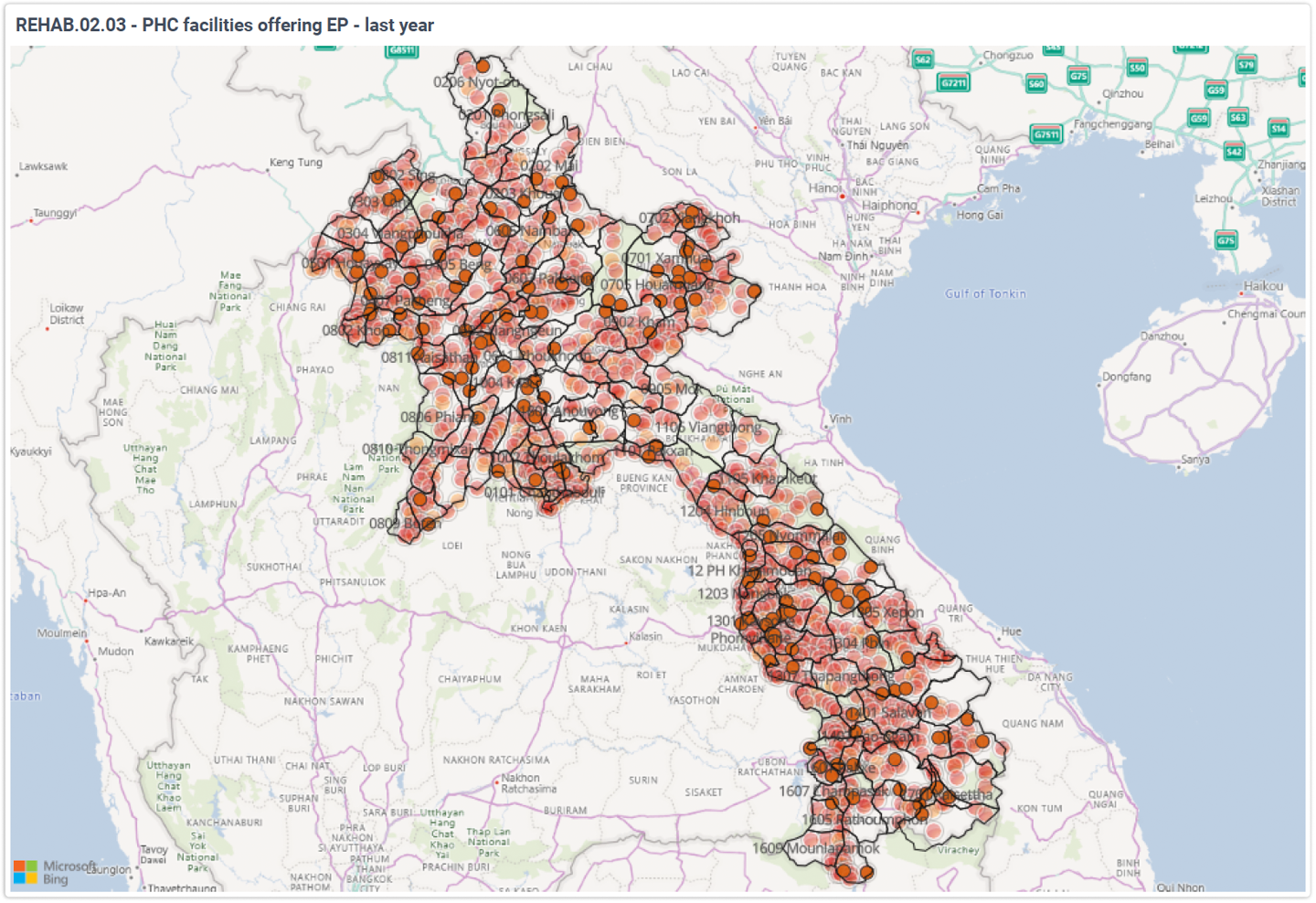
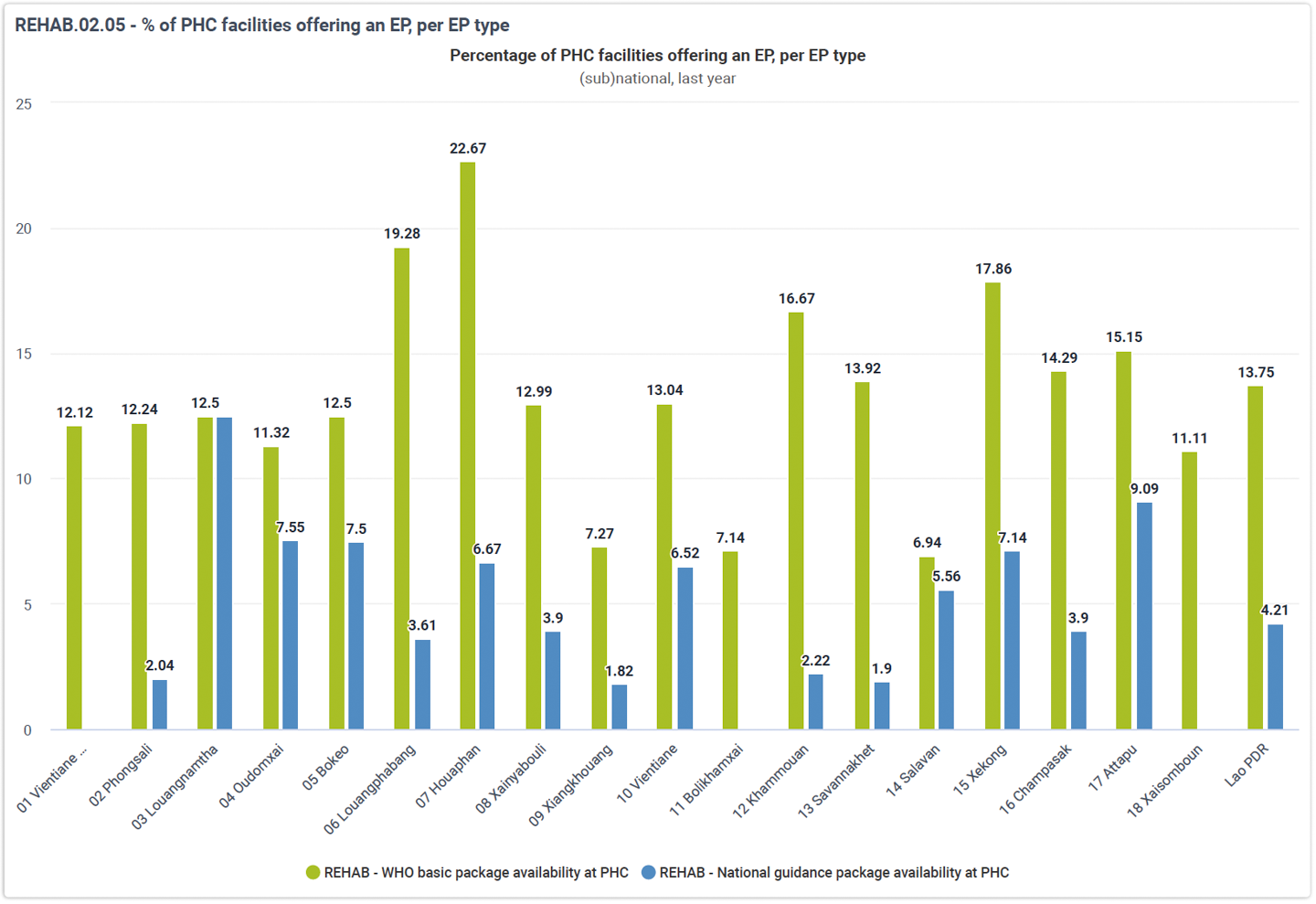
Objetivo: A OMS recomenda a disponibilidade de um Pacote Essencial (EP) para reabilitação em nível de Atenção Primária à Saúde (PHC) para alcançar a Cobertura Universal de Saúde (UHC). Esse indicador mede a porcentagem de unidades de PHC que oferecem 1 ou mais pacotes essenciais recomendados (com um como requisito mínimo) e fornece informações sobre o status da implementação dessa recomendação nos países. O indicador listará todas as instalações que oferecem pelo menos 1 dos pacotes selecionados, enquanto os países podem desagregar ainda mais os tipos de pacotes essenciais.
02.01 - Distribuição geográfica das unidades de PHC (%) com EP, (sub)nacional, ano passado
02.02 - Cronograma das unidades de PHC (%) oferecendo um EP, (sub)nacional, últimos 5 anos
02.03 - Mapa das unidades de PHC que oferecem dados de utilização ambulatorial de EP e distrital, no ano passado
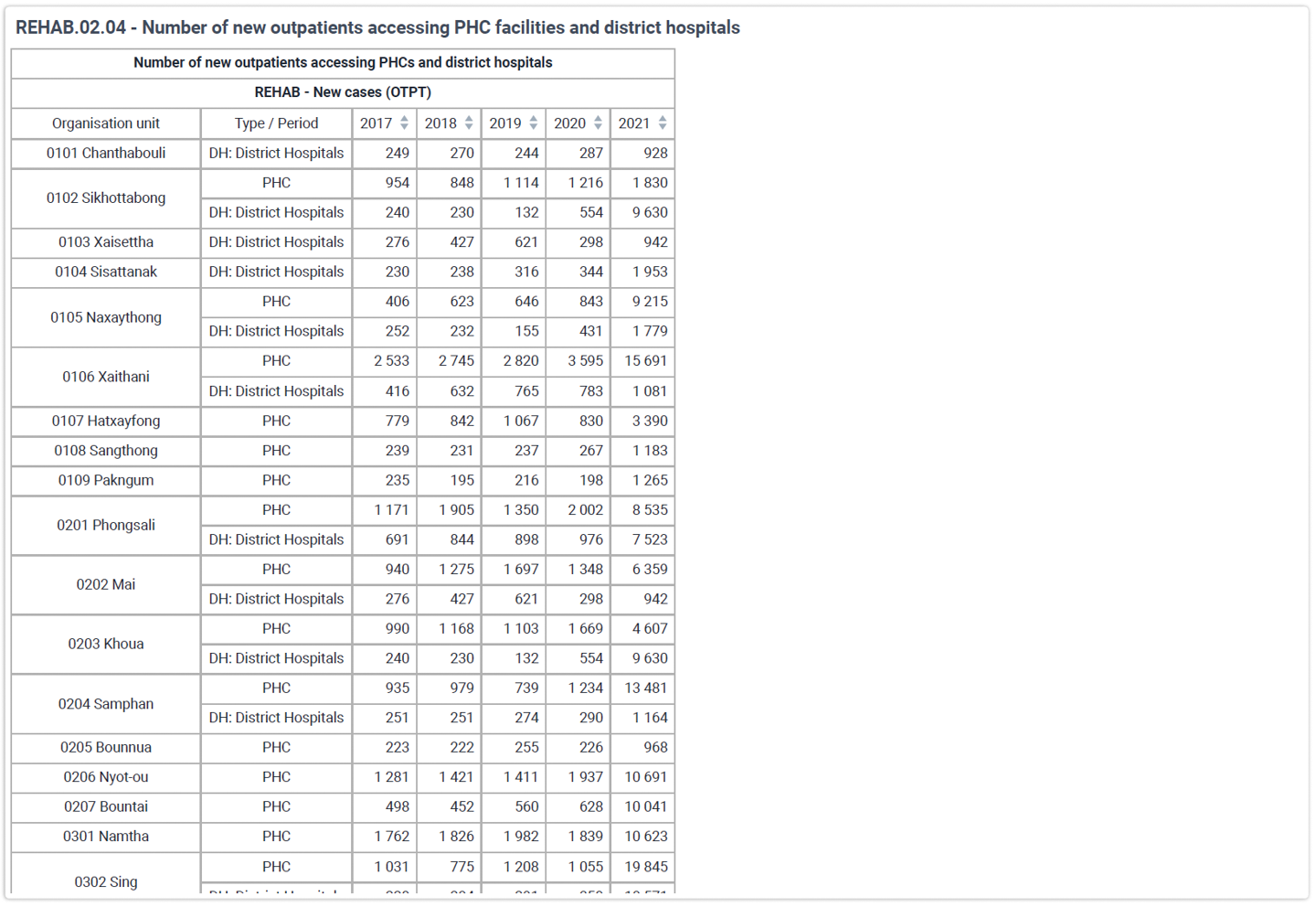
02.04 - Número de novos utentes ambulatoriais com acesso aos PHCs e hospitais distritais, por distritos, nos últimos 5 anos
02.05 - Percentagem de unidades de PHC que oferecem um EP, por tipo de EP, (sub)nacional, no ano passado
REHAB.03 - Output / Rehabilitation service utilization
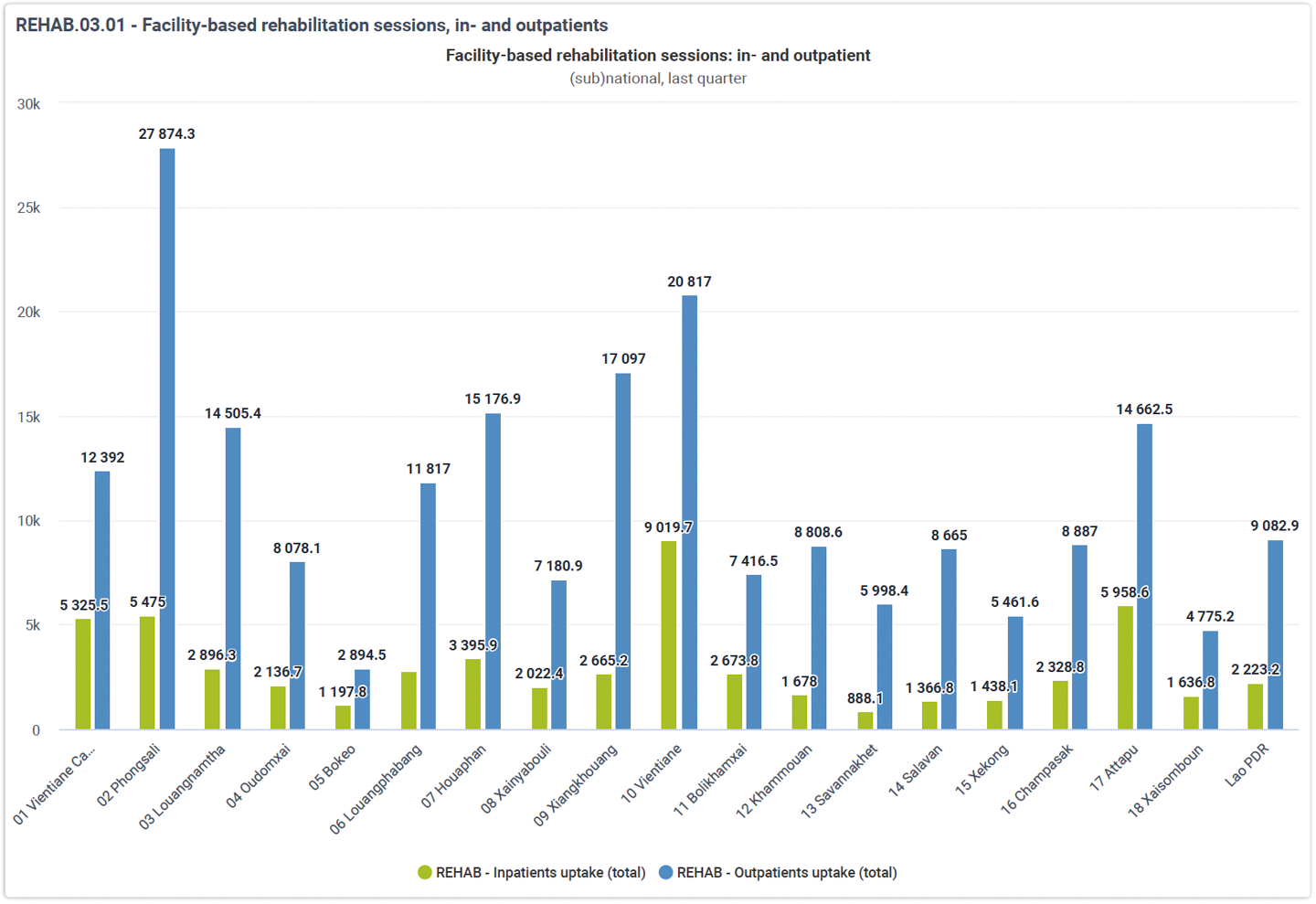
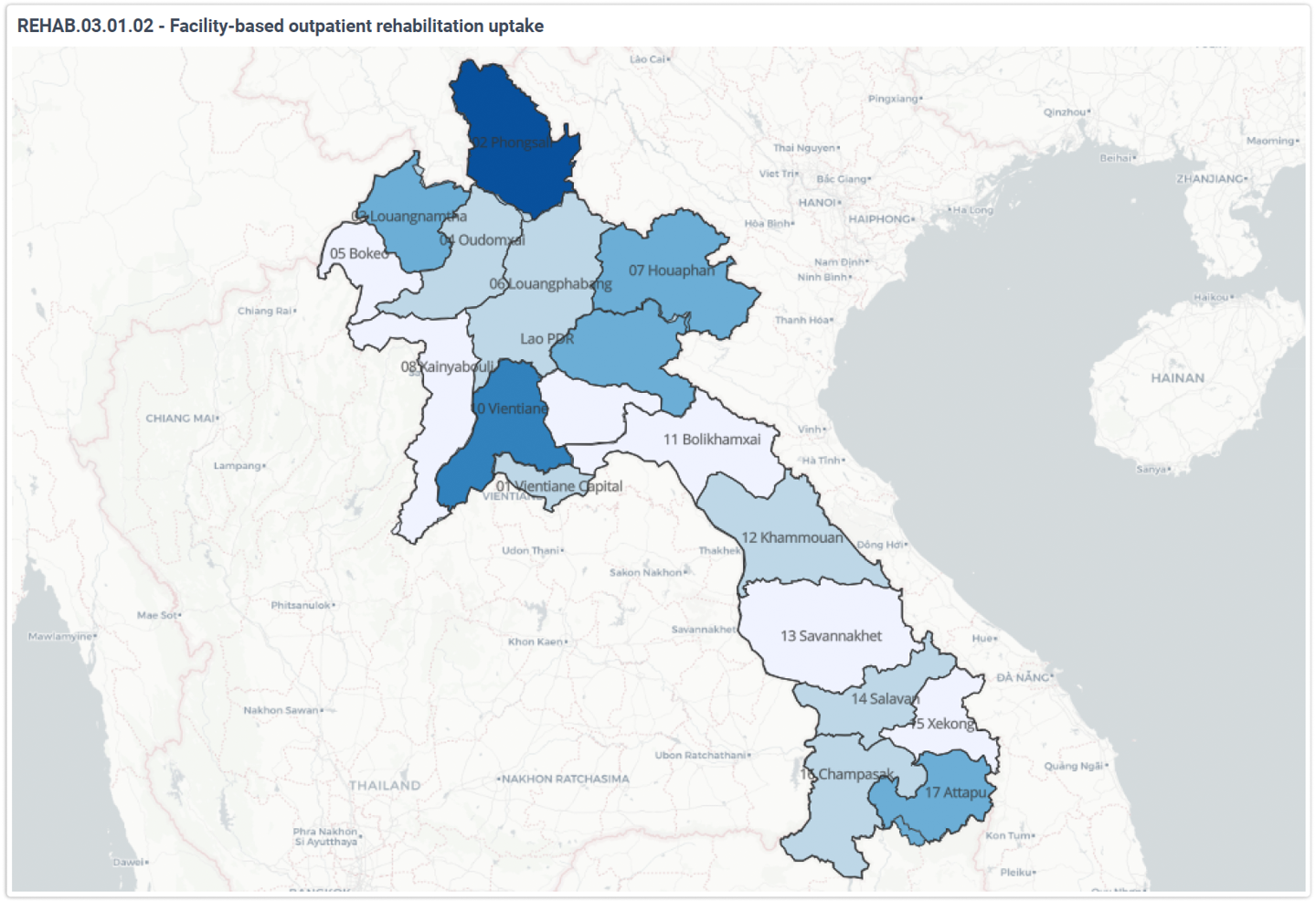
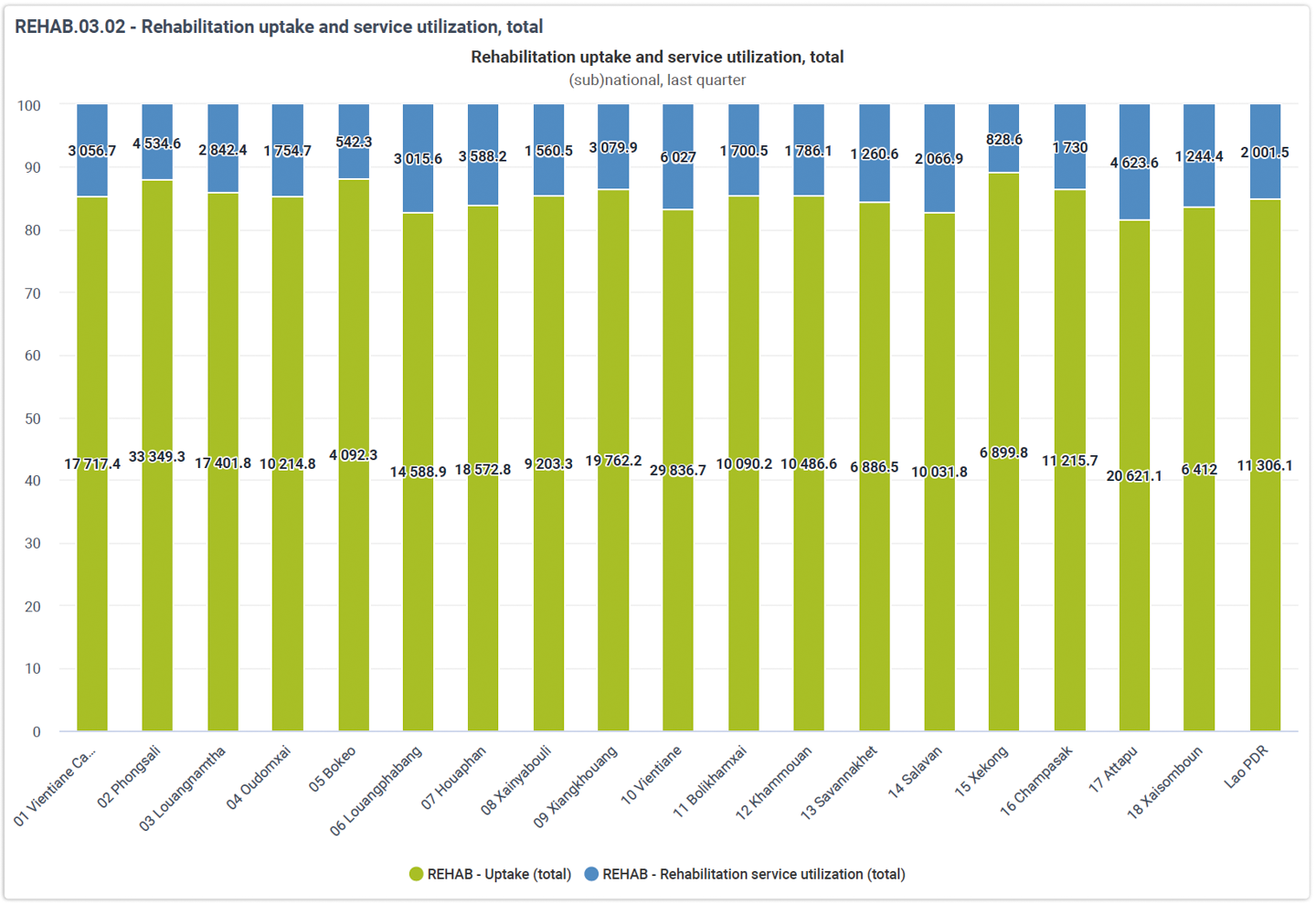
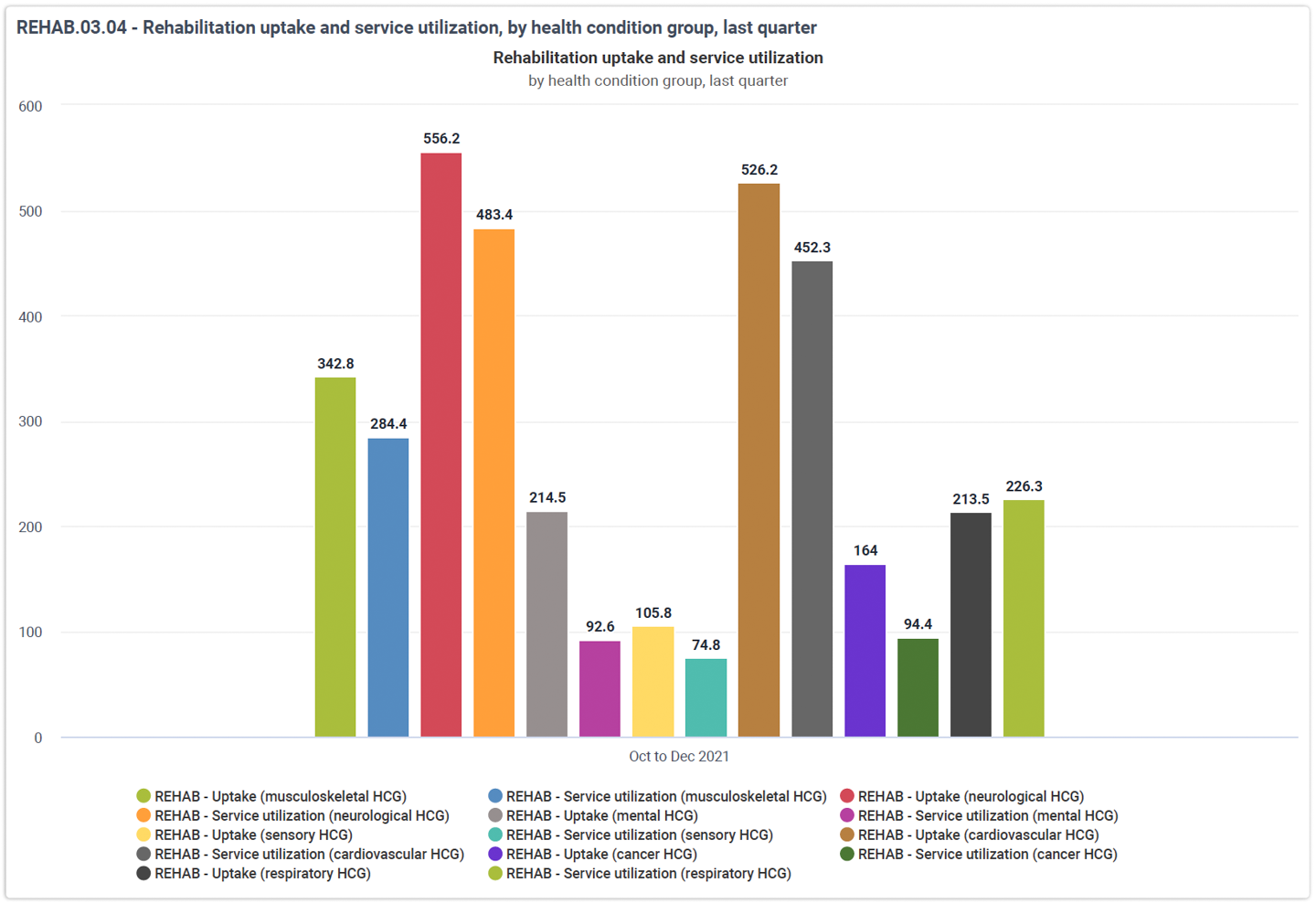
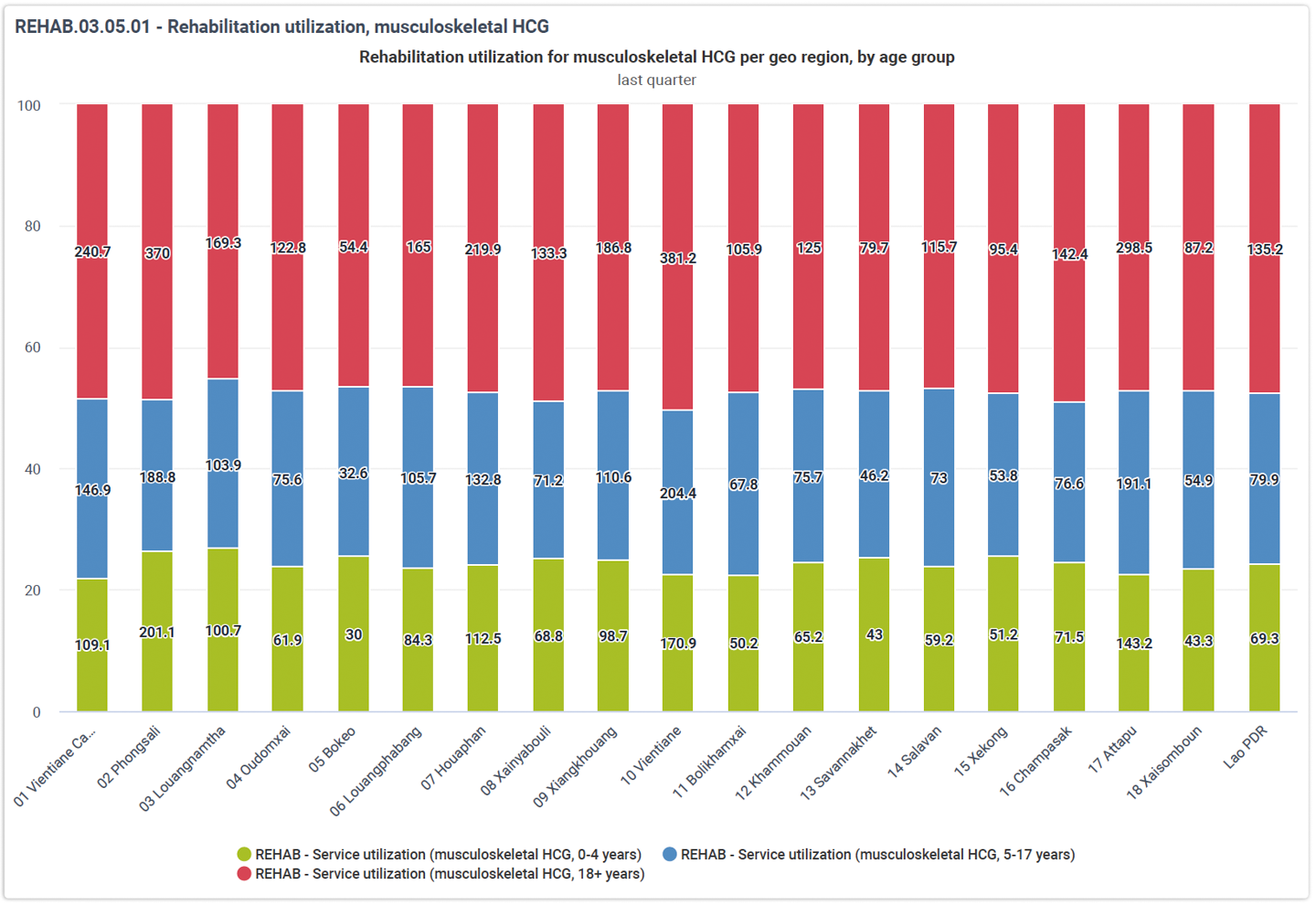
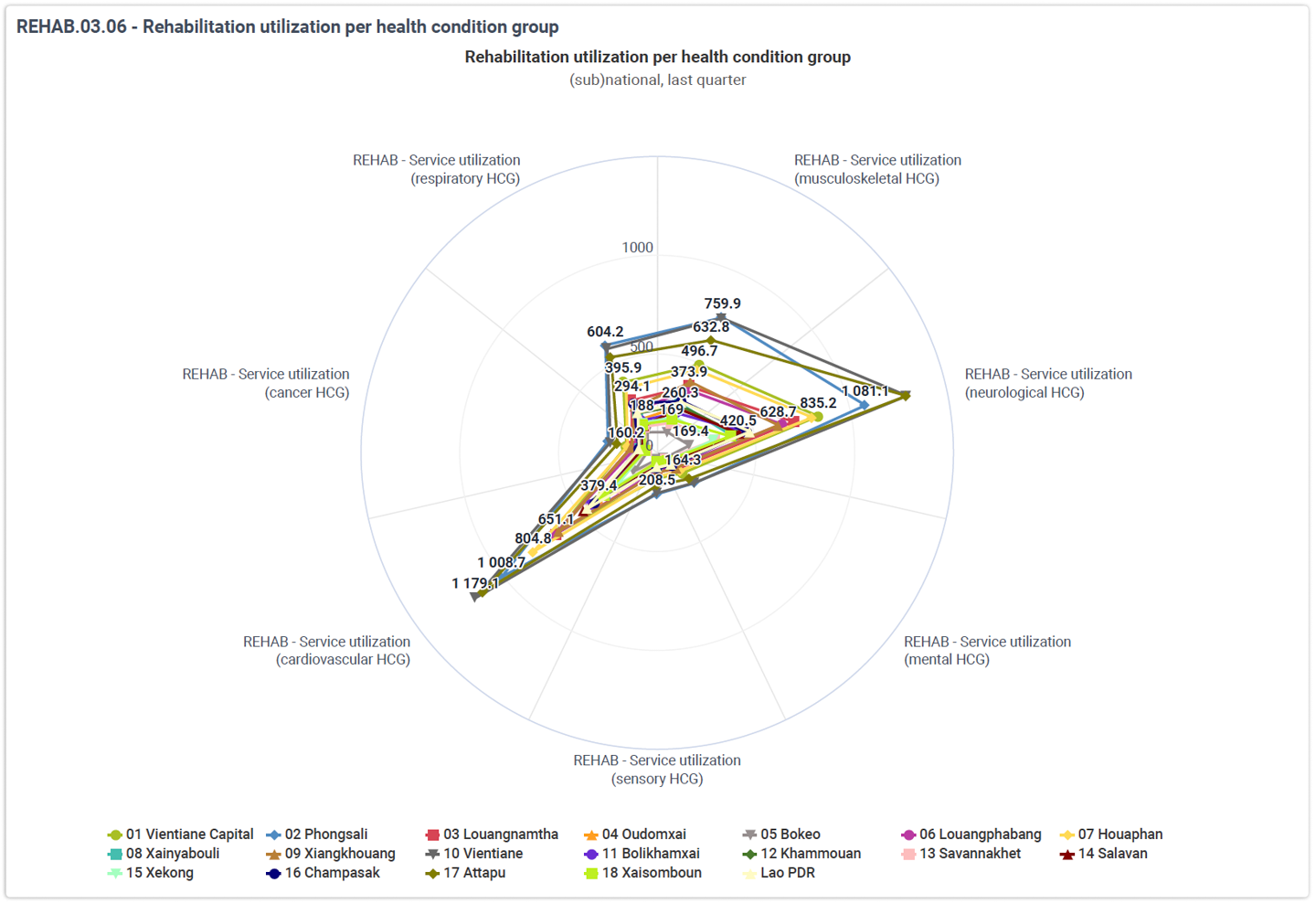
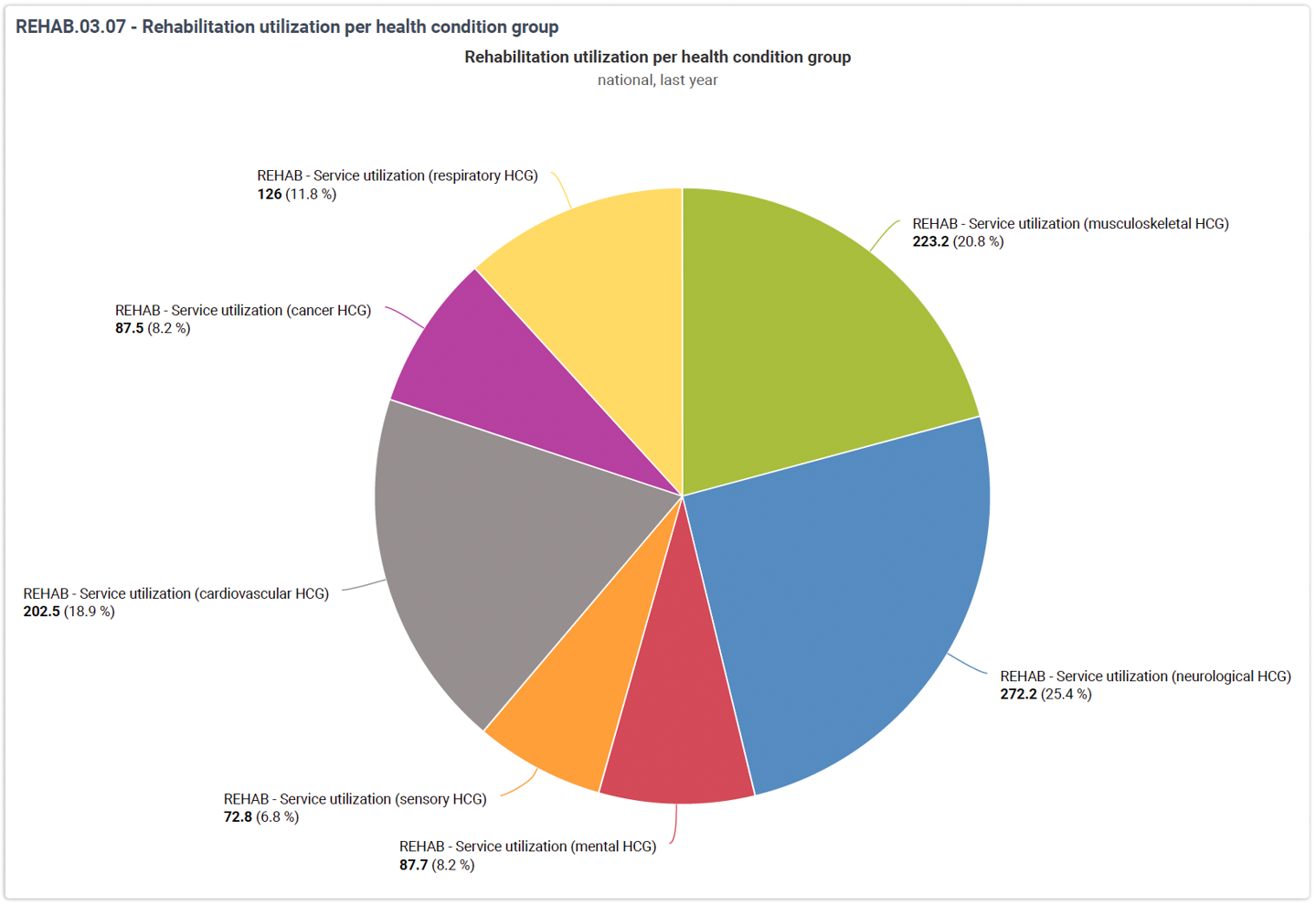
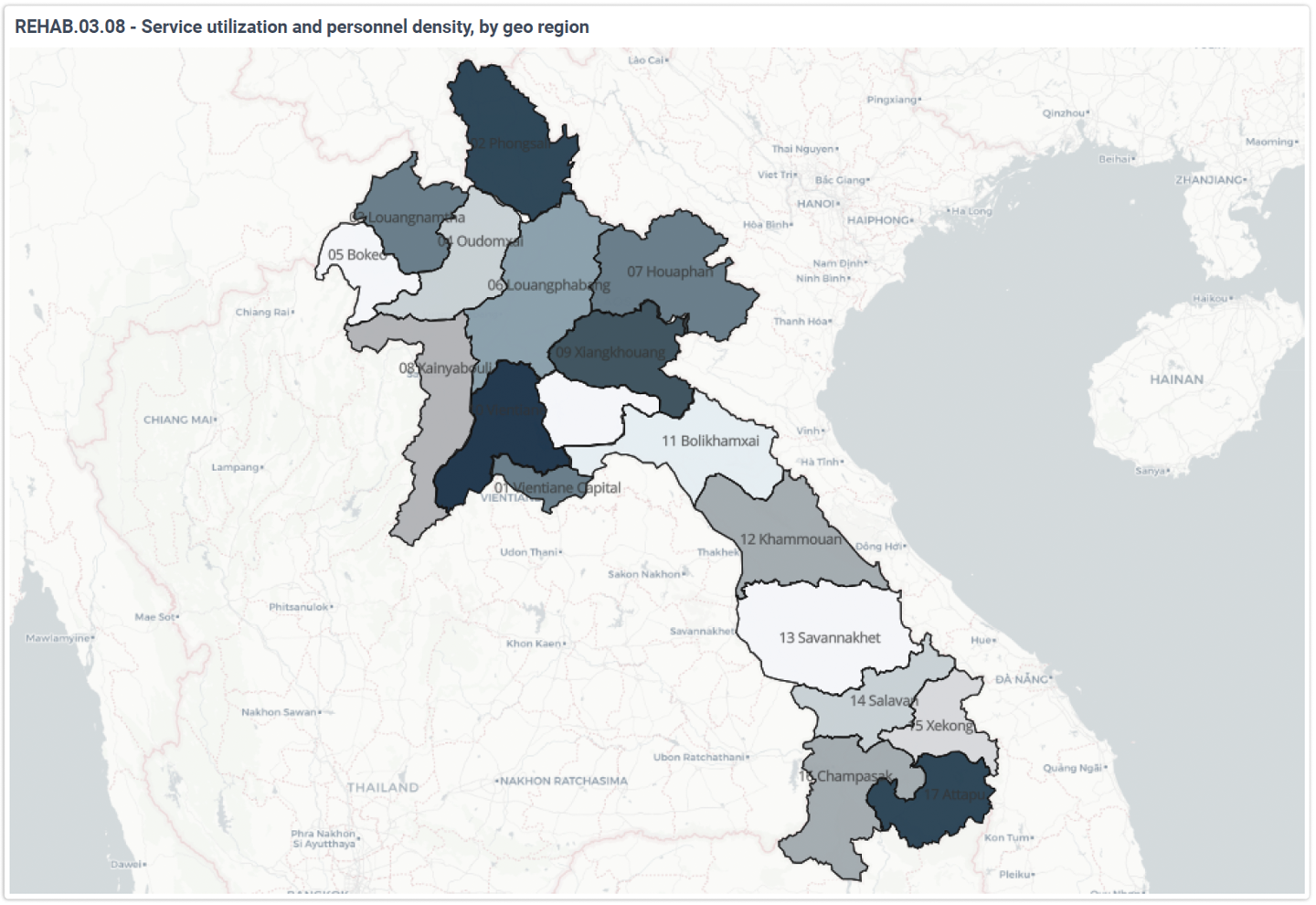
Purpose: Rehabilitation service utilization is indicative for rehabilitation accessibility. This part of the indicator set measures the number of rehabilitation sessions and new clients by preset health condition group, the number of assistive products issued, and the number of rehabilitation sessions provided through outreach programs.
03.01 - Facility-based rehabilitation uptake: in- and outpatient, (sub)national, last quarter (user organisation unit)
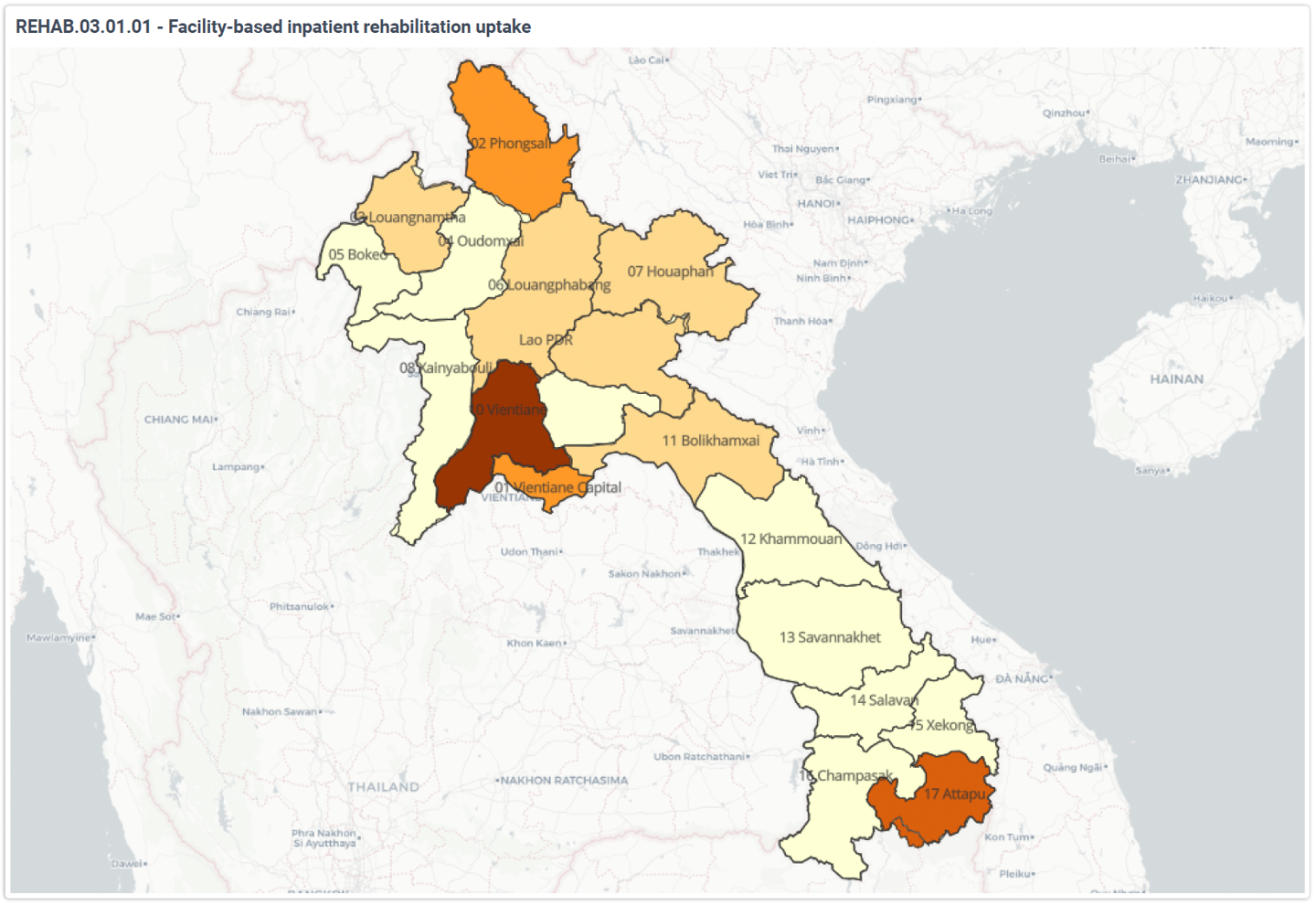
03.01.01 - Map of facility-based inpatient rehabilitation uptake, last year (user organisation unit)
03.01.02 - Map of facility-based outpatient rehabilitation uptake, last year (user organisation unit)
03.02 - Rehabilitation uptake and service utilization, total, (sub)national, last quarter (user organisation unit)
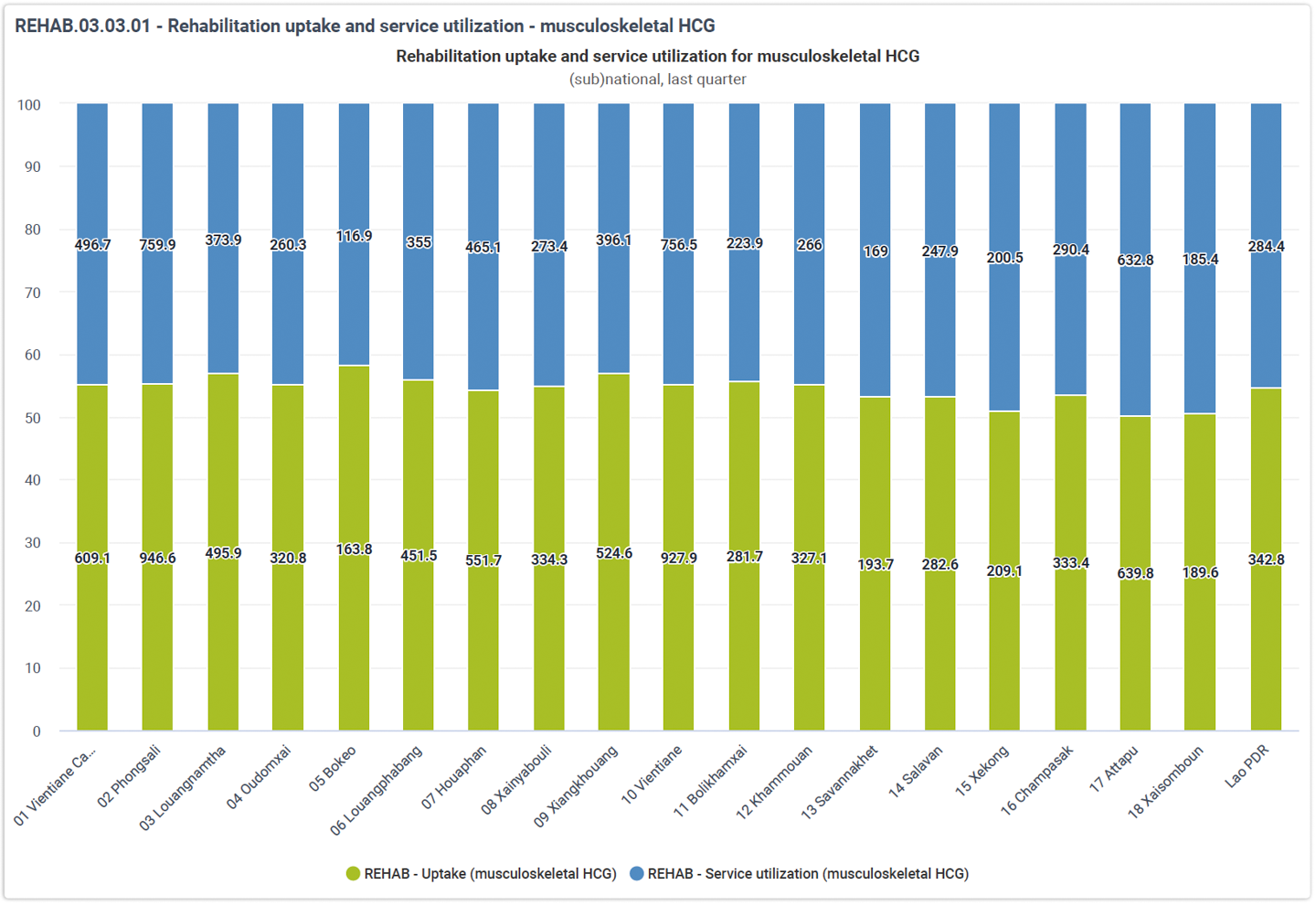
03.03.01 - Rehabilitation uptake and service utilization for selected health condition group, (sub)national, last quarter
03.04 - Rehabilitation uptake and service utilization, by health condition group, last quarter (user organisation unit)
03.05.01 - Rehabilitation utilization for specific health condition group per geo region, by age group, last quarter (user organisation unit)
03.06 - Rehabilitation utilization per health condition group, (sub)national, last quarter (user organisation unit)
03.07 - Rehabilitation utilization per health condition group, national, last year (user organisation unit)
03.08 - Map of service utilization and personnel density, by districts, (sub)national, last year
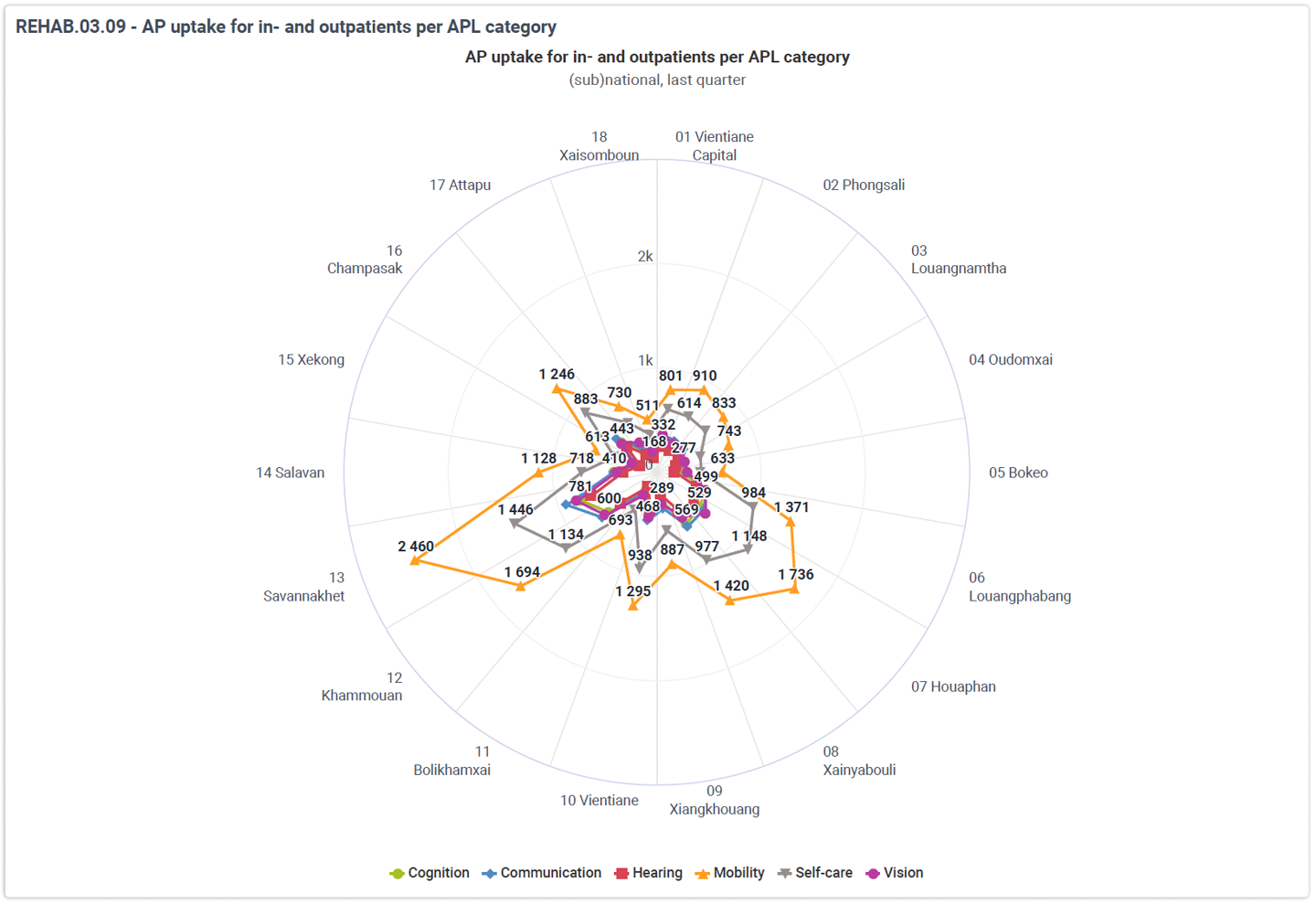
03.09 - AP uptake for in- and outpatients per APL category, (sub)national, last quarter (user organisation unit)
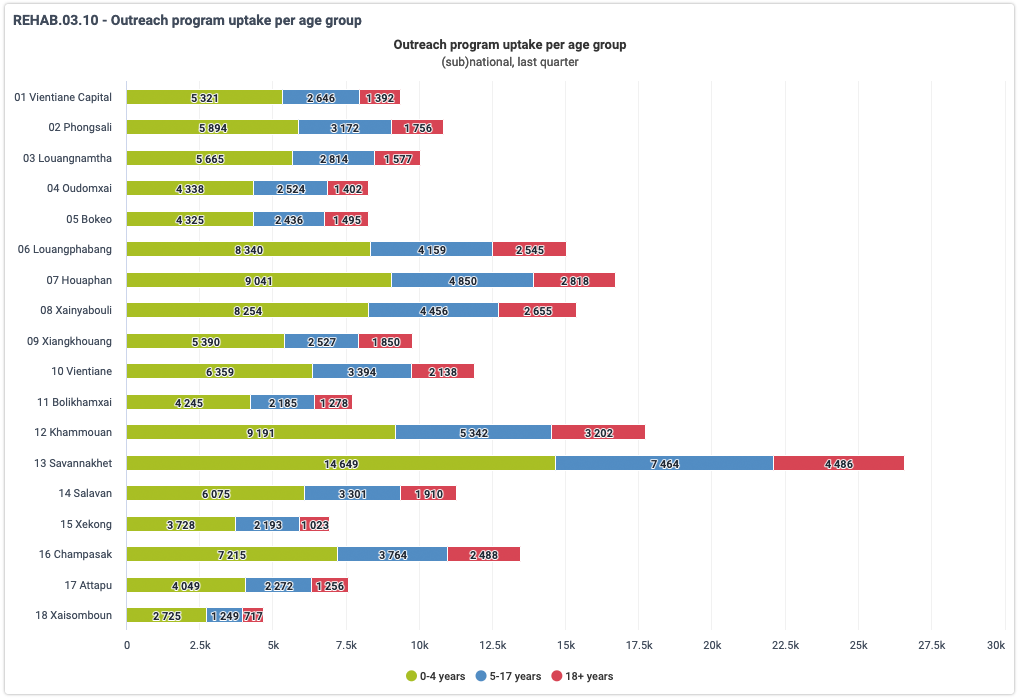
03.10 - Outreach program uptake per age group, (sub)national, last quarter (user organisation unit)
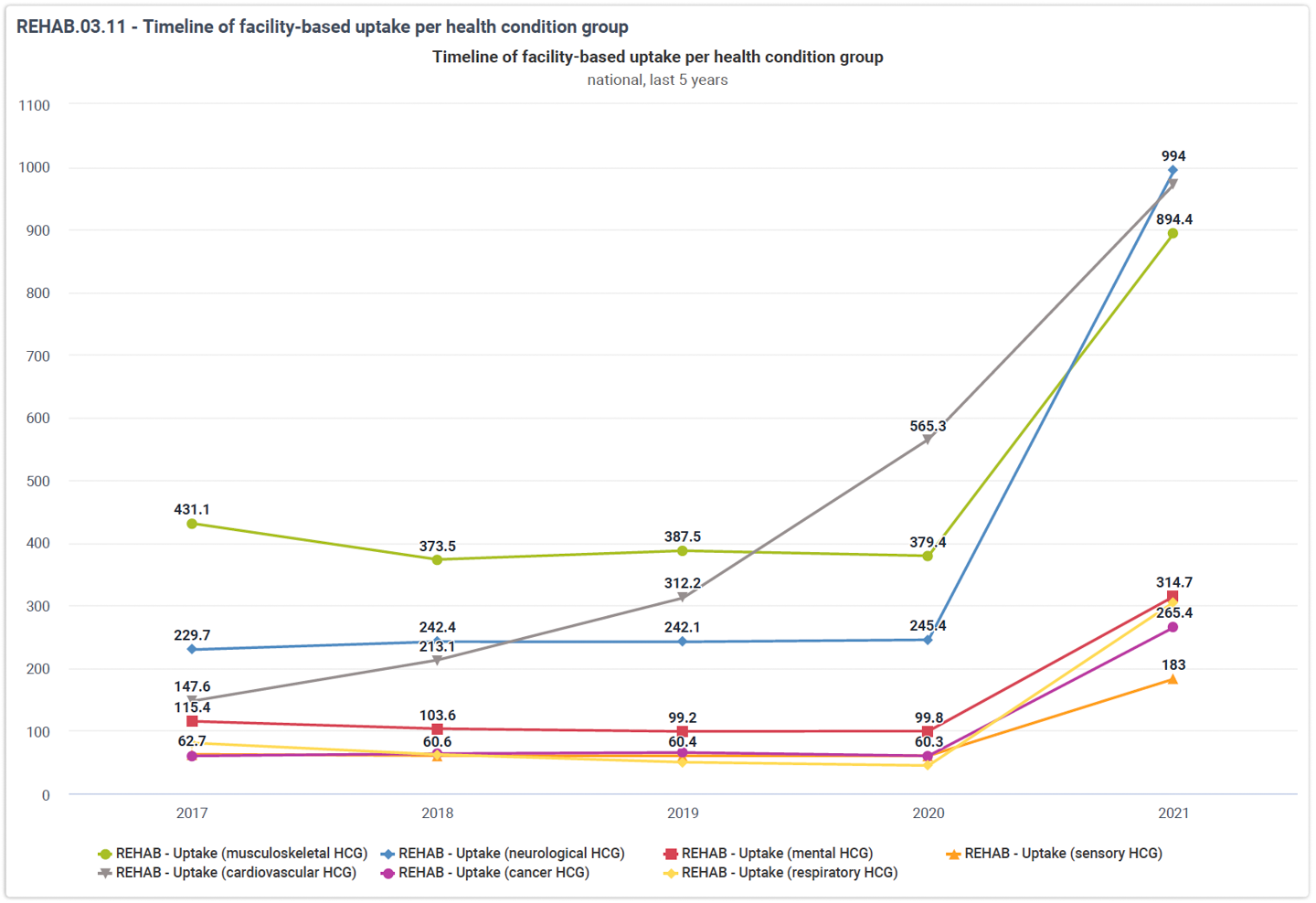
03.11 - Timeline of facility-based uptake per health condition group, national, last 5 years (user organisation unit)
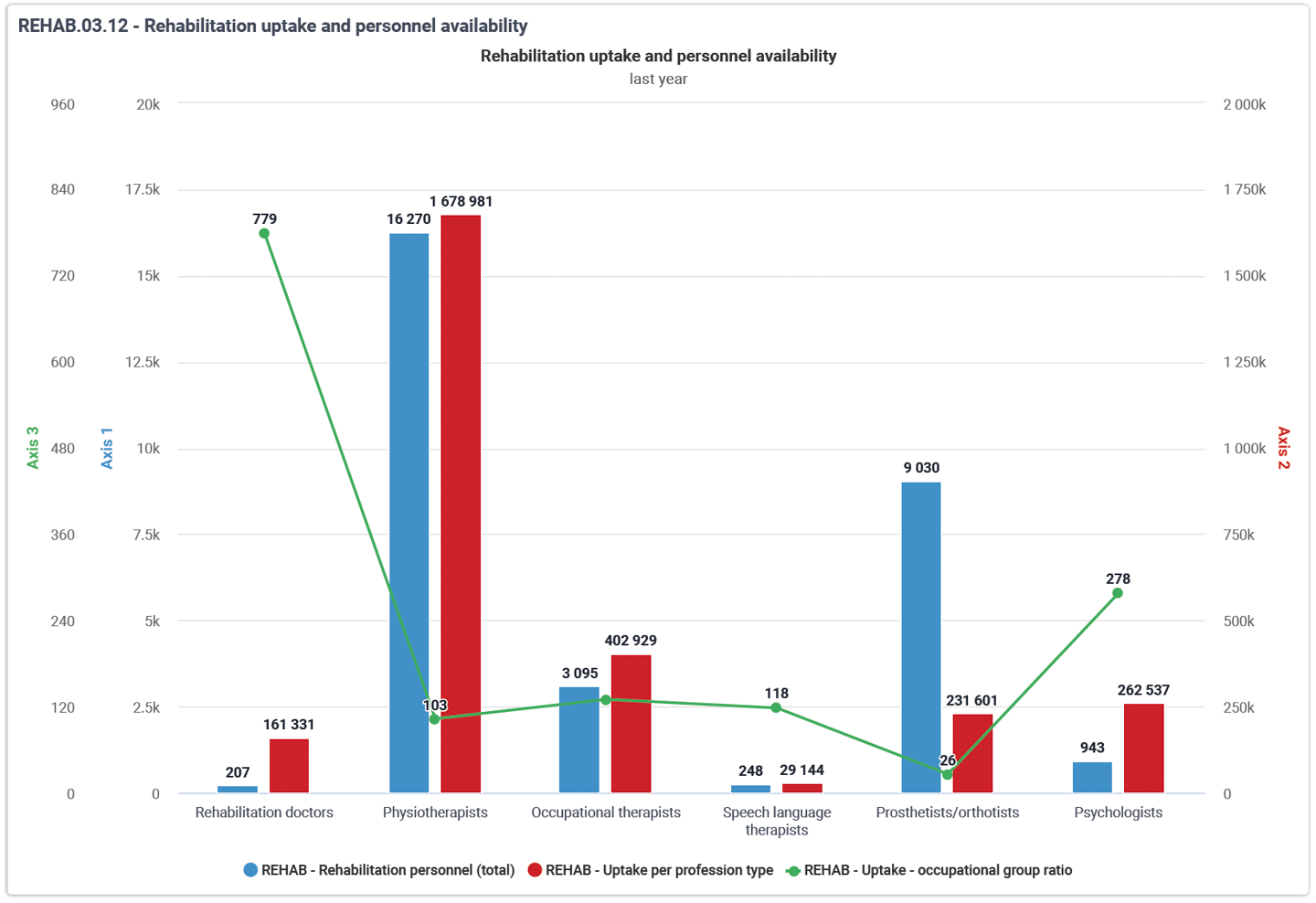
03.12 - Rehabilitation uptake and personnel availability, last year (user organisation unit)
REHAB.04 - Output / Rehabilitation service quality
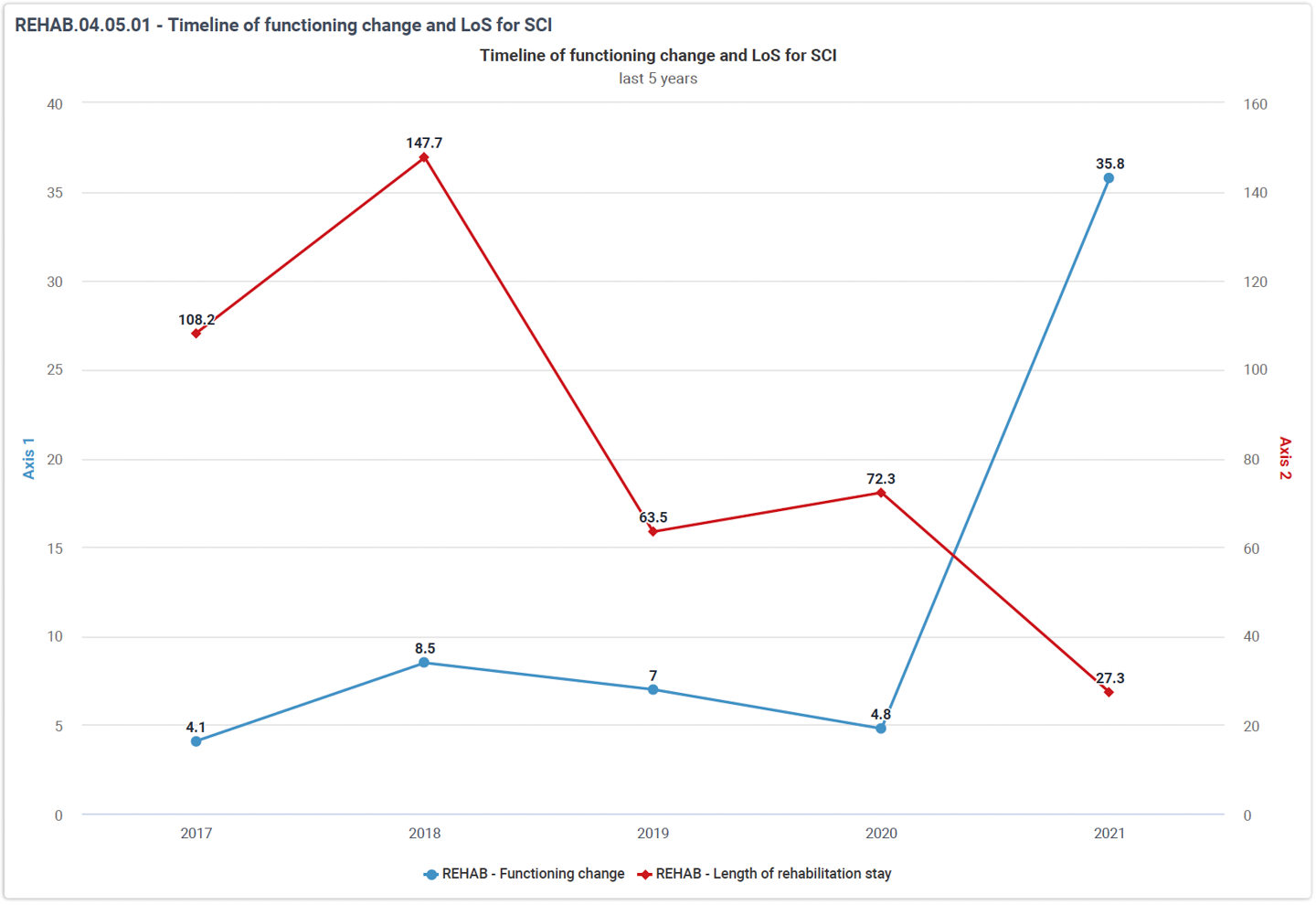
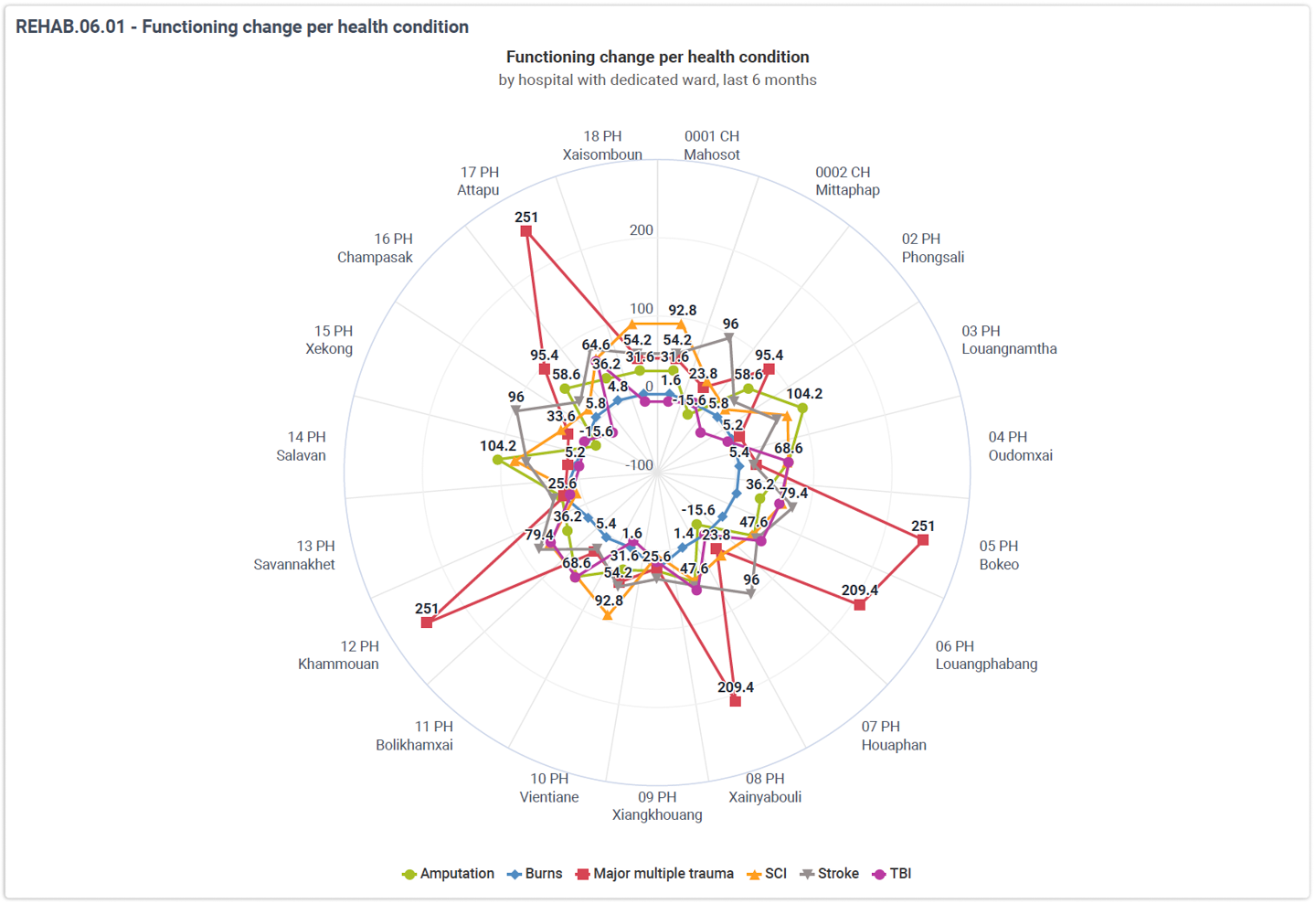
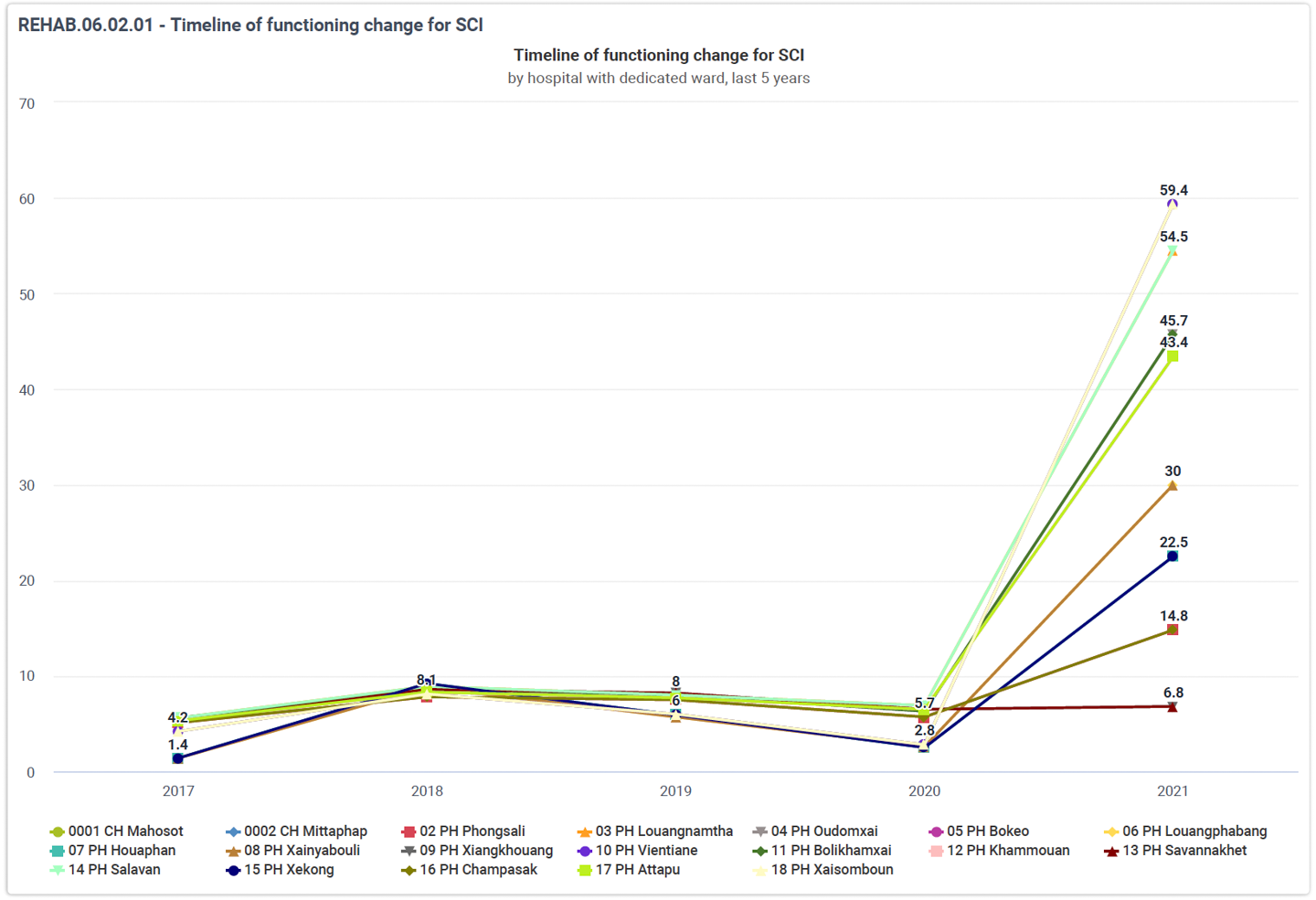
Purpose: Measures of quality and services outcome for dedicated inpatient rehabilitation are particularly interesting for managers. An individualised care plan contributes to better rehabilitation outcomes for clients, and the length of a rehabilitation stay informs assessment of effectiveness and efficiency. Scoring the functioning change over the rehabilitation episode produces a measure of the outcome of the rehabilitation episode. A gain in functioning reflects an increased ability of independent living and societal participation, which is the overall aim of rehabilitation.
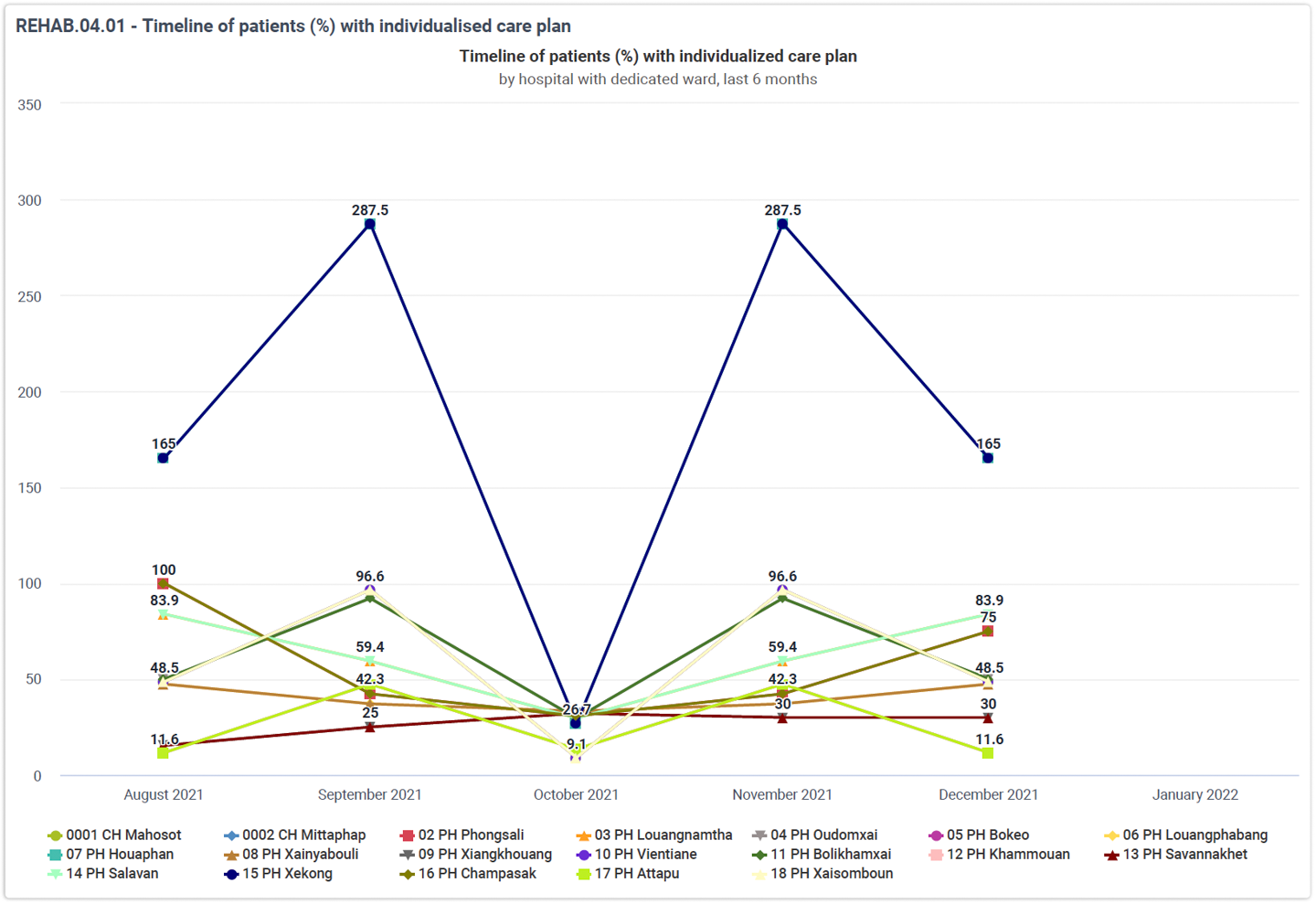
04.01 - Timeline of patients (%) with individualised care plan, by hospital with dedicated ward, last 6 months (user organisation unit)
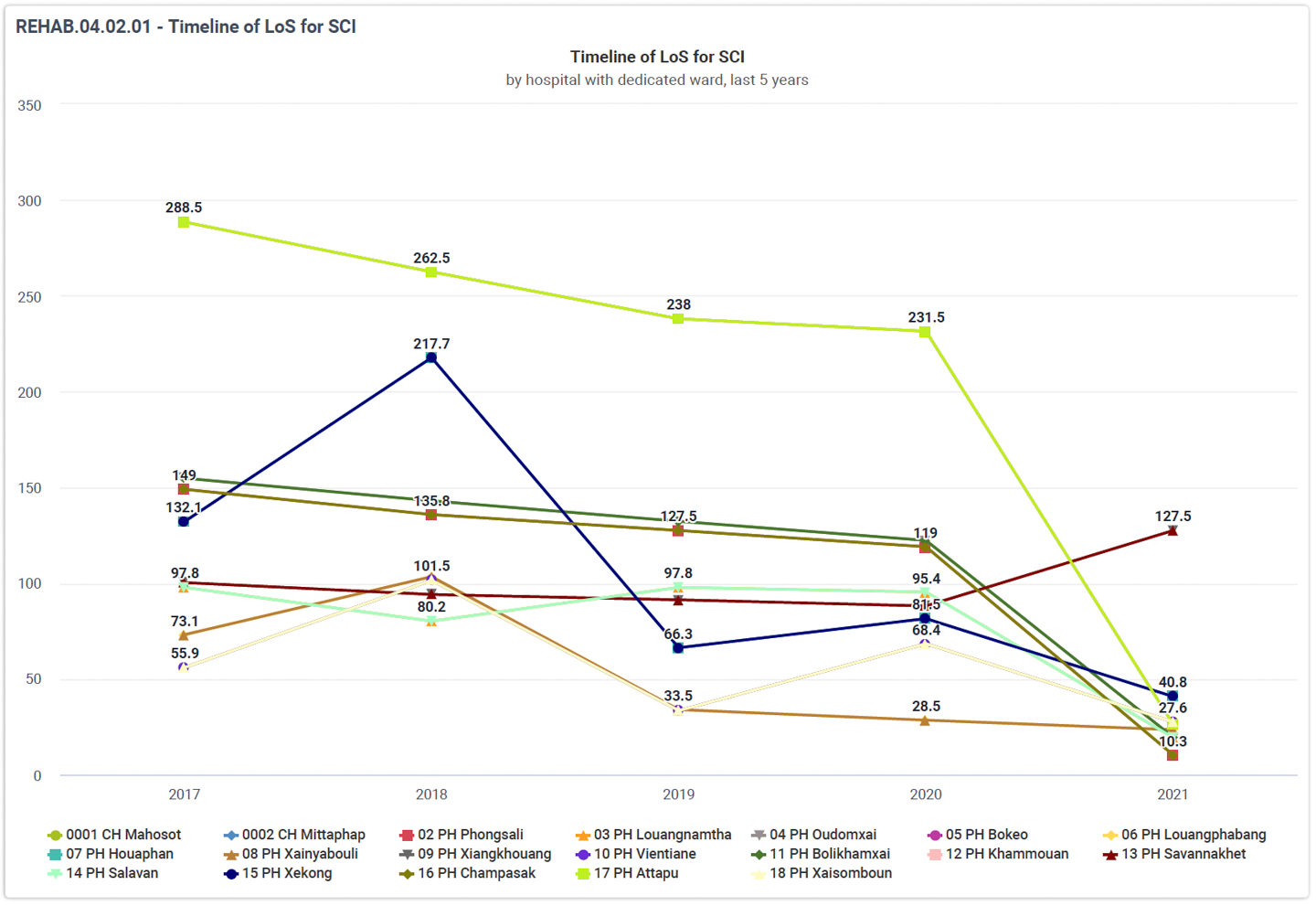
04.02.01 - Timeline of LoS for a specific health condition, by hospital with dedicated ward, last 5 years (user organisation unit)
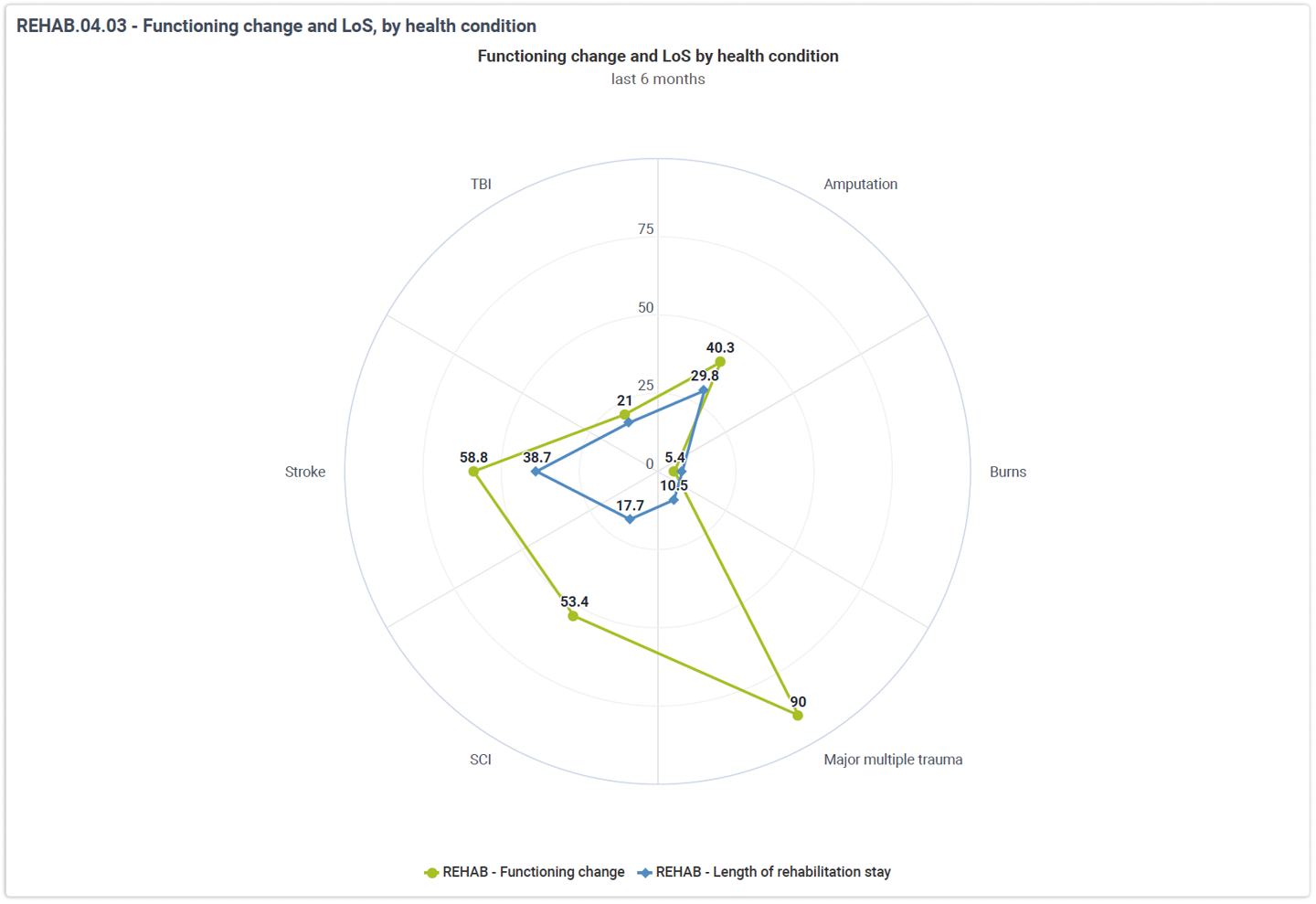
04.03 - Functioning change and LoS by health condition, last 6 months (user organisation unit)
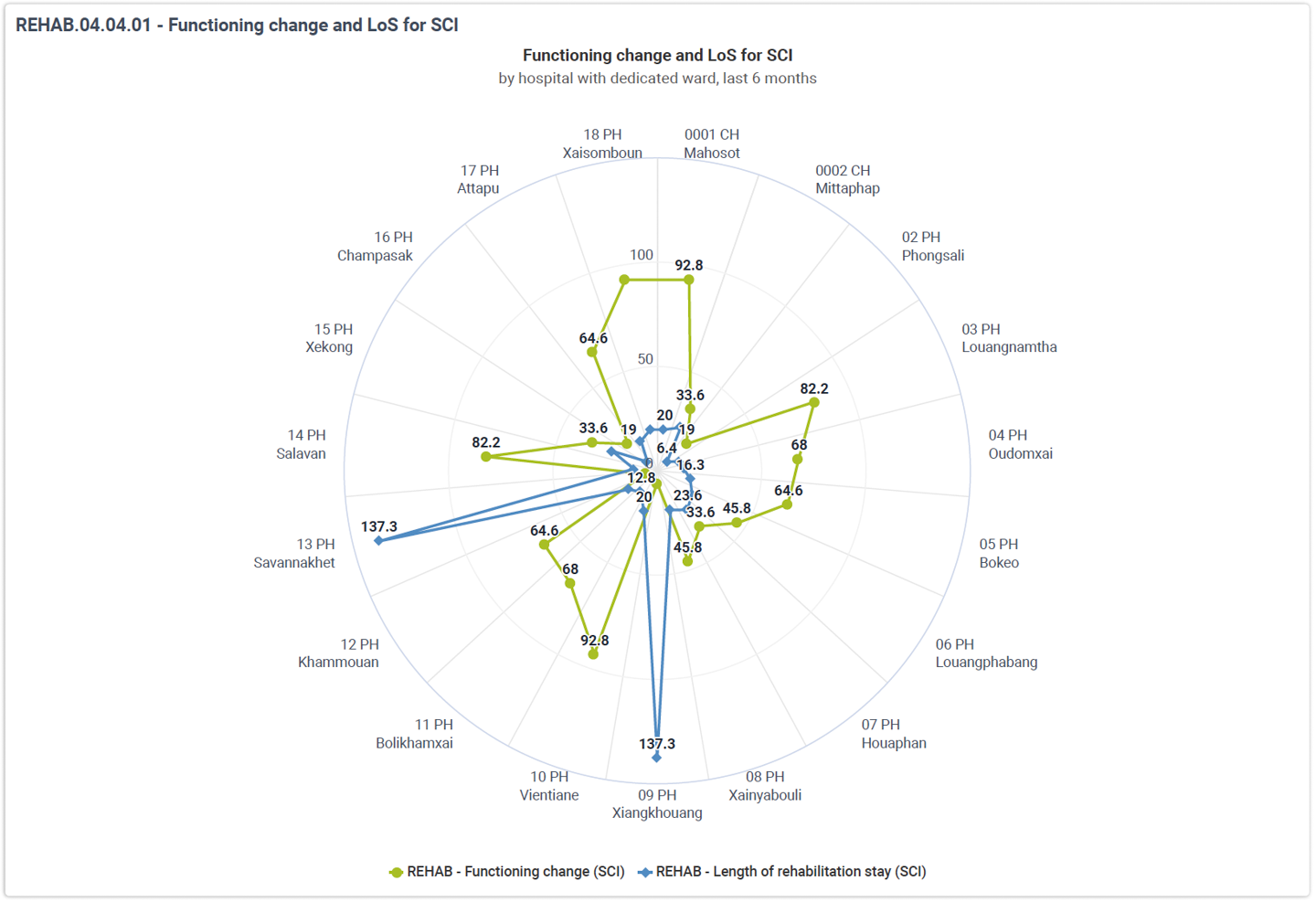
04.04.01 - Functioning change and LoS for a specific health condition, by hospital with dedicated ward, last 6 months (user organisation unit)
04.05.01 - Timeline of functioning change and LoS for a specific health condition, last 5 years (user organisation unit)
REHAB.05 - Outcome / Service coverage
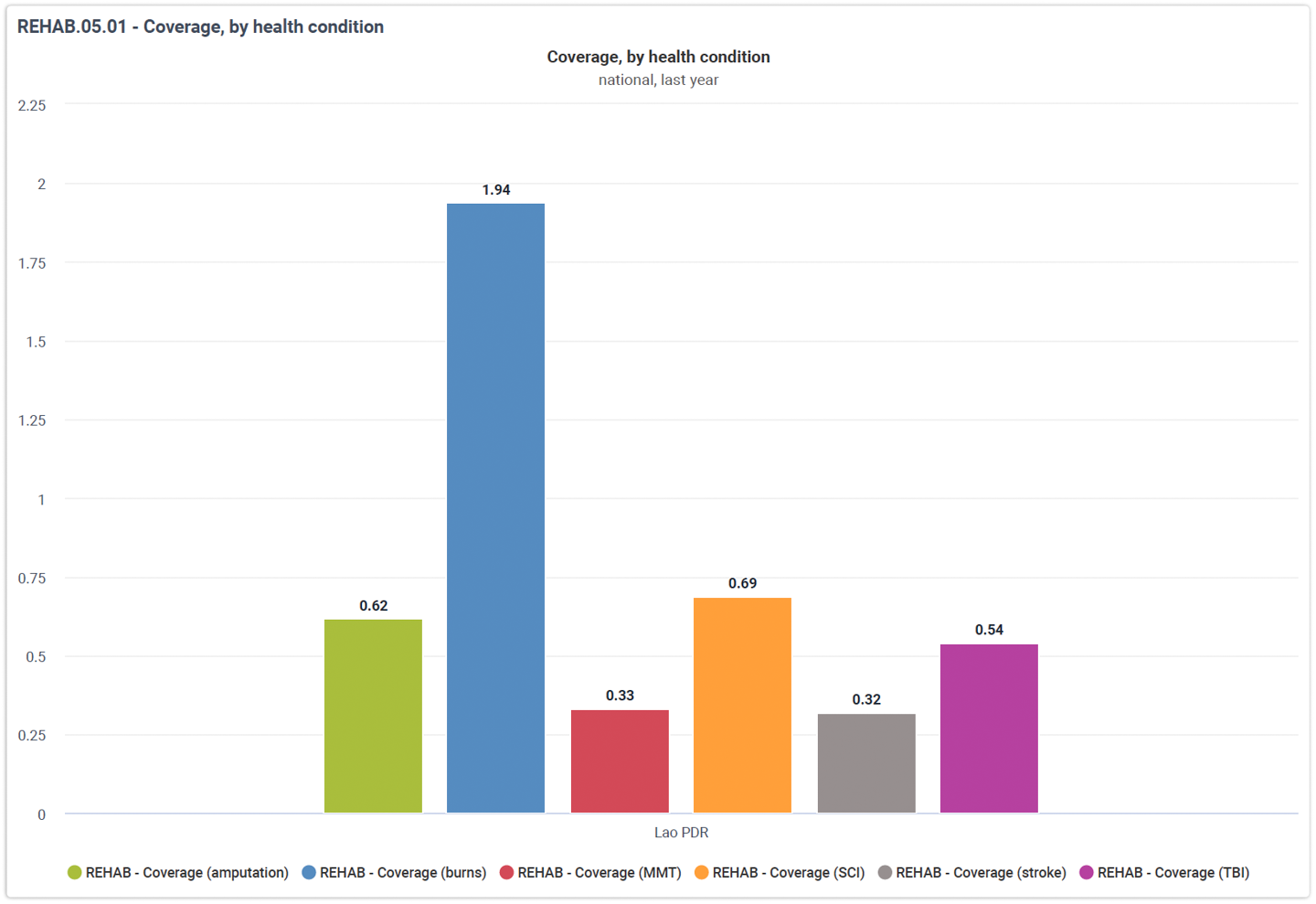
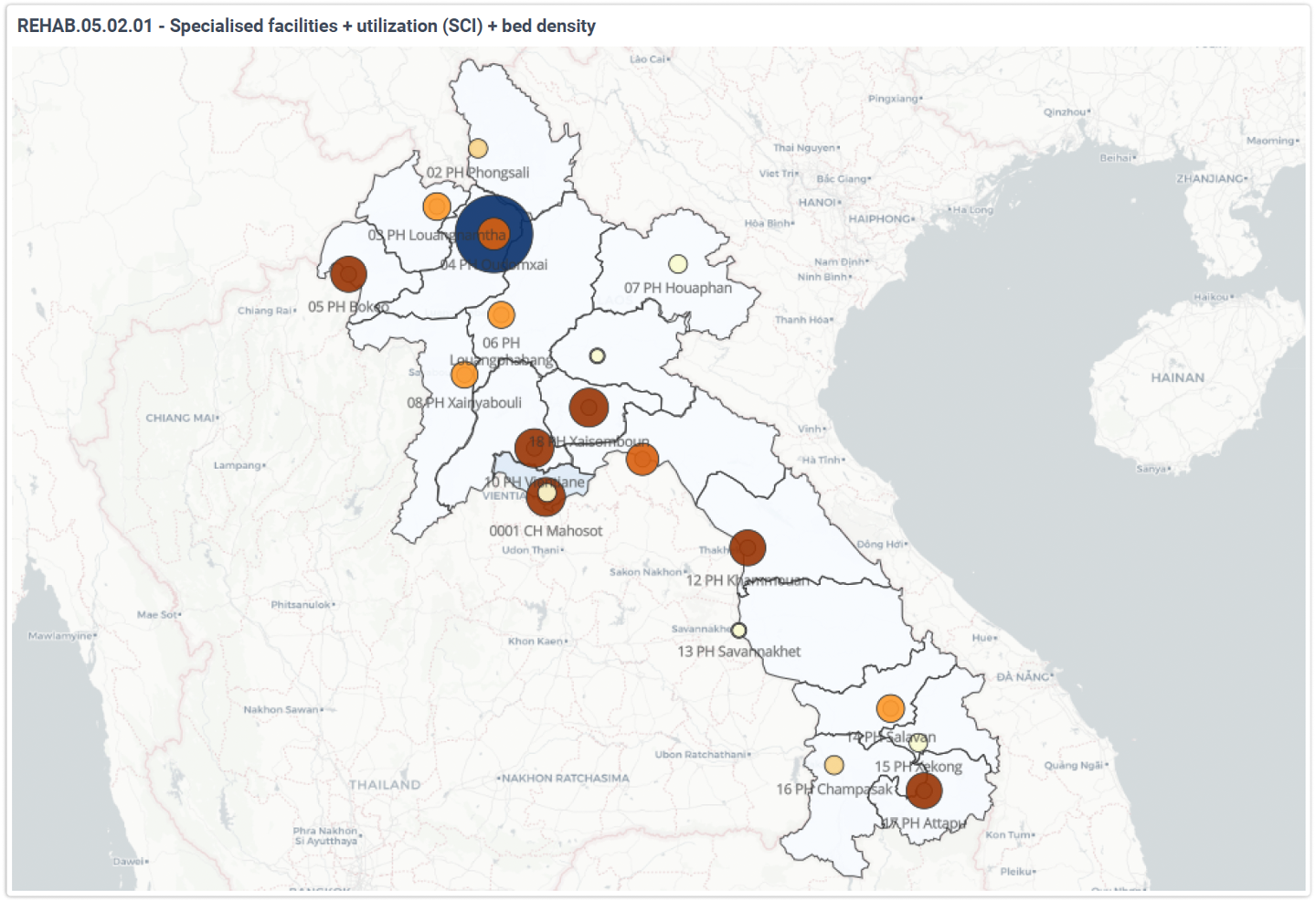
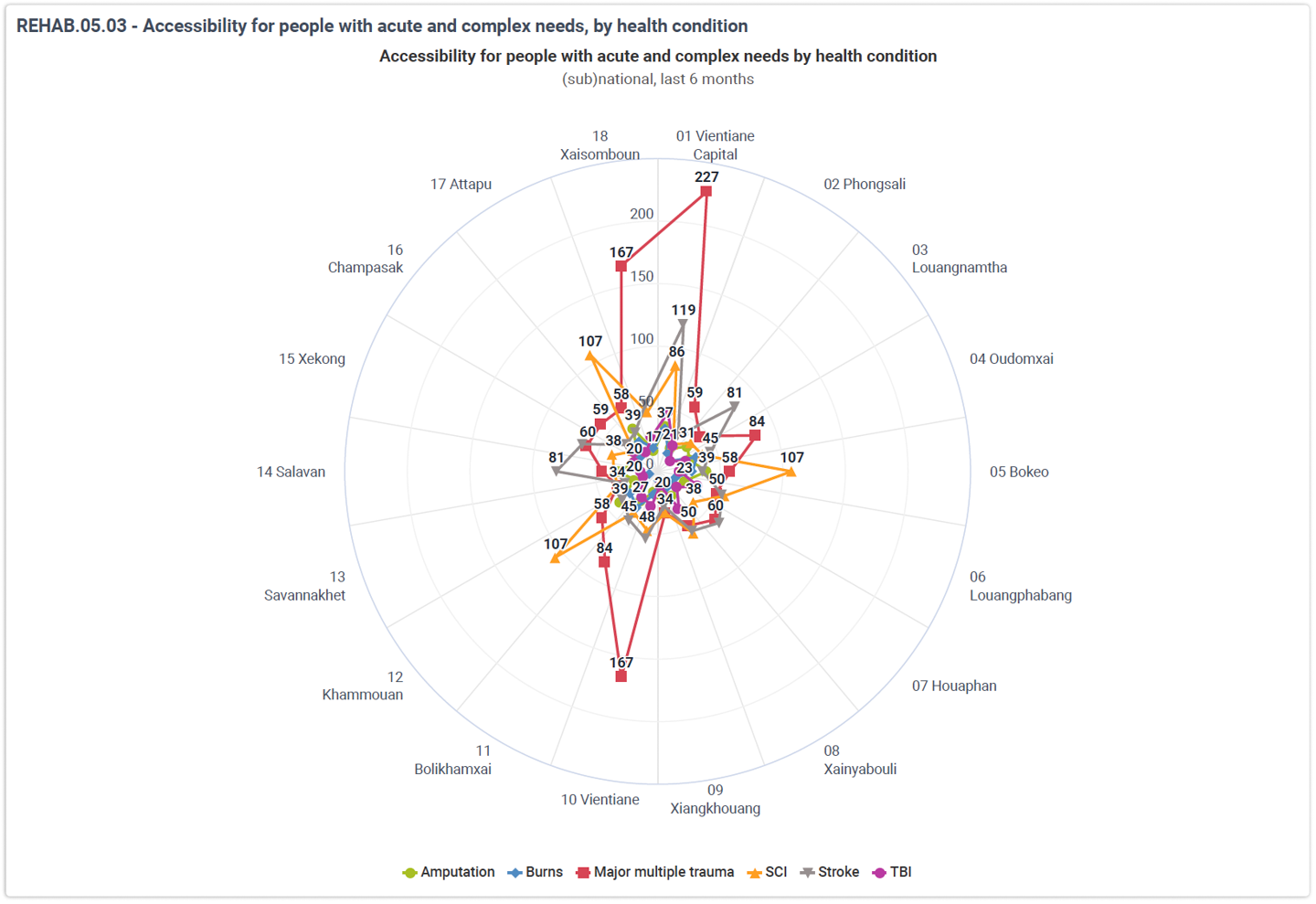
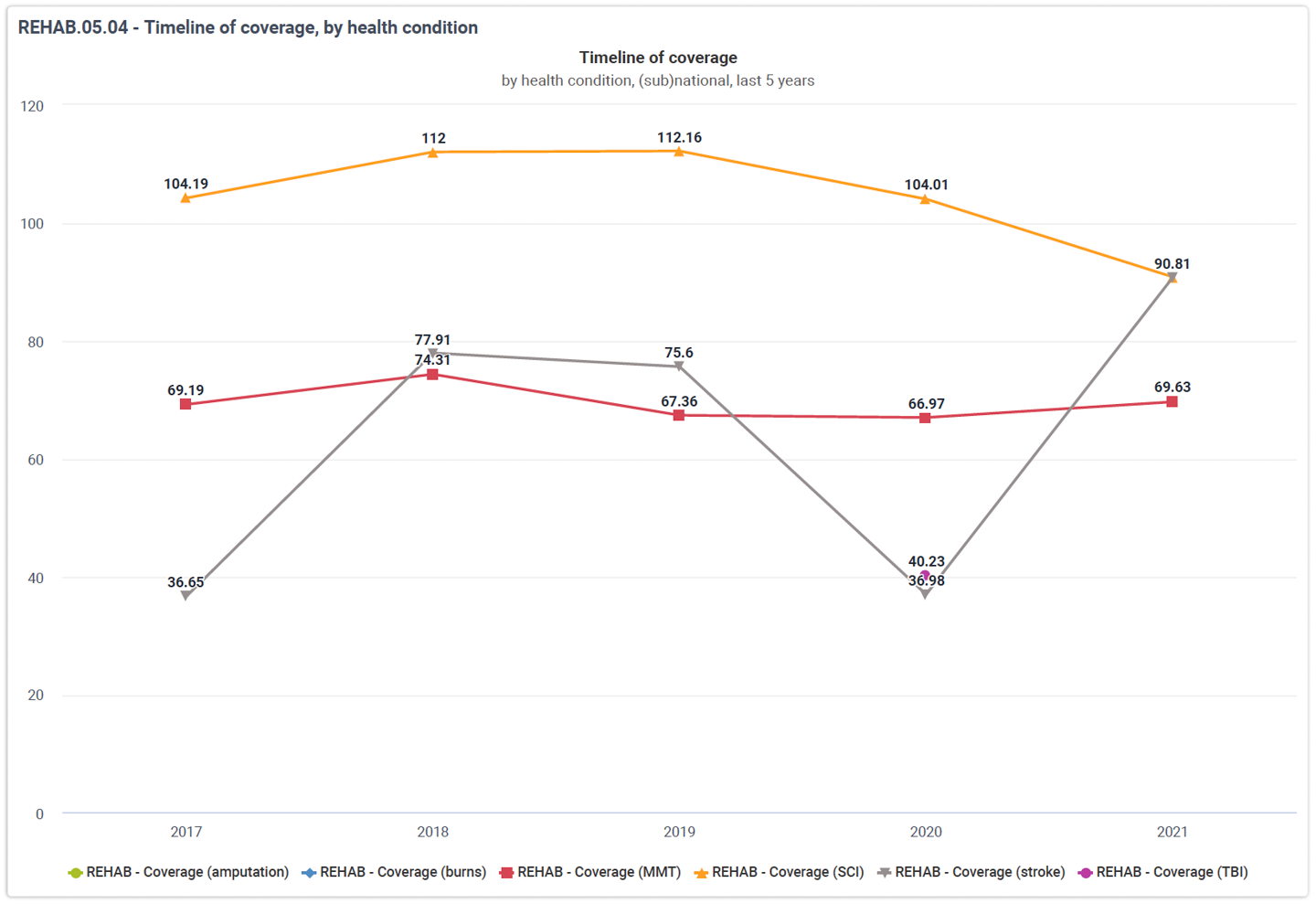
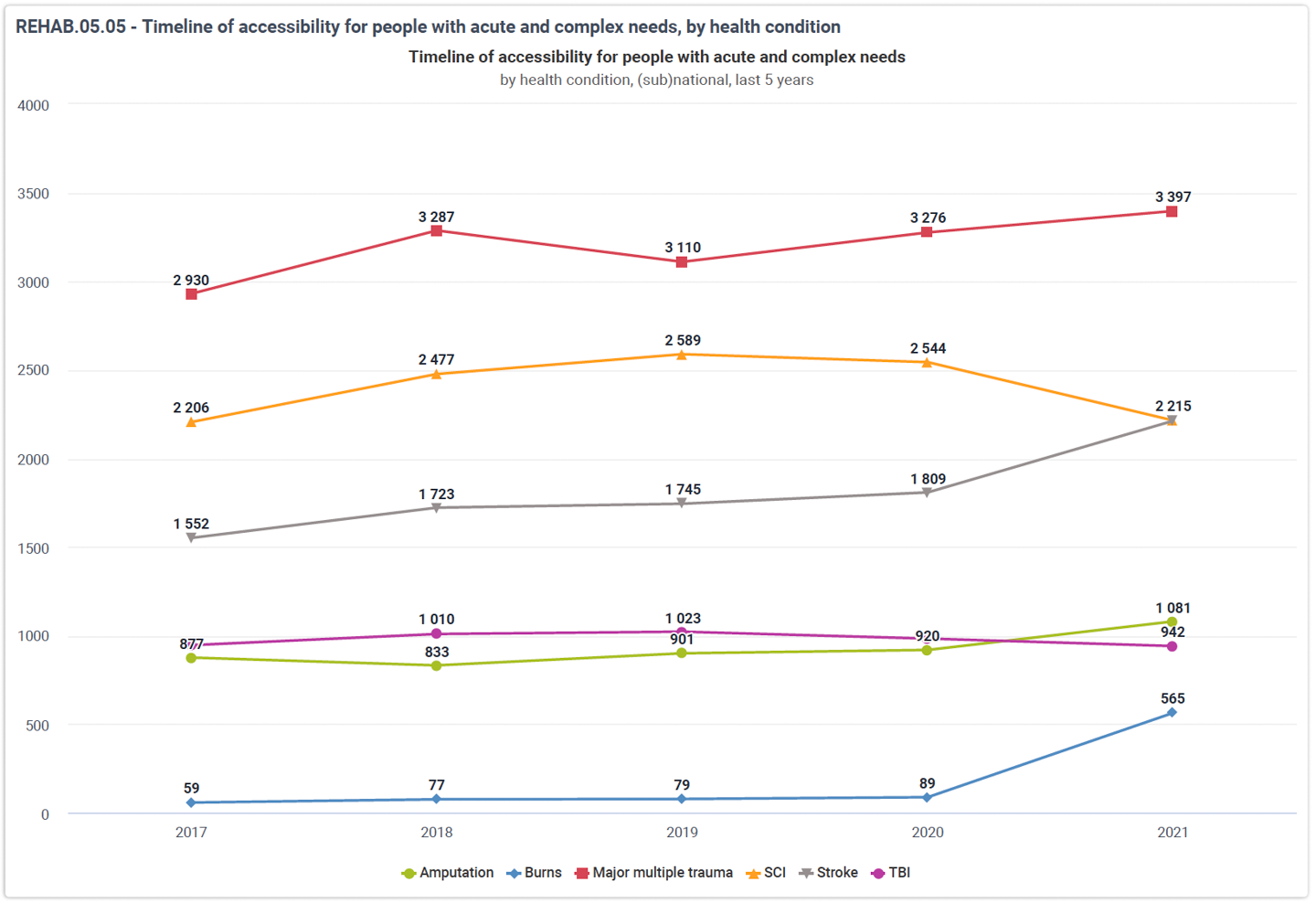
Objetivo: A cobertura é medida através da porcentagem de pessoas com necessidades de reabilitação agudas e complexas que acessam serviços de reabilitação de qualidade prestados de forma adequada. A boa prática clínica prescreve a reabilitação multidisciplinar do paciente internado em uma enfermaria de reabilitação dedicada à reabilitação efetiva de um grupo de condições de saúde com necessidades complexas de reabilitação. A escolha da condição de saúde a ser medida precisa ser baseada nas prioridades nacionais e na disponibilidade do denominador. Na maioria dos países, a fonte de dados para o denominador (número estimado de pessoas no país com uma condição de saúde definida) precisará ser estabelecida. Pode ser uma estimativa nacional de uma pesquisa de base populacional ou codificação da ICD. Os países também podem fazer uso da população de captação e aplicar estimativas de prevalência para a região para calcular o denominador. Por razões de disponibilidade do denominador, a cobertura só será captada a nível (sub)nacional. Caso o denominador não esteja disponível, o analista ainda pode utilizar o indicador "Utilização de pessoas com necessidades agudas e complexas".
05.01 - Coverage, by health condition, national, last year
05.02.01 - Map of specialised facilities + accessibility for people with acute and complex needs for a specific health condition + bed density data, last year
05.03 - Accessibility for people with acute and complex needs, by health condition, (sub)national, last 6 months (user organisation unit)
05.04 - Timeline of coverage, by health condition, (sub)national, last 5 years
05.05 - Timeline of accessibility for people with acute and complex needs, by health condition, (sub)national, last 5 years (user organisation unit)
REHAB.06 - Outcome / Functioning change
06.01 - Functioning change per health condition, by hospital with dedicated ward, last 6 months (user organisation unit)
06.02.01 - Timeline of functioning change for a specific health condition, by hospital with dedicated ward, last 5 years (user organisation unit)
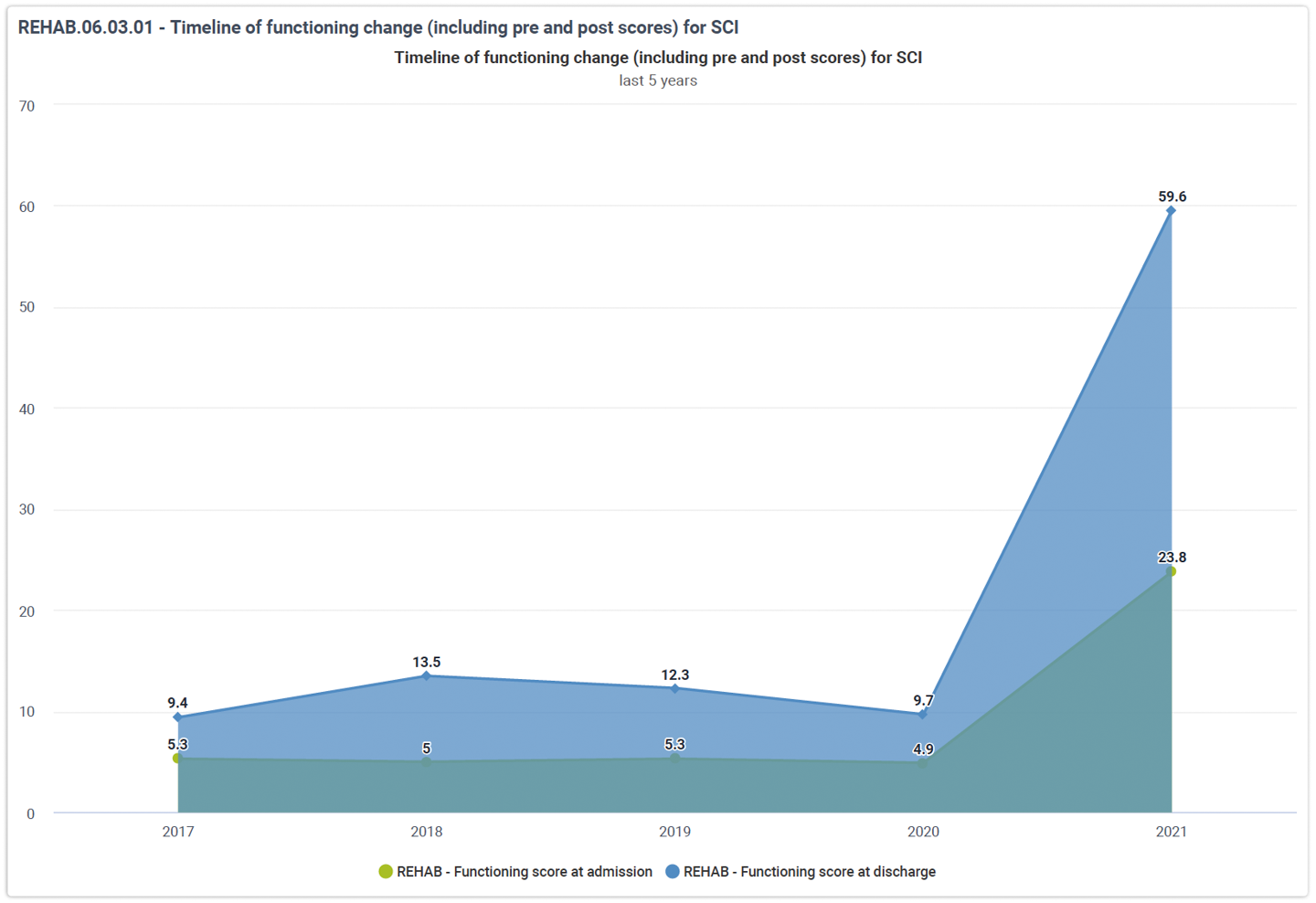
06.03.01 - Timeline of functioning change (including pre and post scores) for a specific health condition at selected hospital with dedicated ward, last 5 years (user organisation unit)
REHAB.07 - Continuum of care
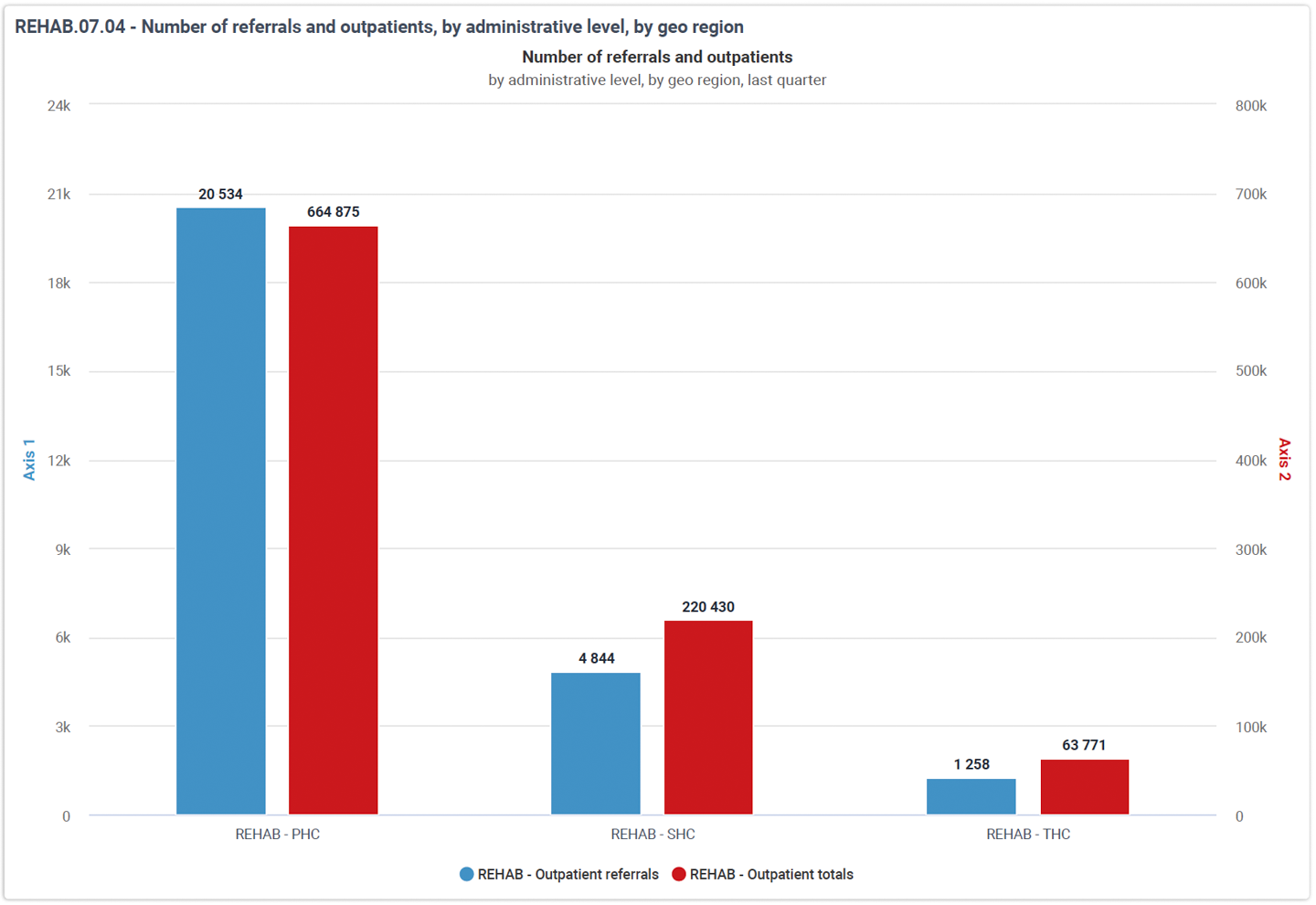
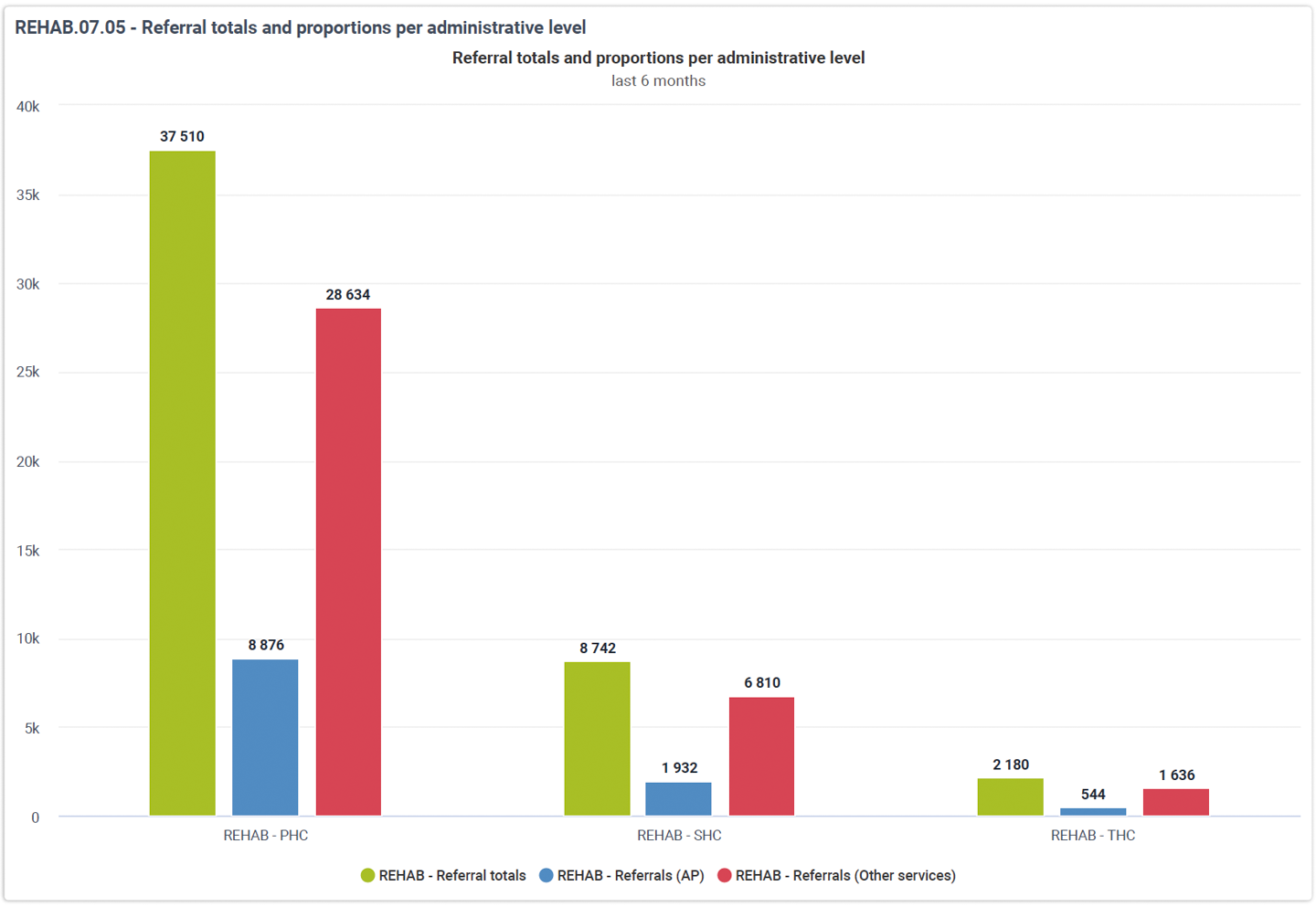
Objetivo: Esta secção fornece informações sobre o desempenho do sector de reabilitação. A reabilitação é comumente parte de um continuum de cuidados e um continuum forte resulta em melhores resultados de saúde. Tanto a prática de encaminhamento para reabilitação quanto o tempo de espera são indicativos para o uso efectivo da continuidade do cuidado. Processos de encaminhamento que funcionam bem acontecem em ambas as direções em todos os níveis de atenção à saúde, e os encaminhamentos precisam ser documentados por caso para demonstrar o uso eficaz dos mecanismos do processo de encaminhamento. A entrega atempada da reabilitação contribui para a sua eficácia e para a qualidade geral dos cuidados.
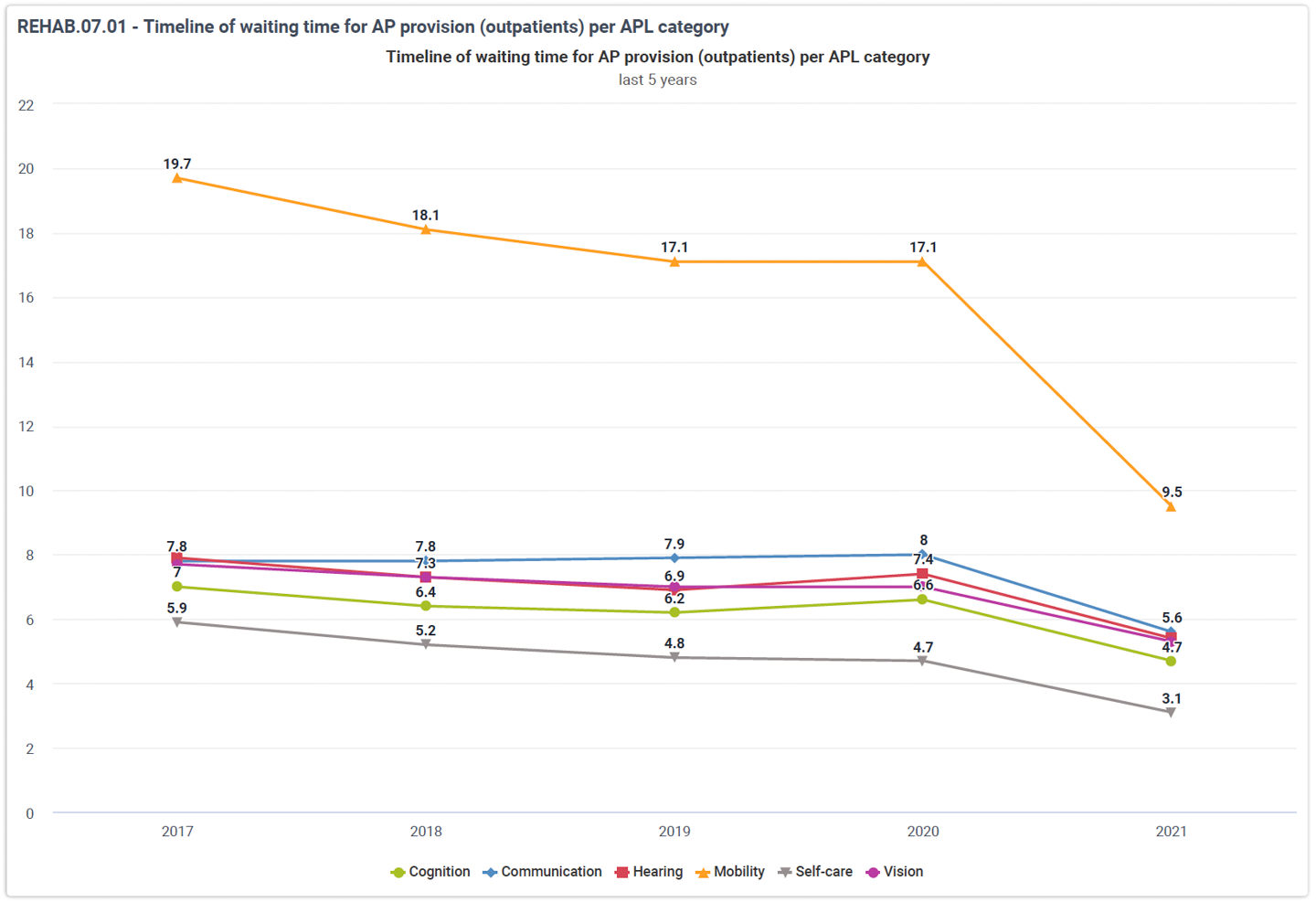
07.01 - Timeline of waiting time for AP provision (outpatients) per APL category, for selected subnational region, last 5 years (user organisation unit)
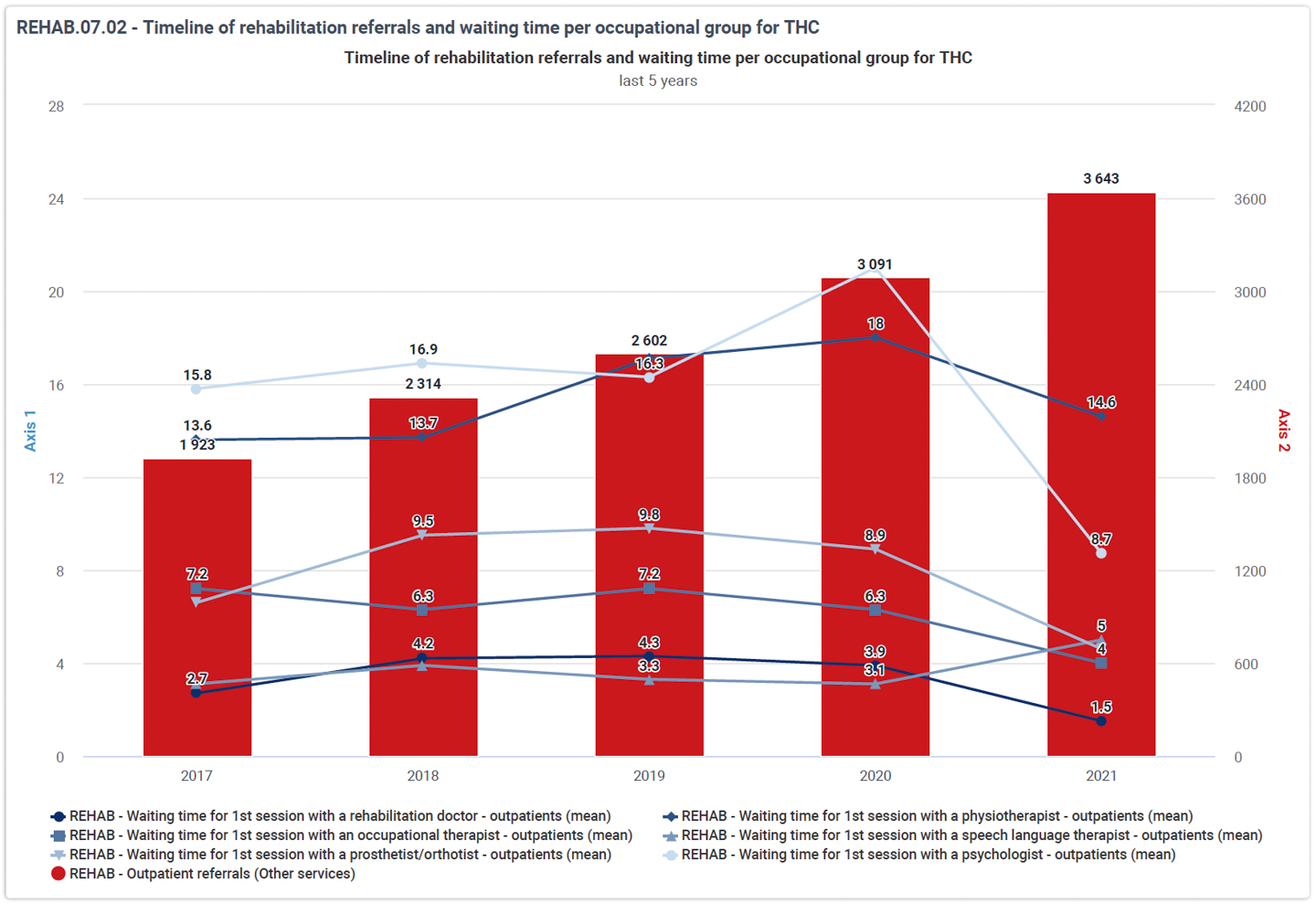
07.02 - Timeline of rehabilitation referrals and rehabilitation waiting time per profession type, for selected administrative level, (sub)national, last 5 years (user organisation unit)
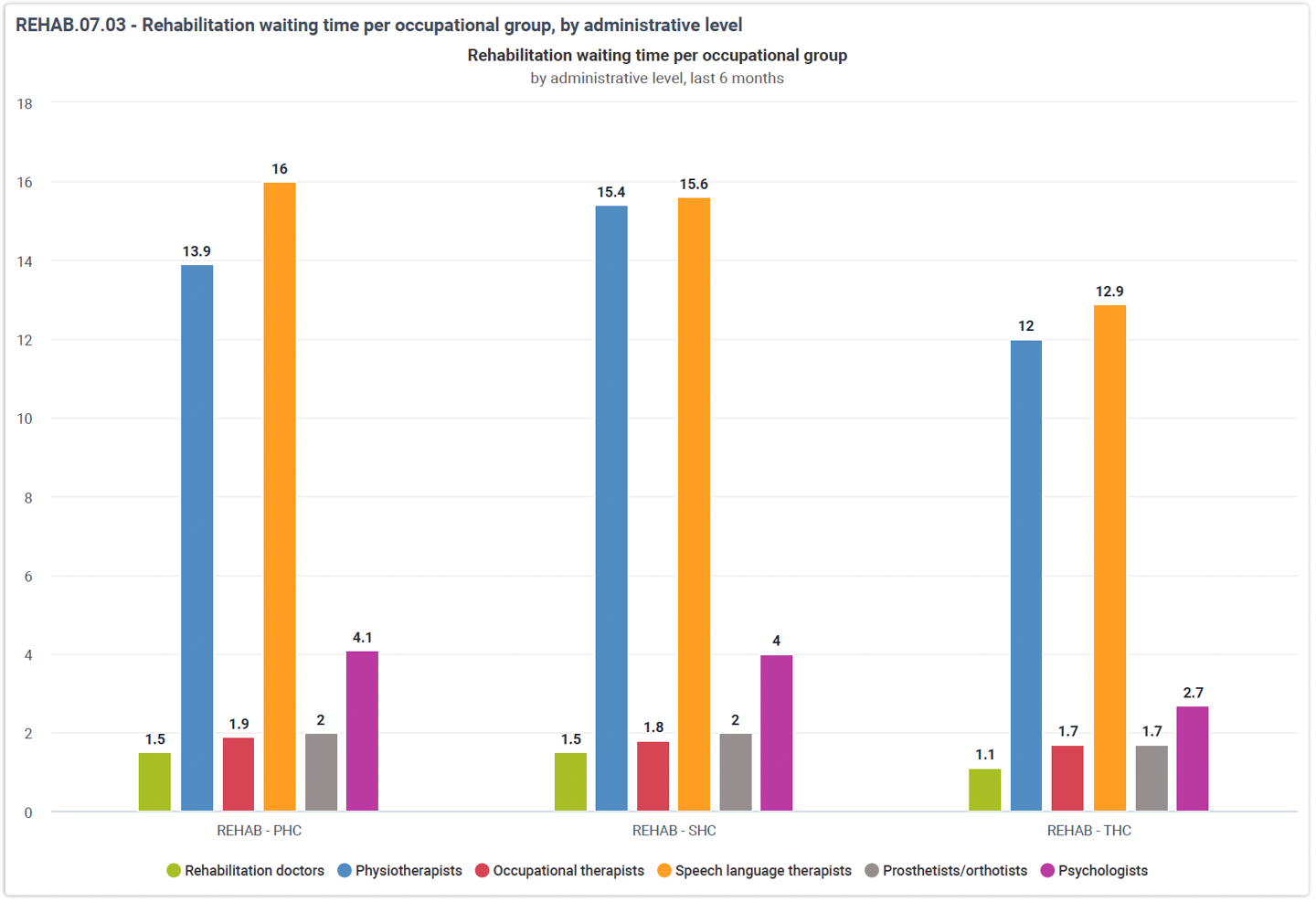
07.03 - Rehabilitation waiting time per occupational group, by administrative level, for selected subnational region, last 6 months (user organisation unit)
07.04 - Number of referrals and outpatients, by administrative level, by geo region, last quarter (user organisation unit)
07.05 - Referral totals and proportions per administrative level, last 6 months (user organisation unit)
07.06 - Rehab referrals (%) for administrative levels, by subnational region, last 6 months
Note
- All visualizations that are labeled with (user organisation unit) may be compiled into an additional dashboard for facility-level analysis.
- Visualizations 03.03.01, 03.05.01, 04.02.01, 04.04.01, 04.05.01, 05.02.01, 06.02.01 and 06.03.01 are configured for a specific health condition group / health condition. Configure visualizations for other health condition groups / help conditions based on the provided examples.