Learner's Guide to the Attribute Model
What is this guide?
This guide contains all exercises and detailed steps to perform them related to the review of attributes for the Design for Data Use Level 1 academy. Please perform each of the exercises when prompted to by your instructors
Learning objectives for this session
- Describe what dataset attributes are
- Use attributes in analysis apps
- Configure attribute options, attribute categories, attribute category combos in maintenance
- Verify the creation of attribute category option combos via maintenance
Exercise 1 - Use attributes to create visualizations
Perform this exercise in the DEMONSTRATION system
Review a dataset in data entry that uses the attribute model
Dataset you can view : Immunization. Immunization is located at the facility level in the Lao hierarchy.
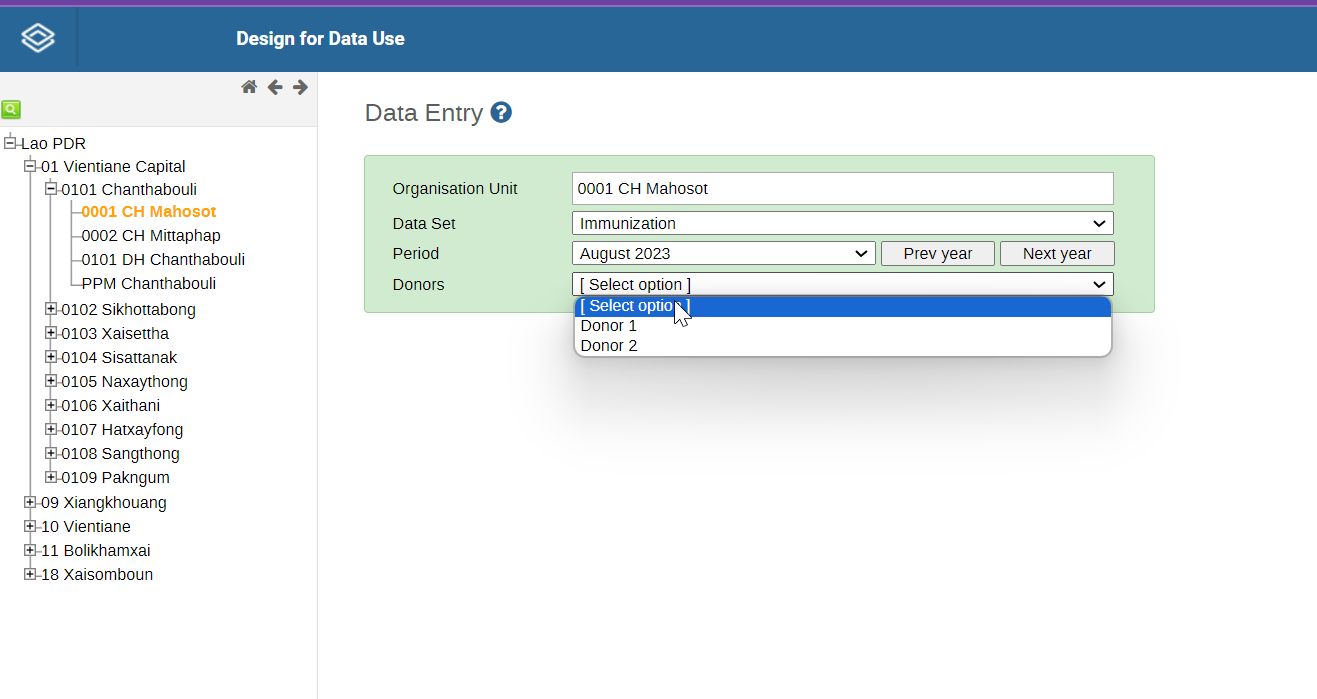
Select to review in data entry focusing on the use of attribute categories to disaggregate the data set.
Review how attribute categories can be used to visualize data
Open the chart "EPI - BCG doses given by Donors" from the Immunization dashboard
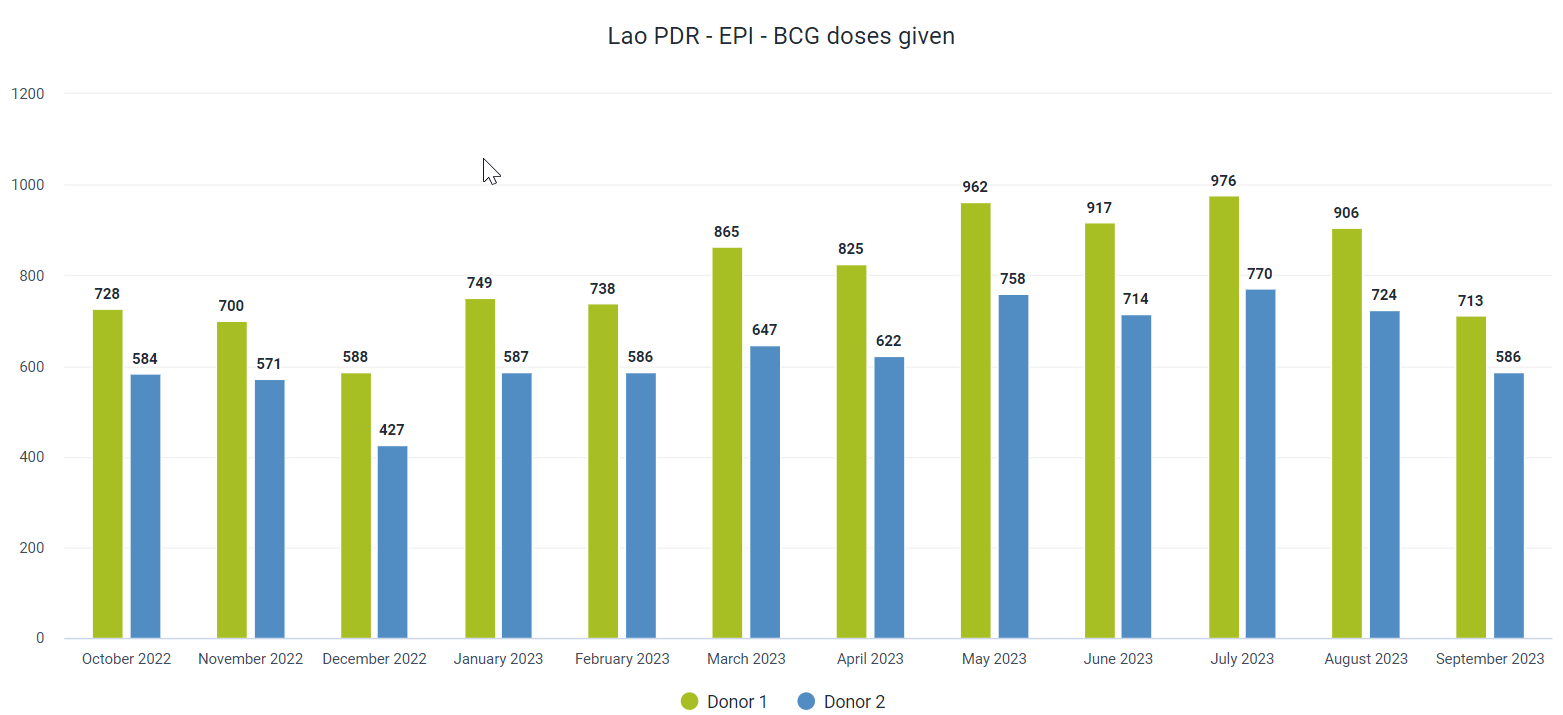
This chart has two categories being used to disaggregate the data.
Attribute category : Donors; We can see Donor 1, Donor 2 on the chart.
We can add in additional dimensions as items or filters to our chart.
As an example, we can select the disaggregate category "Age" and select some classes to filter our data further
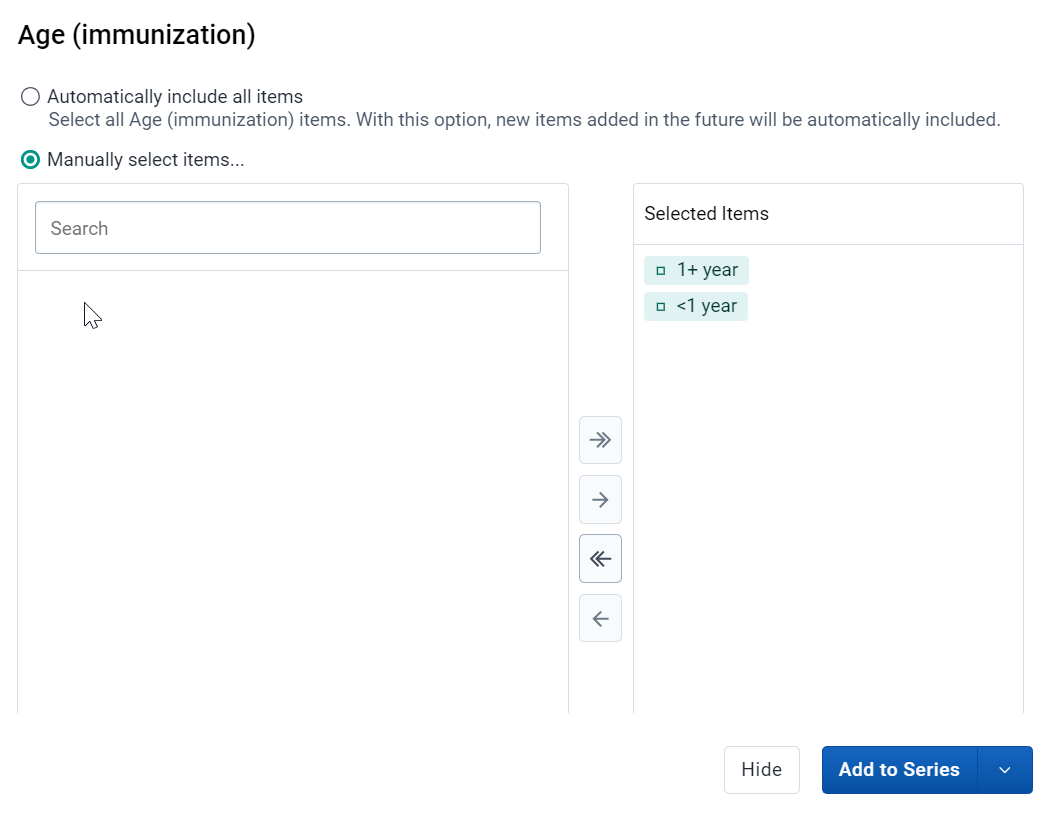
Place the age dimension in the series and Donors in Filter and update the data.
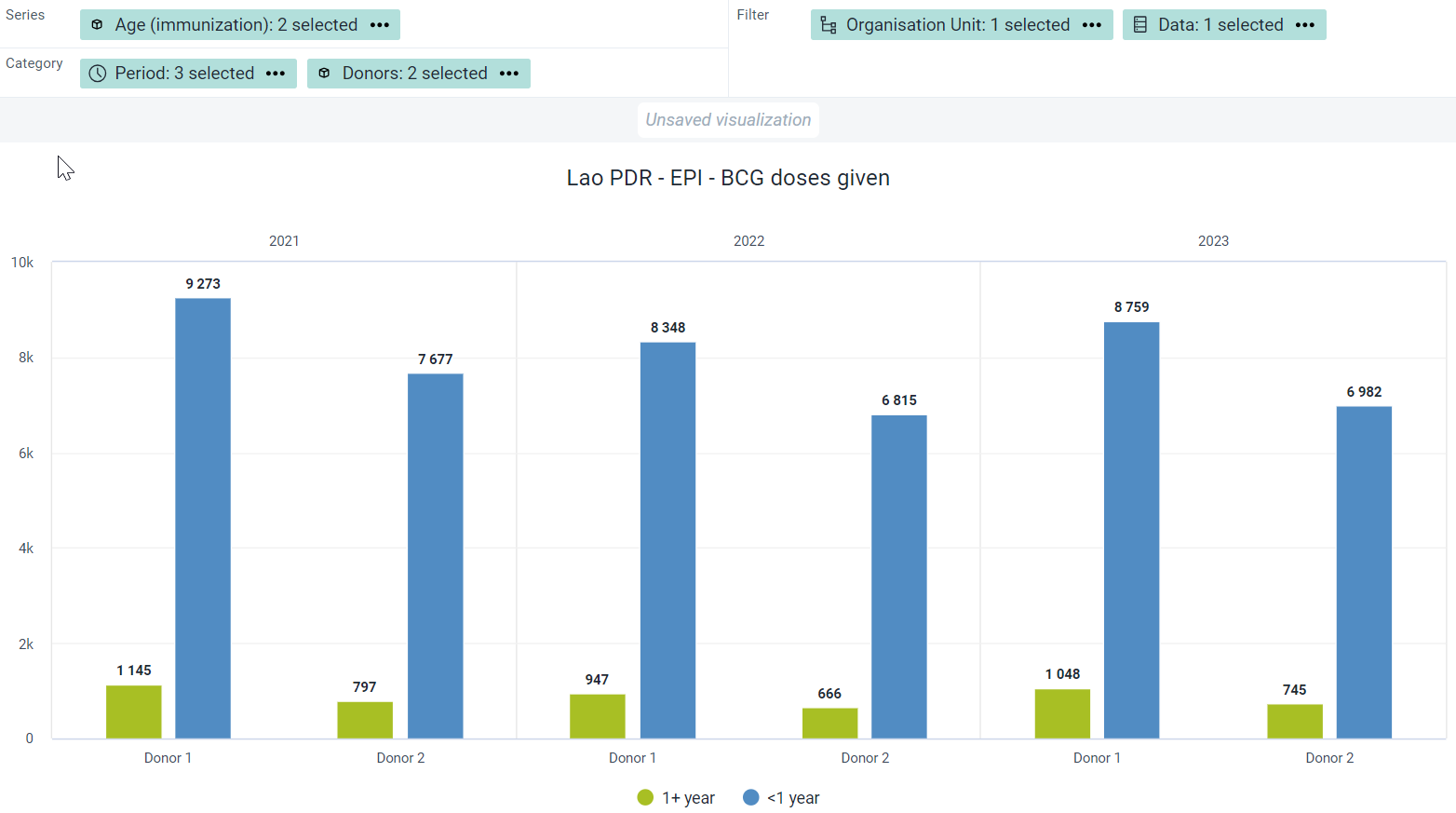
You will see this effects the output of the data we are now showing.
Note you can do this for any type of data set disaggregated using attribute categories.
Create a new chart
To create a new chart select File - > New
Here are the inputs for the chart:
Chart Type - Column
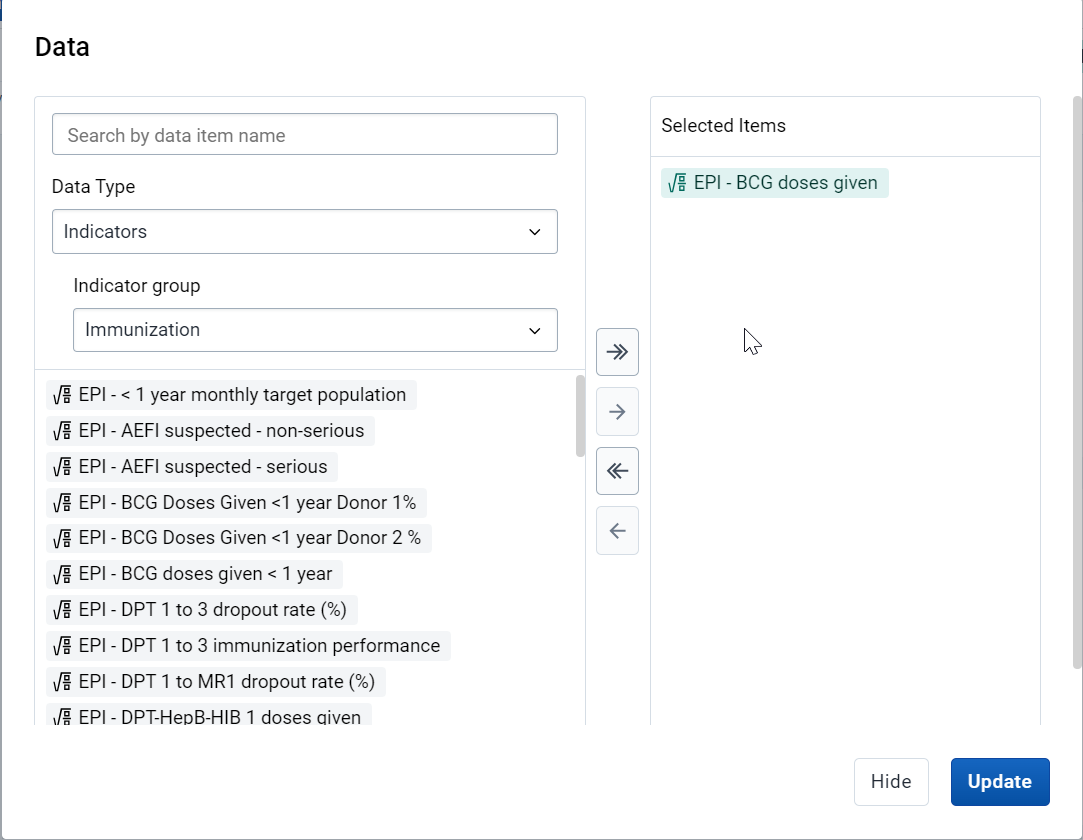
Data - Data Type : Indicators - Indicator group: Immunization - Indicator Name: EPI - BCG doses given
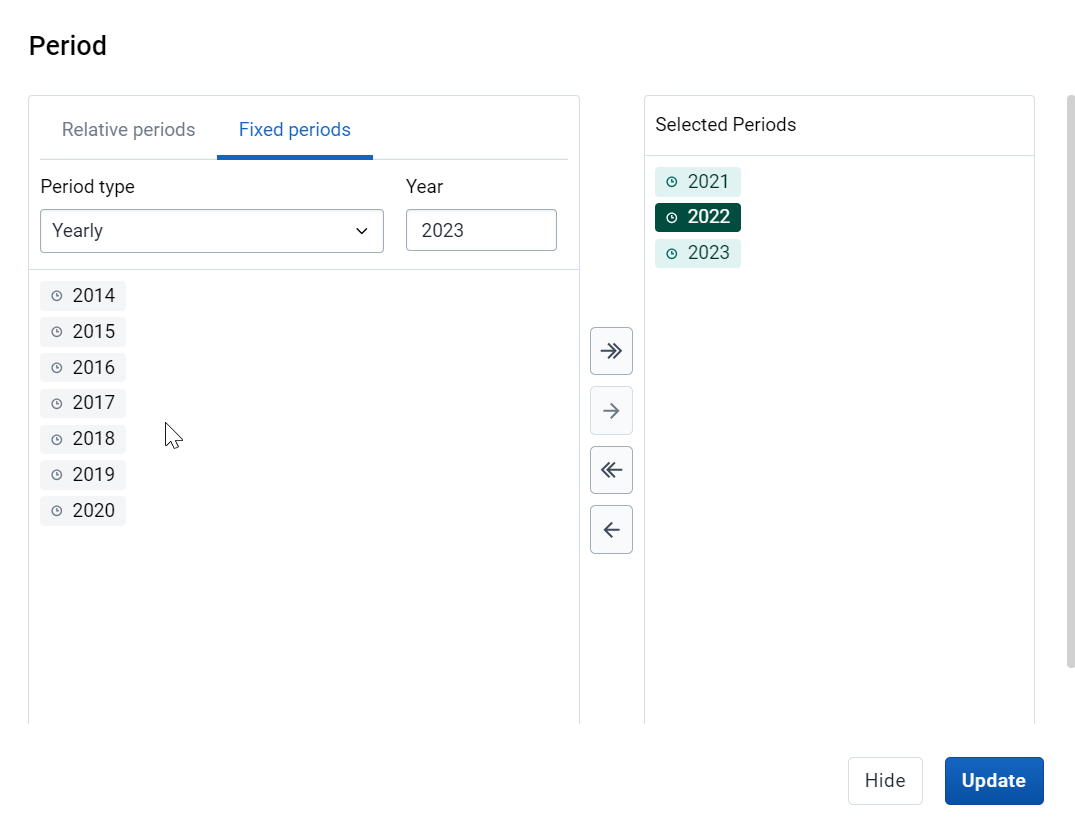
Period - 2021, 2022, 2023
Organisation unit - Lao PDR
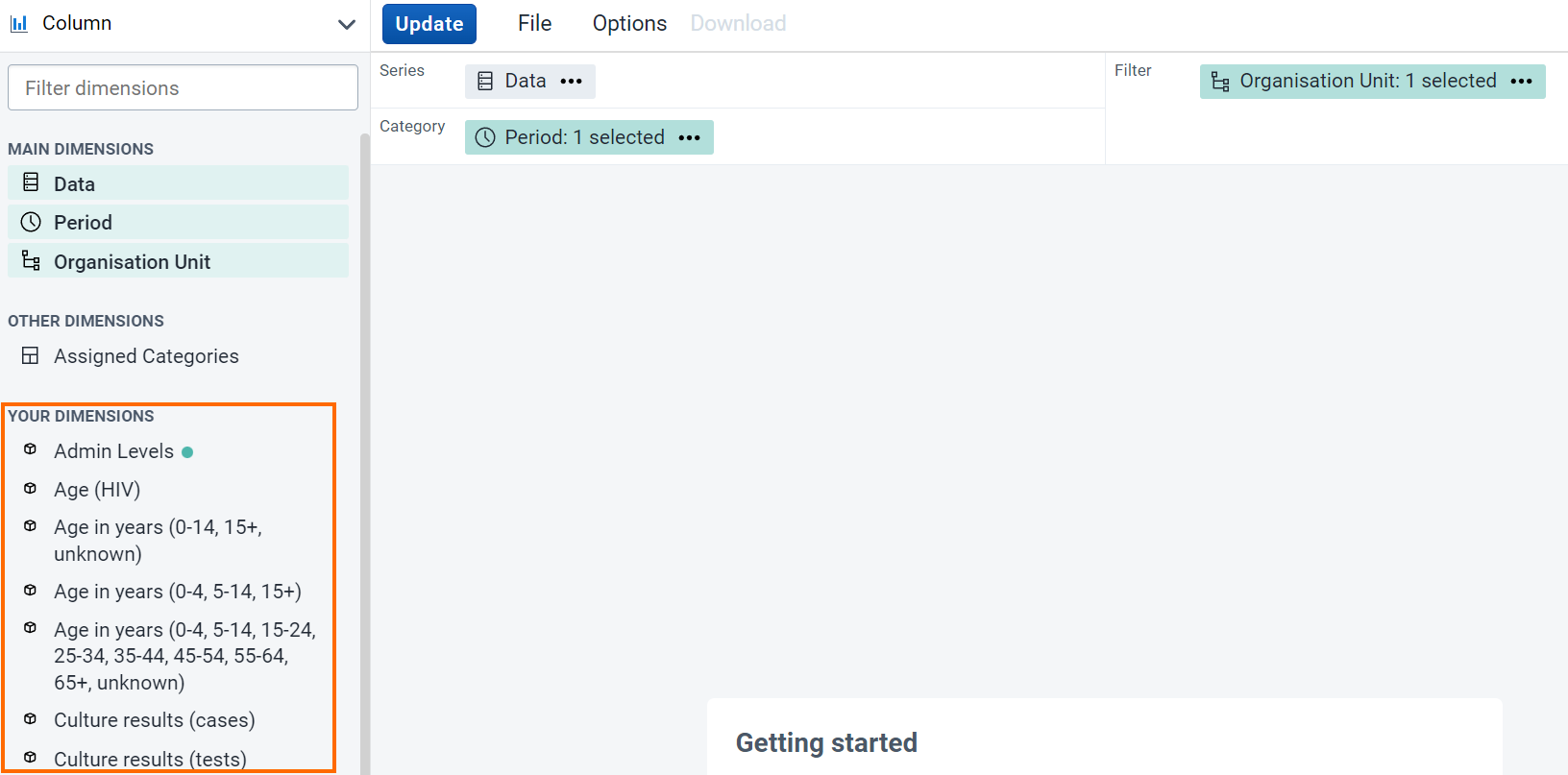
We now want to add in the age Immunization and Donor data dimensions to the chart. We can note now that the attribute category "Donor" is not treated differently from any other available data dimension when we look at the side panel. There is no distinction to seperate it from other categories or org unit group sets either as the attribute category dimension can be used the same as the other ones that are available. As long as the data we are reviewing is disaggregated according to said dimension, it can be used to disaggregate and filter our data.
Add in the categories for Donors
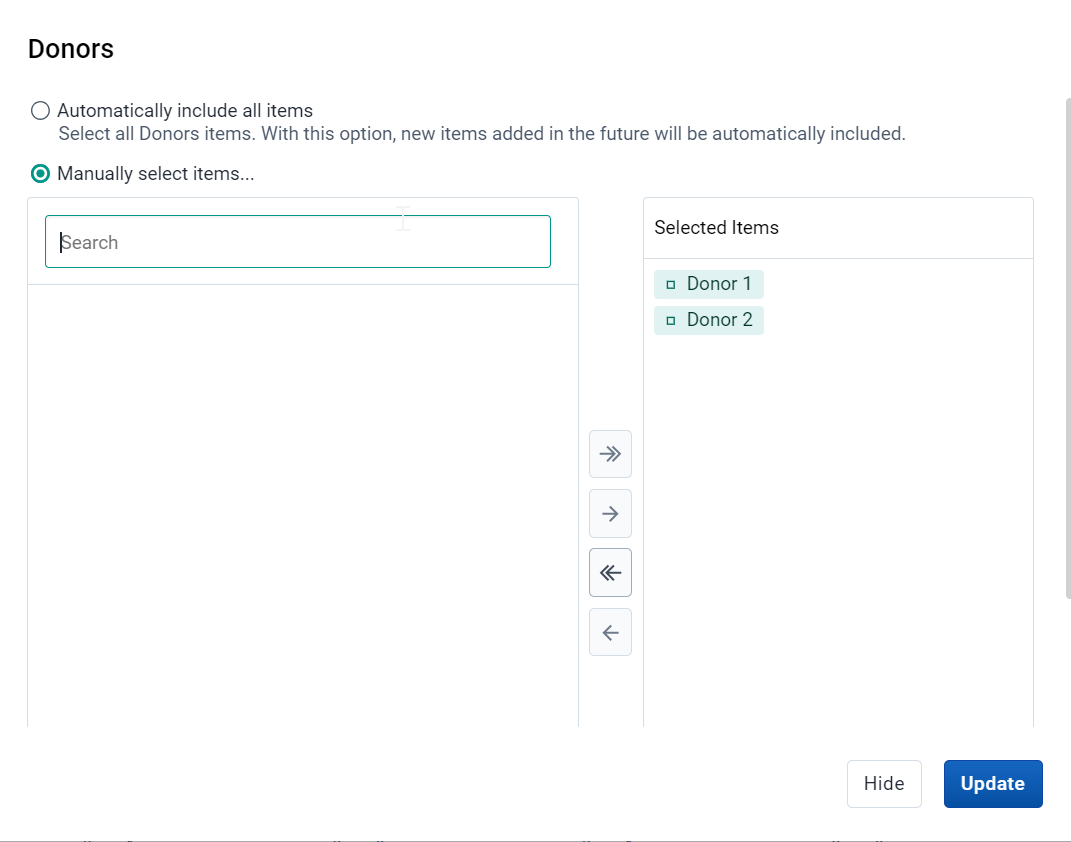
and Age (Immunization)
Modify the layout and update the chart
You will see the disaggregations (categories) have now been applied.
Exercise 2 - Review how to manage category options in maintenance
Perform this exercise in the CUSTOMIZATION system
In our example, let us create the attribute options that we had used to disaggregate our Immuniuzation data set. This consists only Donors.
Navigate to maintenance -> Category -> Category Option
From this screen, the first thing you want to do is search for the attribute option you are creating.
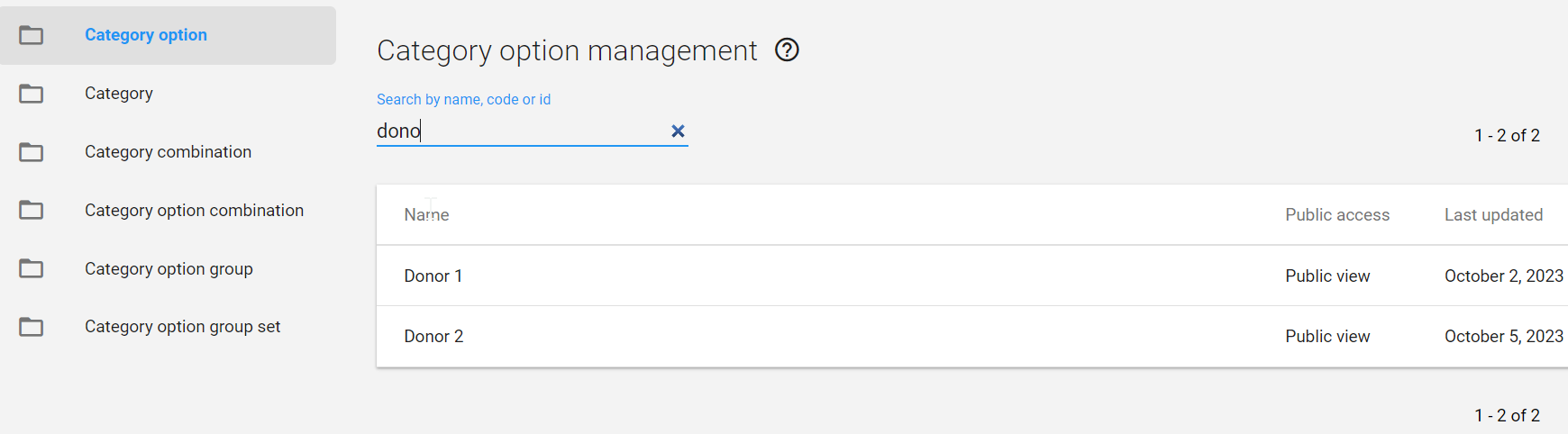
If I type in "Donors" as a attribute option, I will see that this already exists. Under normal circumstances, you would stop here. Never create a duplicate attribute option when it already exists.
In this scenario, we want to go through the process of the attribute category model from start to finish; so we will create this attribute option for demonstration purposes only.
Create a new attribute option by selecting the plus icon.
Use your initals as a prefix and create the attribute option Donor 1.
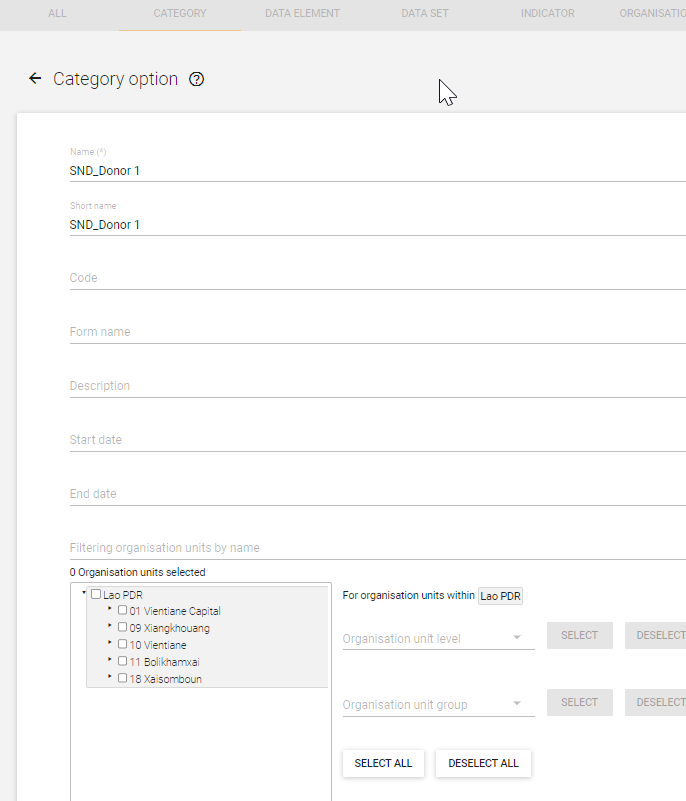
You can discuss the fields as you fill them in. Save the attribute option when you are finished.
Repeat this process to create the attribute option for Donor 2.
So far, nothing is actually different then when we create disaggregate category options.
Exercise 3 - Review how to manage categories in maintenance
Perform this exercise in the CUSTOMIZATION system
We want to create one category
- Donors
Navigate to maintenance -> Category -> Category
From this screen, the first thing you want to do is search for the category you are creating.
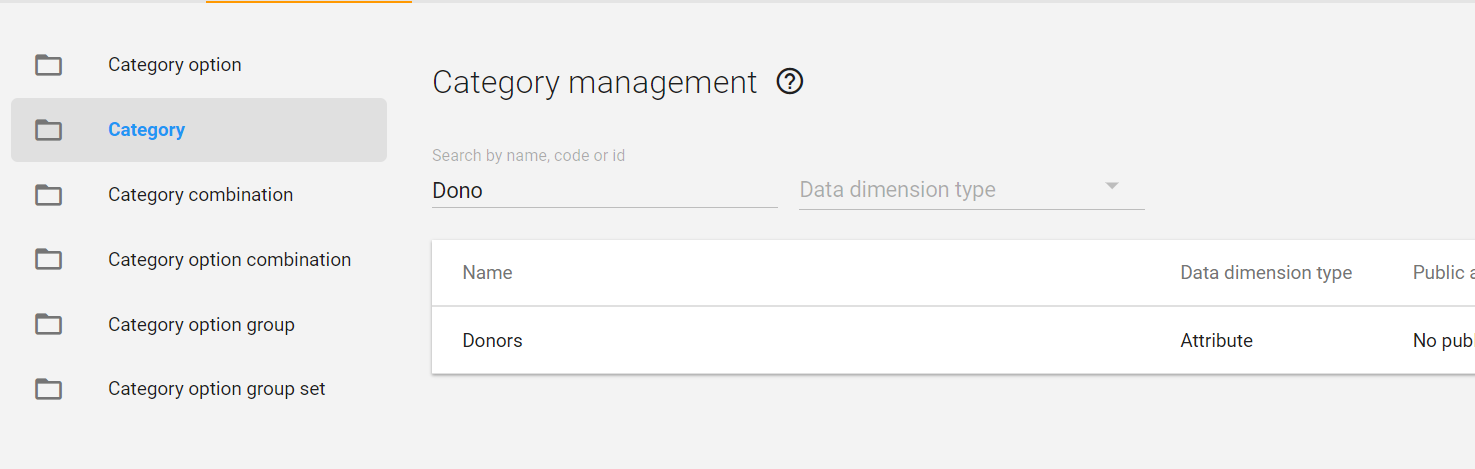
We will see Donors listed already. Under normal circumstances, you would stop here. Never create a duplicate categories when they already exist.
In this scenario, we want to go through the process of the attribute category model from start to finish; so we will create these attribute categories for demonstration purposes only.
Create a new category by selecting the plus icon.
Use your initals as a prefix and create the category for Donors. Make sure you use the category options that you have created (intials_Donors)
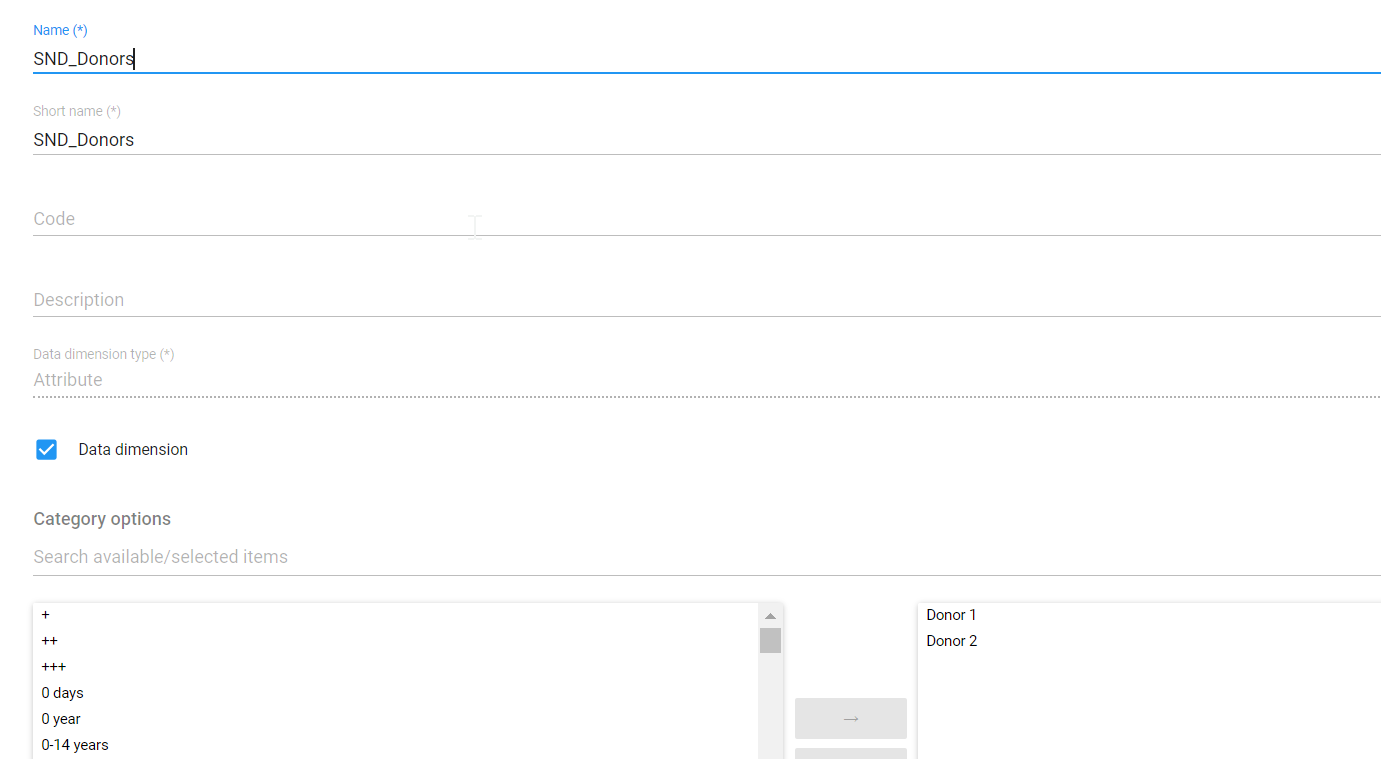
You can discuss the fields as you fill them in. In particular, make sure to review the data dimension type. This time, we will be using attribute. This is because this category is being applied to a data set, not a data element.
Also, explain that the data dimension tick box allows the category to show up on the left side menu in analysis apps.
Ensure you use the category options that you made with your initials to create this new attribute category.
Exercise 4 - Review how to manage attribute category combinations in maintenance
Perform this exercise in the CUSTOMIZATION system
We want to create one attribute category combination
- Donors
Navigate to maintenance -> Category -> Category combination
From this screen, the first thing you want to do is search for the category you are creating.
The category combination already exists
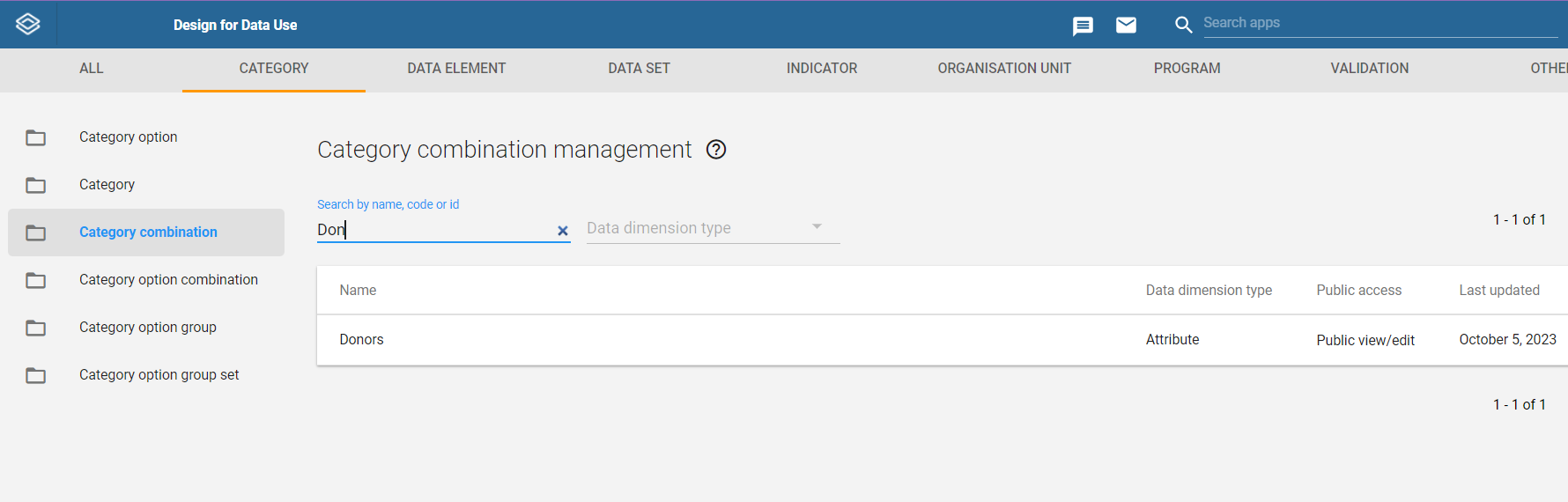
In this scenario, we want to go through the process of the attribute category model from start to finish; so we will create this category combination for demonstration purposes only.
Create a new category combination by selecting the plus icon.
Use your initals as a prefix and create the category combination for Donors. Make sure you use the categories that you have created (initials_Donors)
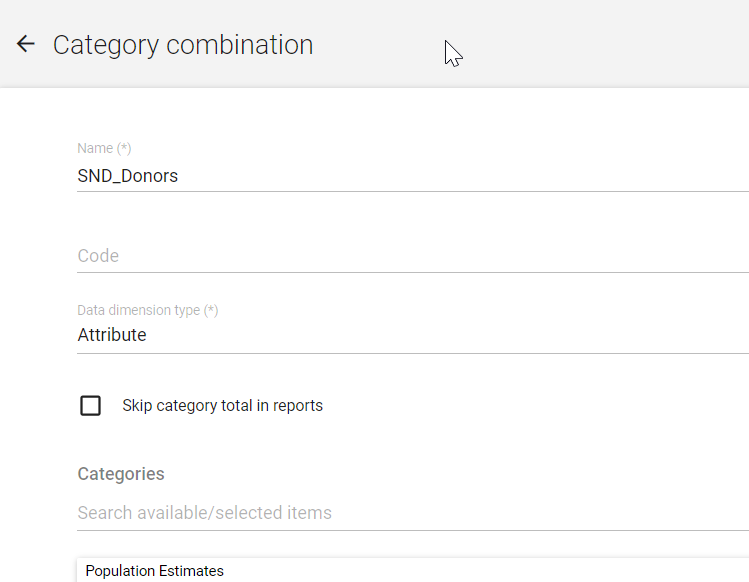
You can discuss the fields as you fill them in. In particular, make sure to review the data dimension type. We will use attribute once again. Interestingly, when you select attribute as the data dimension type, you will only be able to select from attribute categories to create your attribute category combination.
Exercise 5 - Check the category option combinations
We have succesfully created our category combination. It is now time to check if the category option combinations have been created. Based on what we made, we should have a total of 2 category option combinations
- Donor 1
- Donor 2
To check this,
Navigate to maintenance -> Category -> Category option combination
Search for your category combination, hit the action button followed by show details
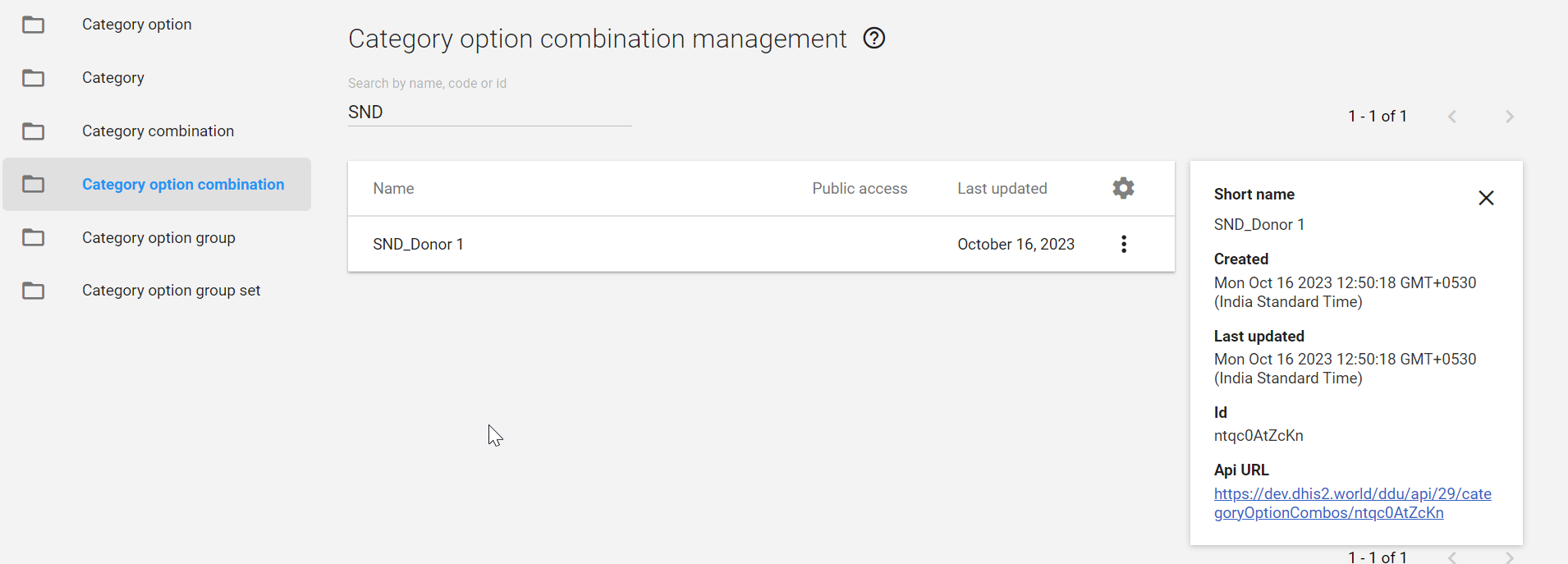
Now that you have verified it has been created correctly, you can use the attribute category combination to disaggregate the data sets that you need.
Note : the process to check if this has been generated correctly is the EXACT SAME as what was done for disaggregate category option combinations. This is because the underlying data model is also identical. The only difference is the classification (attribute) and that is now used to disaggregate a data set instead of a data element.
STOP - Perform Exercise 5
Exercise 6 - Review where you apply these attribute category combos when creating a dataset
Perform this exercise in the CUSTOMIZATION system
Navigate to Maintenance -> Data Set and list the data sets. Search for the immunization data set.
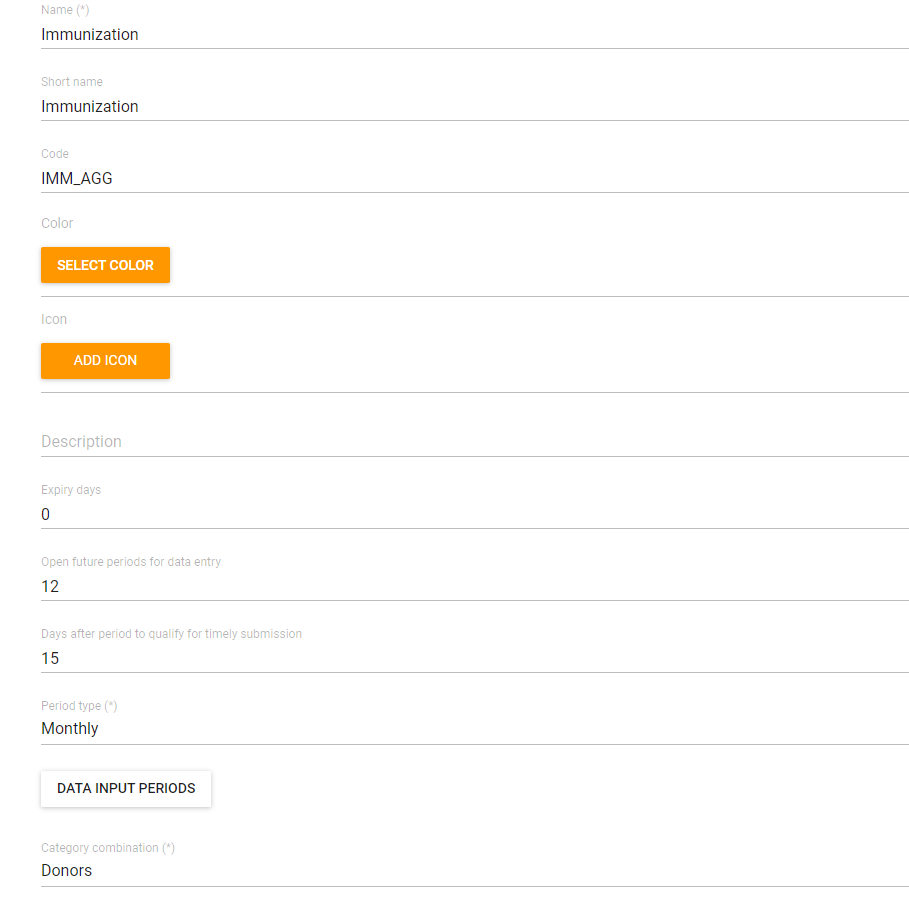
After opening these datasets, navigate to the category combination field. It is usually marked as "None" when there is no attribute category combination applied. In these cases however, you will see the attribute category combination that is required has been applied to the data sets in question.