Tanzania: Integrated Health Information Architecture
About this use case
In this use case, we'll be looking at the different stages of how multiple teams collaborated with the University of Dar es Salaam (UDSM), the Ministry of Health and Social Welfare (MoHSW), and the University of Oslo (UiO) to implement integrated Health Information Systems (HIS) in Tanzania Mainland. The key lessons learned were the importance of implementing a HIS gradually to provide a sustainable framework; streamlining resources and promoting collaboration; ensuring systems were flexible; promoting data ownership and data sharing; building capacity at all levels; involving major programs very early; and dedicating time and resources building up a community of stakeholders.
Tanzania country profile
The United Republic of Tanzania is the largest country in the East African region with a population of 45 million people. It's composed of two countries: the semi-autonomous island of Zanzibar and Tanganyika, or Tanzania Mainland. Tanzania Mainland is divided into 25 administrative regions that are subdivided into 167 district councils. Each district council is subdivided into divisions, wards, villages/streets. There's approximatively one health facility per 8.000 people, according to SARA (2012).
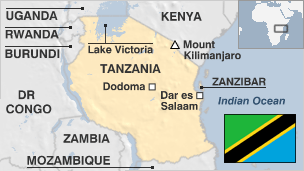
Owing to a huge disparity between regions and districts in terms of geography, history, population, and infrastructure, some areas of Tanzania have no reliable roads, electricity, or access to the Internet.
Moving from multiple tools to a unified system
Before DHIS2
Tanzania Mainland's first HIS began in the 90s as a paper-based system used at health facilities and district offices. Information was collected and processed with a Microsoft Access database. Without the intervention of external consultants hired by funding agencies, there weren't any strategies to sustain the system with upgrades or refresher training.
With a surge in demand for a HIS, the MoHSW was being put under strain. Lack of coordination led to fragmented vertical projects running side by side. This caused an unsustainable situation in which efforts were being duplicated as results weren’t being converged.
Around 2007, a plan called the Monitoring and Evaluation Strengthening Initiative was made by the MoSWH, UDSM, UiO and other partners. Its goal was to build a new, integrated HIS to provide reliable data for the ministry and other stakeholders. A new paper-based system combined with DHIS2 was introduced. http://www.dhis2.org
Introducing an integrated HIS in Tanzania
In 2010, the adaptation and implementation of a totally revised HIS began. This process was enabled by a flexible, standard solution and participatory approaches operating across all levels of the national health system. It was important to find a solution that would meet the demands of health managers, implementers, designers and decision-makers.
A gradual, national HIS rollout
In 2011, the coastal region of Pwani was used as a testbed for paper-based data collection tools and DHIS2. Over the next two years, revised systems were rolled out to the remaining 24 regions and associated districts and health facilities of Tanzania Mainland. On completion of this rollout, efforts were directed towards the integration of all major vertical programs such as malaria, TB/leprosy, RCH, HIV/AIDS into DHIS2. Along with the implementation process, training programs were held for implementing partners, district and regional hospital staff, and the MoHSW staff.
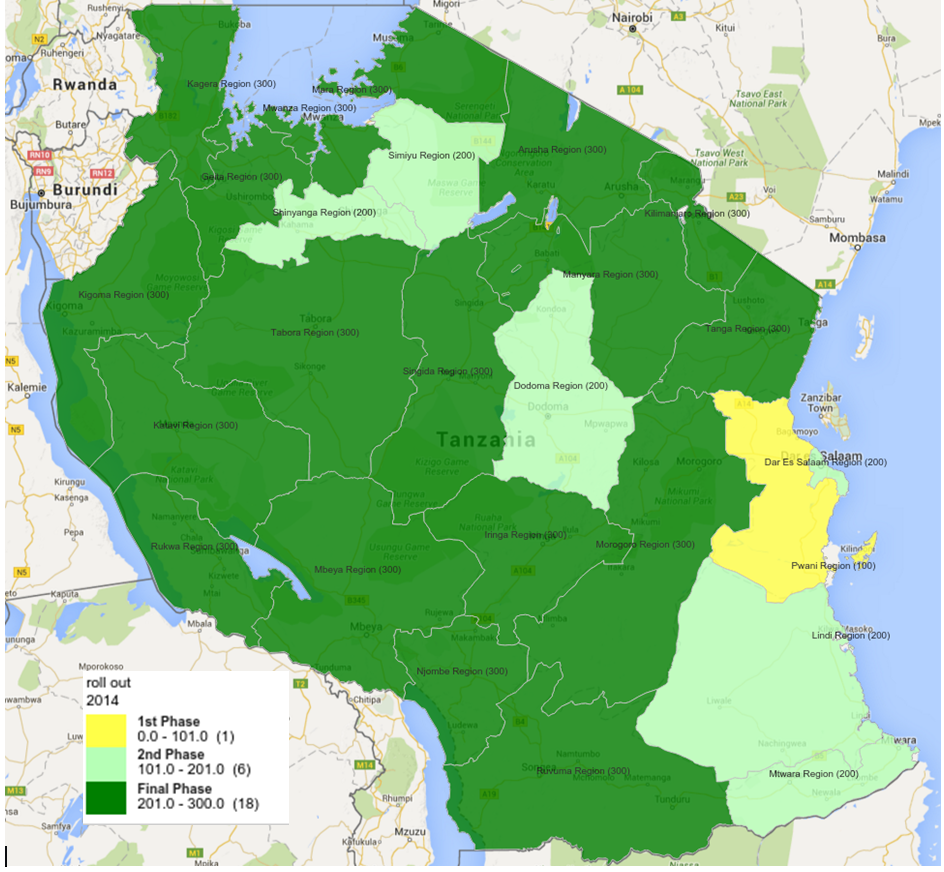
Tanzania Mainland DHIS2 rollout phases for 2014
Building a robust HIS
Here are some of the key areas we dedicated time and resources to:
Open-source philosophy
The choice to apply open-source tools rather than going through a closed, commercial product ensured that the software remained collaborative with a more diverse and flexible scope of design. Furthermore, the involvement of the many health sector stakeholders and an open source community of developers implied that the system would be geared towards long-term sustainability rather than a short-term lifecycle, dependent on a company’s paid maintenance services.
Incremental, flexible, and scalable design
DHIS2 was implemented in an incremental way, rather than in one go. Like that, issues could be tackled directly during the rollout process, and implemented in direct response to user feedback. The most glaring flaws were thus easily spotted and a more stable and efficient system was built.
Standards for data collection
We used a set of common data collection standards that covered data collection, reporting, analysis, and quality procedures and tools. All informal tools were removed and the recording of duplicate entries of data declined.
Participatory design
A community of users such as managers from the HIS, supporting partners and implementers exchanged emails, spoke on forums, and at workshops about how to make the software more user-friendly. This helped implementers fine-tuned their programs and ensure that DHIS2 was being used optimally.
Action-led research
Students enrolled on PhD and MSc degree programs at UiO and UDSM conducted “action-led research” that enabled them to participate in the roll-out of DHIS2 while doing research. By doing so, they learned and documented best practices about system customization, user support, training, and data analysis.
Local capacity building
People learned to troubleshoot DHIS2 software, and users were encouraged to assist each other across many different organization levels and roles. By instilling a sense of ownership and self-sufficiency, the gap between implementers and users was thus reduced. Training focused on software usage, data analysis and basic and advanced features of DHIS2 for health and data managers.
Using information guidelines and standards
To drive decision-making and to reach national health goals, annual planned targets, and Millennium Development Goals (MDGs), teams created processes on how to generate and use data efficiently.
Interoperability of DHIS2 with other systems
Since 2014, DHIS2 has been integrated with other software systems, enabling health workers to cross-cut, analyze and share data across organizations. Here are some examples of systems integrated or made interoperable with DHIS2:
eIDSR (electronic Integrated Disease Surveillance and Response)
eIDSR was developed from scratch using USSD technology and linked with DHIS2 for the immediate reporting of data on infectious diseases. The tool is designed to improve detection and response time to diseases and is used within all health facilities in Tanzania.
HRHIS (Human Resources for Health Information Systems)
HRHIS was developed to report health data information from within all Tanzanian health facilities. It has helped to assess HR problems, manage the distribution of HR, and plan and evaluate HR interventions.
MFL (Master Facility List)
MFL is a health facility register to keep records about health facility profiles.
eLMIS (Logistics Management Information Systems)
eLMIS is a supply chain system for distributing and stocking of drugs and other commodities.
Data use and awareness solutions
Solutions to raise awareness about best practices for data use, data analysis and data dissemination have been embedded within DHIS2. These solutions are:
Scorecards
Scorecards are used to communicate the status of progress toward key global, regional and national commitments for specific indicators. The representation of visual indicators has the role of stimulating actors to respond to situations rapidly through effective policies and investments.

HMIS web portal
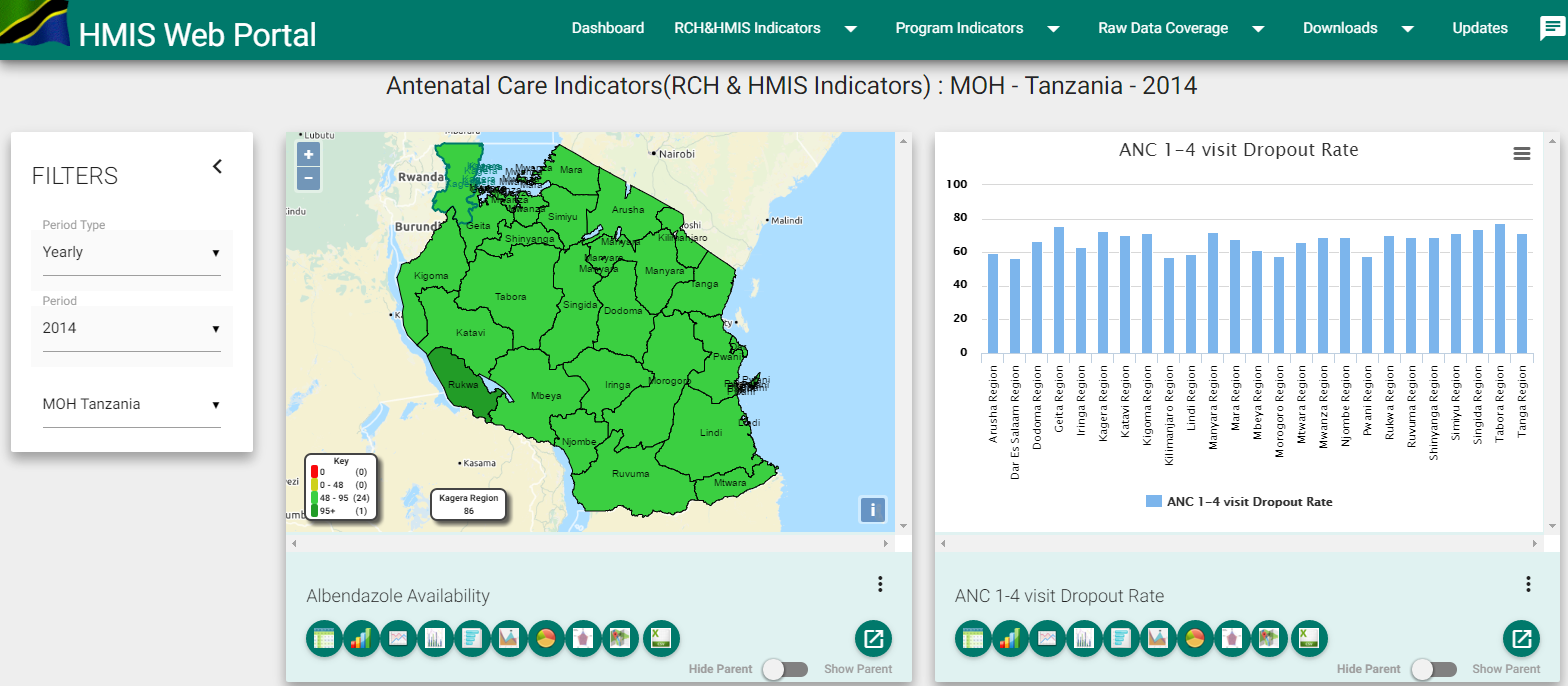
The HMIS web portal is hosted by the MoHSW and used by health stakeholders. It’s also accessible to the general public. https://hmisportal.moh.go.tz/
P4P (Pay for Performance)/ RBF (Result Based Finance)
Rewards the delivery of one or more outputs or outcomes by one or more incentives that can be financial or otherwise. The P4P/RBFprogram is integrated within DHIS 2 to enable health service providers to monitor their performance and payments.
DHP/RHP (District and Region Health Profile)
Provides planning and progress guidance to the district health management team. For example, it offers a summary of district health conditions through priority health indicators that reflect the district health status of the population, status of the health systems and the status of the health services delivery.
Challenges
As with any big project being implemented on such large scale and with a complex health care setting, a number of challenges arose.
Unforeseen changes to the administrative structure
District and regional administrative boundaries are frequently updated. The foundation of a new region generates a new representation of local population data. This disruption has an impact on the comparative analysis of HIS data such as the performance of health indicators.
Reducing standalone programs
Reducing the amount of existing standalone programs was often achieved through demonstrating the limitations of individual programs, and highlighting the potential of DHIS2. Due to some reservations however, some vertical programs are still running in parallel with DHIS2.
Lack of trained personnel and geographical coverage
The lack of people with adequate HIS skills has at times weighed heavily on implementing and scaling up DHIS2 from a pilot region to the entire country. Tanzania has over 7000 health facilities across 168 district councils.
The outcome
Now an endorsed and standard system of choice throughout Tanzania, DHIS2 is recognized as follows:
-
An integrated e-health architecture that has strengthened health data collection, improved the analysis, use and harmonization of data and stakeholders.
-
Over 1.5 million data entries are being collected and added to the national data warehouse on a monthly basis, using modems, broadband LAN and VSAT.
-
Multiple, reliable, integrated tools to assist in improved evidence-based decision making (such as scorecards, dashboards, P4P).
-
Open access initiative (HMIS web portal) initiated by the community of stakeholders.
-
Improved data validation and quality checks for better monitoring and evaluation of health programs.
What are the lessons learned?
Here are some key lessons to take away from the experience of rolling out DHIS2 in a sustainable way.
Apply a gradual incremental process
The systems must be flexible and adaptable to meet emerging needs. By learning from previous iterations it has been possible to extend the system to other regions.
Develop and endorse a comprehensive national plan
To save on resources and prevent running the risk of duplicating efforts, before deploying DHIS2, streamline all resources and HIS activities of all stakeholders and use the MoHSW as a lead organization.
Establish a trustworthy relationship
Promote system and data ownership within the MoHSW. Encourage data sharing amongst the health programs and stakeholders to help develop a sense of trust in the routine HIS and the resources and capacity that can support it.
Build capacity at national, regional, and local levels
A reliable system is maintained by well trained and knowledgeable people. Capacity building needs to be a continuous strategy. Capacity is needed for system development, maintenance, and information use to make sure the system is up and running every day, and information generated is used for health management, planning and decision making.
Get other health programs involved
The major health programs are HIV/AIDS, Maternal Child Health (MCH), malaria and TB. Getting such big programs as these involved in a HMIS at an early stage is a means to spark the interest of other programs and associated stakeholders.
Dedicate the right amount of time and resources to your program
Lots of time and effort was spent integrating the vertical programs into the HIS/DHIS2 platform and gradually rolling out the HIS. Today we’ve established a large community of stakeholders who share a common interest in building a sustainable HIS/DHIS2 platform for future generations to use and build upon.